固相萃取—气相色谱法检测水体中11种农药残留
2015-10-28李为民
李为民
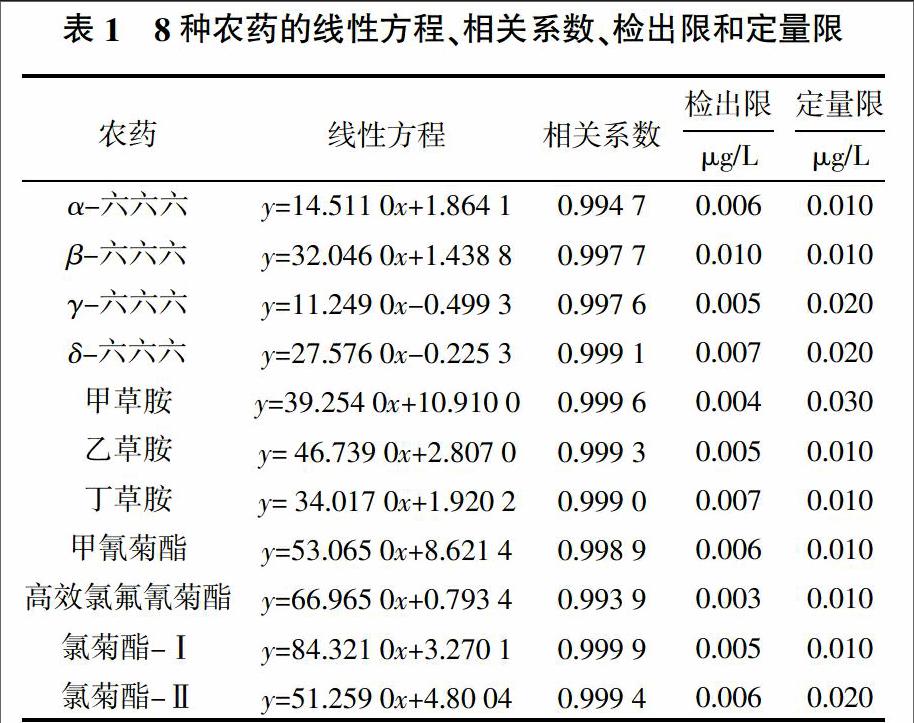
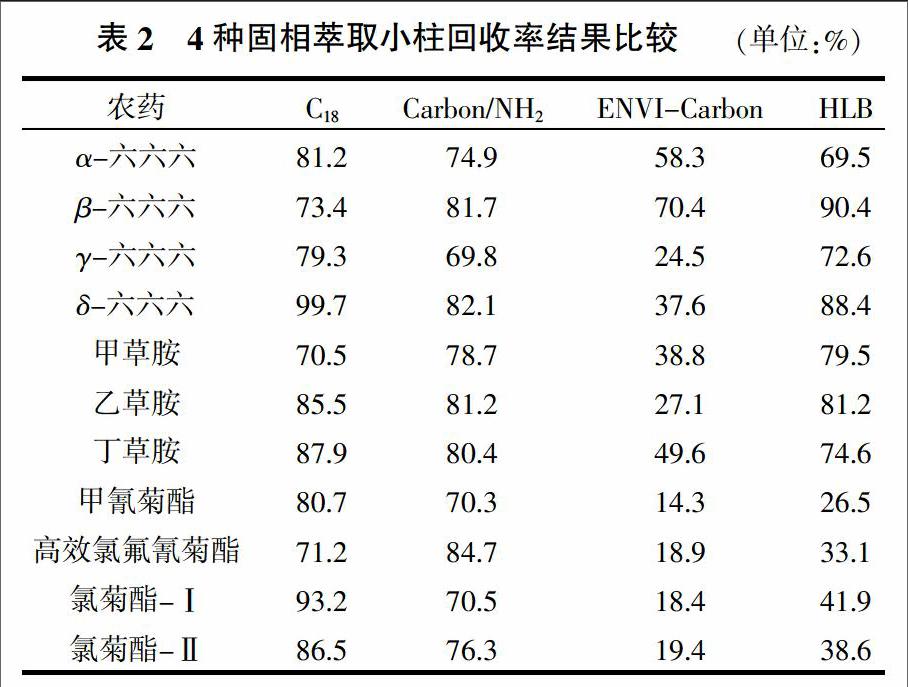
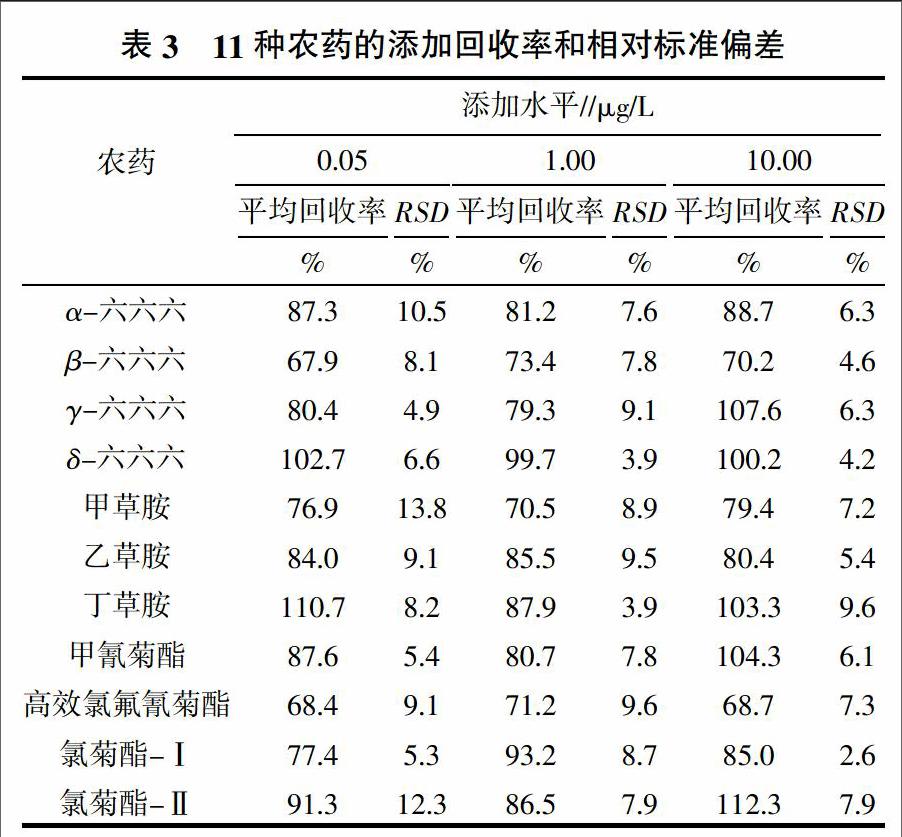
摘要:采用固相萃取法(SPE)进行样品前处理,经气相色谱带电子捕获检测器(GC-ECD)进行检测,建立了水体中11种农药的多残留检测方法。将水样上样活化过的SPE小柱,经正己烷和丙酮依次洗脱,氮吹仪吹干,丙酮定容,经GC-ECD检测。结果表明,11种农药在0.05~2.00 mg/L内线性良好,R2大于0.993 9;在水体中添加水平为0.05~10.00 μg/L时,平均添加回收率为67.9%~112.3%,RSD为2.6%~13.8%。该方法准确、快速、方便,适用于水体中的残留检测。对流经长沙的湘江和浏阳河进行了11种农药残留的检测,11种农药的残留的不大于0.22 μg/L。
关键词:固相萃取;气相色谱;水体;残留
中图分类号:O656.3 文献标识码:A 文章编号:0439-8114(2015)19-4818-04
DOI:10.14088/j.cnki.issn0439-8114.2015.19.042
Abstract: A rapid analytical method for simultaneous determination of 11 pesticides in water was established based on SPE with GC-ECD. Water samples were added into SPE, and eluted using ethyl acetate and acetone,analyzed by GC-ECD. The results showed that a good linearity ranged from 0.05~2.00 mg/L was obtained and correlation coefficient was higher than 0.993 9, the average recoveries of the 11 pesticides in water samples were in the range of 67.9%~112.3% at spiked levels 0.05~10.00 μg/L, the relative standard deviations were 2.6%~12.3%. The method is simple and applicable to confirm the residues of pesticides in water samples. 11 kinds of pesticide residues were not more than 0.22 μg/L in flowing through Changsha Xiangjiang river and Liuyang river.
Key words: SPE; gas chromatography; water; pesticides residue
农药的使用大大提高了农业的经济效益,然而随着农药的长期大量使用也造成了环境污染,给人们健康带来巨大的威胁,也引起了人们的广泛关注。水体环境中的农药污染问题近年来研究的热点。目前大量报道发现水体中存在各种不同浓度的农药,不同地域的水体农药种类和残留量也有差异[1,2]。因此,在分析水环境中的农药残留时,不仅要求分析方法具有较高的灵敏度,还要求前处理方法要有良好的富集和净化效果。传统的萃取方法为液液萃取,该方法溶剂消耗量大,不绿色环保。
固相萃取(SPE)技术是是近年发展起来一种样品前处理技术,其原理是样品中的目标物与杂质在固体吸附剂上相互作用(分配、吸附、离子交换)的差异,通过选择合适的洗脱溶剂,从而达到目标物与干扰物质的分离和富集。与传统的萃取方法比较,SPE具有使用溶剂量少、集浓缩和净化于一体、减少样品预处理过程,操作简单、省时、省力。……