尿毒症血液透析患者并发透析性心包炎的危险因素分析
2024-06-21徐金雄刘建锋邓群
徐金雄 刘建锋 邓群
*基金项目:江西省卫生健康委科技计划项目(SKJP220200453)
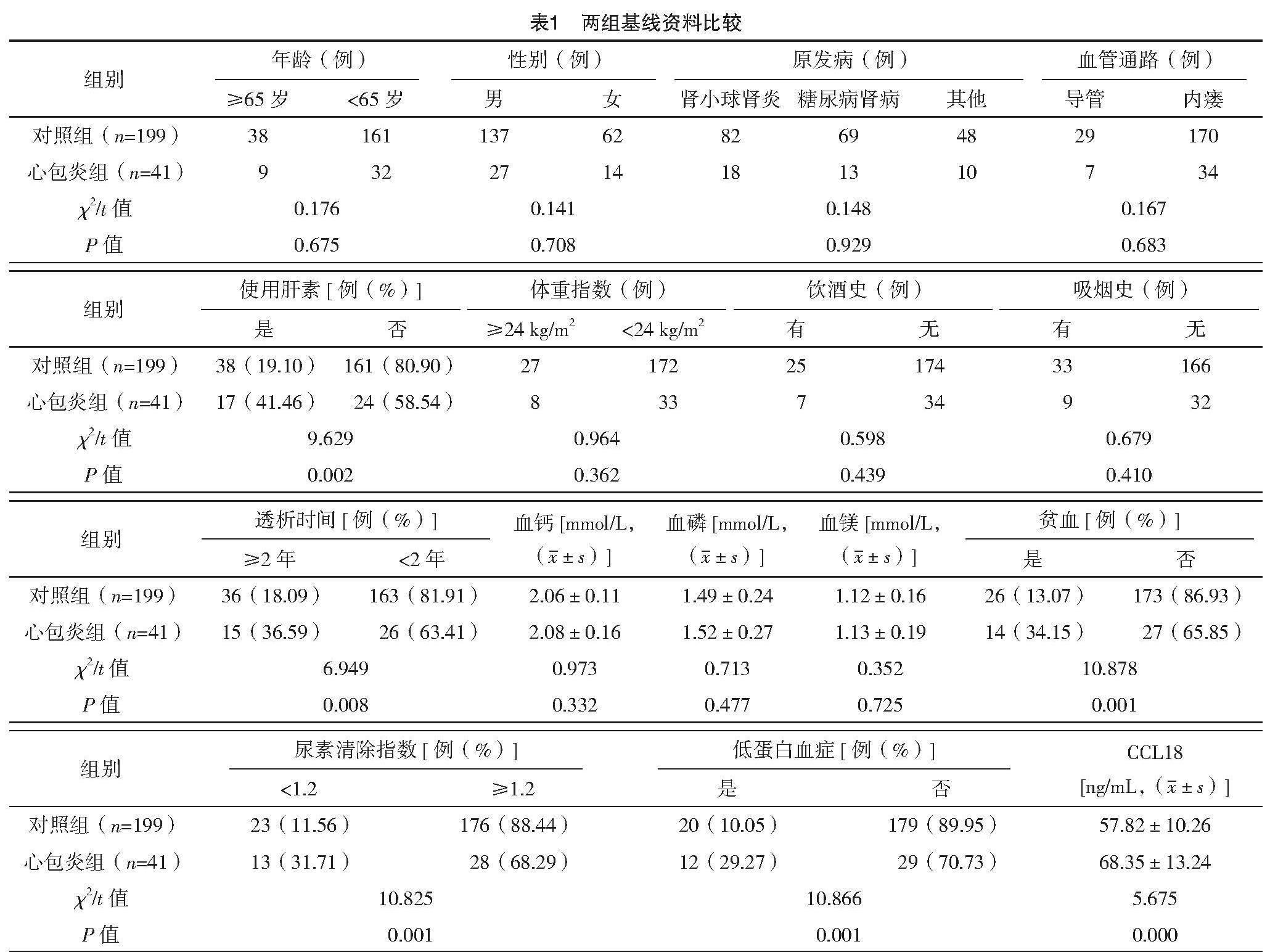
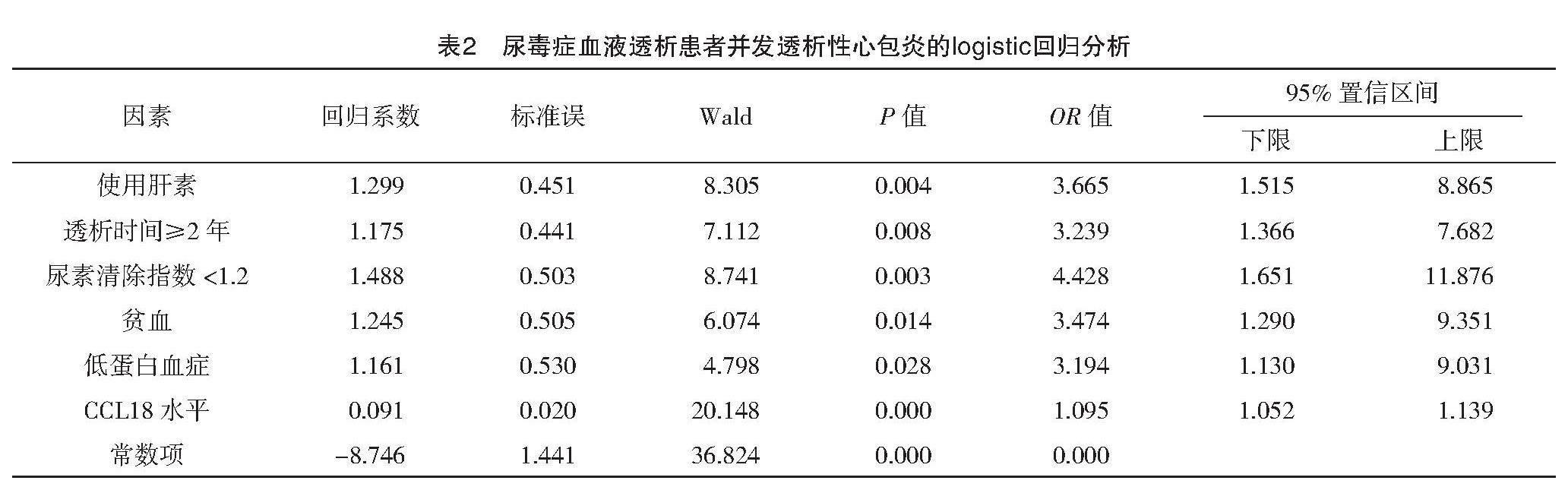
【摘要】 目的:探讨尿毒症血液透析患者并发透析性心包炎的危险因素。方法:回顾性选取2019年3月—2022年11月进入江西省胸科医院行血液透析治疗的240例尿毒症患者作为研究对象,根据透析性心包炎的发生情况将尿毒症患者分为心包炎组(发生透析性心包炎)和对照组(未发生透析性心包炎)。采用logistic回归筛选尿毒症血液透析患者并发透析性心包炎的危险因素。结果:240例尿毒症患者中有41例患者并发透析性心包炎,透析性心包炎的发生率为17.08%(41/240)。心包炎组和对照组的年龄、性别、原发病、血管通路、体重指数、血钙、血磷、血镁、饮酒史及吸烟史比较,差异均无统计学意义(P>0.05);心包炎组中使用肝素、透析时间≥2年、尿素清除指数<1.2、贫血、低蛋白血症的比例及趋化因子配体18(CCL18)水平均高于对照组,差异均有统计学意义(P<0.05)。logistic回归分析结果显示,使用肝素[OR=3.665,95%CI(1.515,8.865)]、透析时间≥2年[OR=3.239,95%CI(1.366,7.682)]、尿素清除指数<1.2[OR=4.428,95%CI(1.651,11.876)]、贫血[OR=3.474,95%CI(1.290,9.351)]、低蛋白血症[OR=3.194,95%CI(1.130,9.031)]、CCL18水平较高[OR=1.095,95%CI(1.052,1.139)]是尿毒症血液透析患者并发透析性心包炎的危险因素(P<0.05)。结论:使用肝素、透析时间≥2年、尿素清除指数<1.2、贫血、低蛋白血症及CCL18水平较高是尿毒症血液透析患者并发透析性心包炎的危险因素,临床应考虑以上几项危险因素制订相关的防治对策,以减少透析性心包炎的发生。
【关键词】 血液透析 尿毒症 透析性心包炎 危险因素
Analysis of Risk Factors of Dialysis Pericarditis in Hemodialysis Patients with Uremia/XU Jinxiong, LIU Jianfeng, DENG Qun. //Medical Innovation of China, 2024, 21(14): 151-155
[Abstract] Objective: To investigate the risk factors of dialysis pericarditis in hemodialysis patients with uremia. Method: A total of 240 uremia patients admitted to Jiangxi Chest Hospital for hemodialysis treatment from March 2019 to November 2022 were retrospectively selected as the study objects. According to the occurrence of dialysis pericarditis, uremia patients were divided into pericarditis group (dialysis pericarditis) and control group (no dialysis pericarditis). logistic regression was used to screen the risk factors of dialysis pericarditis in hemodialysis patients with uremia. Result: Among 240 patients with uremia, 41 patients had dialysis pericarditis, and the incidence of dialysis pericarditis was 17.08% (41/240). There were no significant differences in age, sex, primary disease, vascular access, body mass index, blood calcium, blood phosphorus, blood magnesium, drinking history and smoking history between pericarditis group and control group (P>0.05). In pericarditis group, the use of heparin, dialysis time ≥2 years, urea clearance index <1.2, the proportion of anemia, hypoproteinemia and the level of chemokine ligand 18 (CCL18) were higher than those in control group, with statistical significance (P<0.05). logistic regression analysis showed that heparin was used [OR=3.665, 95%CI (1.515, 8.865)] and dialysis duration ≥2 years [OR=3.239, 95%CI (1.366, 7.682)], urea clearance index <1.2 [OR=4.428, 95%CI (1.651, 11.876)], anemia [OR=3.474, 95%CI (1.290, 9.351)], hypoproteinemia [OR=3.194, 95%CI (1.130, 9.031)] and higher CCL18 level [OR=1.095, 95%CI (1.052, 1.139)] were risk factors for dialysis pericarditis in hemodialysis patients with uremia (P<0.05). Conclusion: Heparin use, dialysis duration ≥2 years, urea clearance index <1.2, anemia, hypoproteinemia and high level of CCL18 are risk factors for dialysis pericarditis in patients with uremic hemodialysis. The above risk factors should be considered in the clinical development of prevention and treatment strategies to reduce the occurrence of dialysis pericarditis.
[Key words] Hemodialysis Uremia Dialysis pericarditis Risk factor
First-author's address: Tuberculosis Department 1, Jiangxi Chest Hospital, Nanchang 330000, China
doi:10.3969/j.issn.1674-4985.2024.14.036
慢性肾衰竭是指各种慢性肾病引起的进行性实质性损害,导致肾脏的分泌、排泄排毒及代谢等基本功能不能维持,出现氮质血症、酸碱失衡及多个系统受累的临床表现综合征[1-2]。尿毒症是临床常见的疾病,是指由于肾脏功能衰竭而引发的一系列症状和代谢紊乱组成的综合征,属于慢性肾衰竭的终末阶段[3]。尿毒症的临床症状主要表现为酸中毒、水中毒及机体内环境紊乱等,病情严重的可导致患者死亡,给患者及家属带来极为严重的身心伤害[4]。血液透析是治疗尿毒症的常用方式,其是通过超滤、渗透、对流及弥散等方式有效清除尿毒症患者血液中的毒素和废物,从而患者缓解尿毒症患者的症状,帮助患者维持机体的酸碱平衡和电解质平衡[5-6]。近年……