安罗替尼联合吉非替尼一线治疗EGFR阳性的晚期非小细胞肺癌的临床效果分析
2024-06-21刘玮萱王鑫娄智吉亚君
刘玮萱 王鑫 娄智 吉亚君
*基金项目:北京医卫健康公益基金会医学科学研究基金资助项目(13185016)
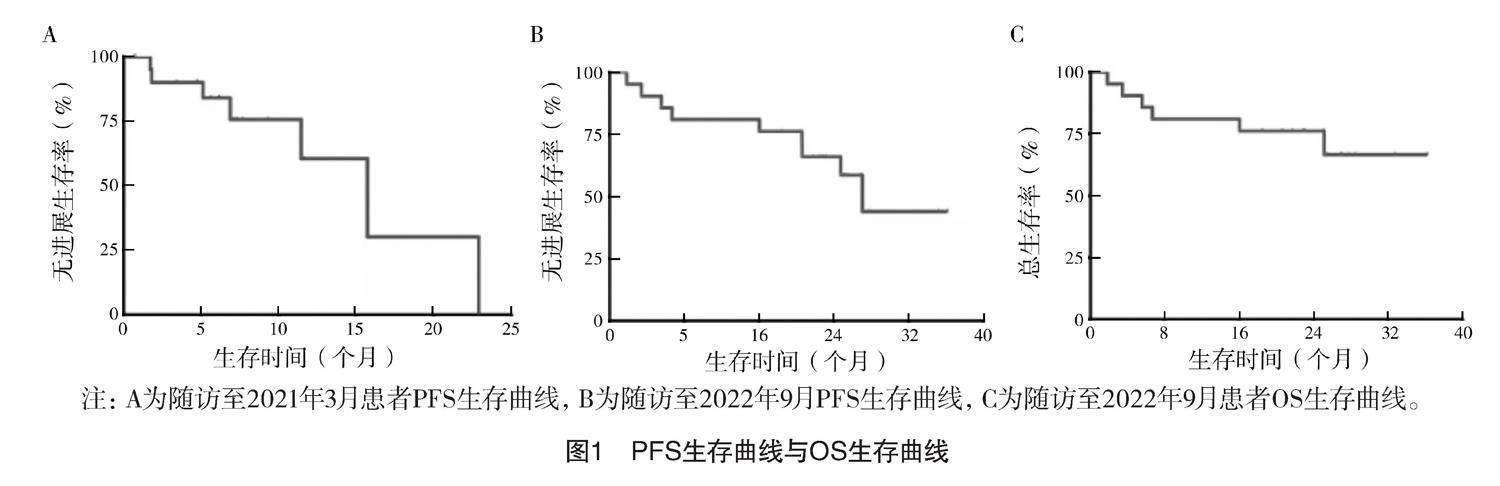
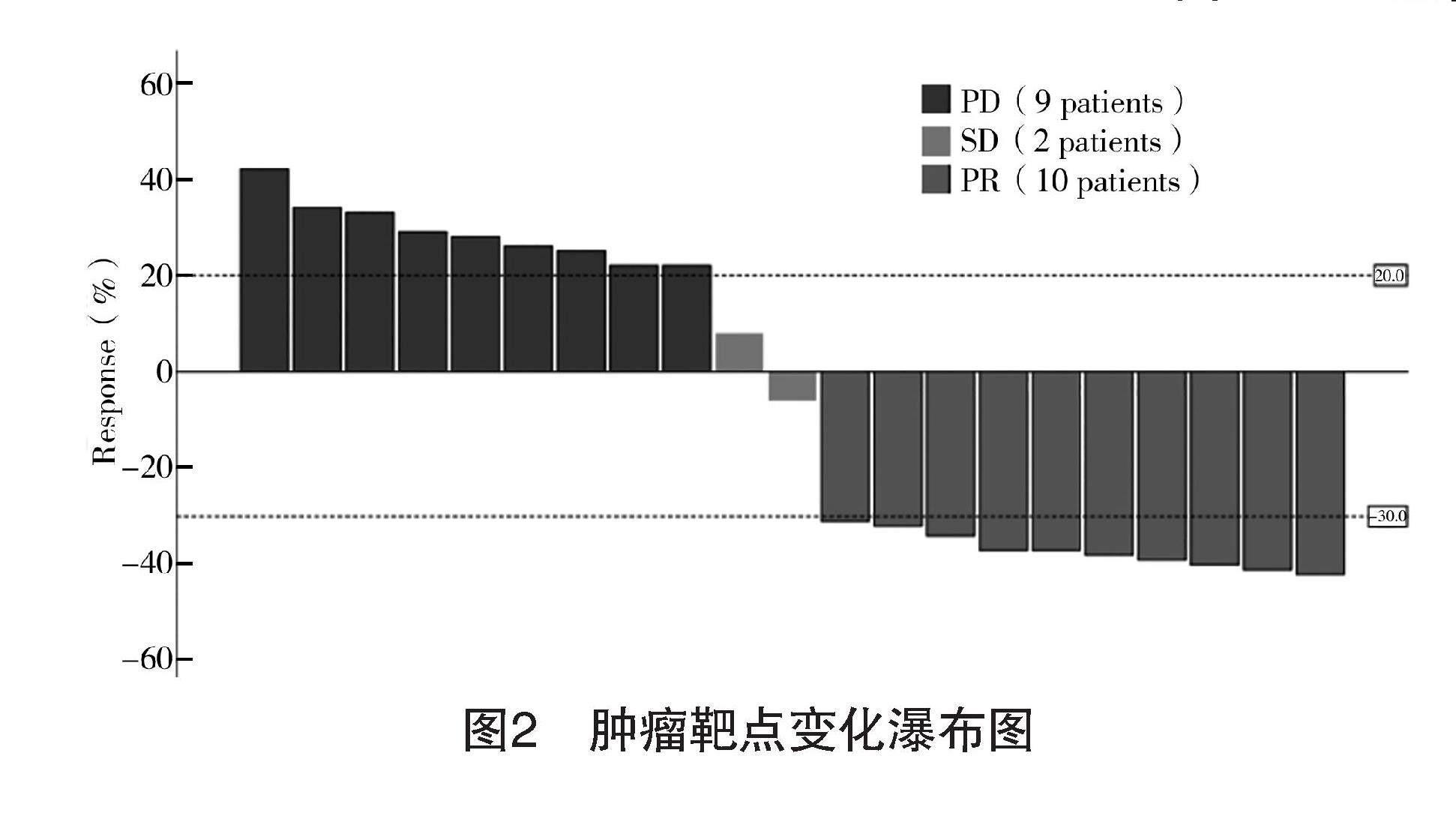
【摘要】 目的:探索抗血管生成药物安罗替尼联合吉非替尼一线用于治疗晚期EGFR敏感突变的非小细胞肺癌患者的临床效果和安全性。方法:选取2019年5月—2021年2月于连云港市第一人民医院肿瘤内科就诊并确诊的晚期非小细胞肺癌(NSCLC)患者21例,纳入患者既往未经治疗、EGFR突变阳性(外显子19缺失或21L858R),均给予安罗替尼和吉非替尼治疗,直至疾病进展或治疗出现不可耐受的毒副反应为止。主要终点为无进展生存期(PFS),次要终点是客观缓解率(ORR)、疾病控制率(DCR)、总生存期(OS)和安全性。结果:首次随访至2021年3月,结果显示联合治疗中部分缓解(PR)13例,ORR 61.90%,疾病进展(PD)7例,失访1例,中位PFS值为15.7个月[95%CI(9.4,22.1)]。继续随访至2022年9月,PR 10例,疾病稳定(SD)2例,ORR为47.62%,DCR为57.14%,PD 4例,失访及死亡5例,中位PFS值为27.1个月[95%CI(22.9,31.2)],2年OS率为66.70%,未达到中位OS,患者整体生存率较高。Cox多因素回归分析结果显示,KPS评分[HR=0.696,95%CI(0.537,0.902),P=0.006]是预测联合方案一线治疗EGFR阳性的晚期NSCLC预后的独立影响因素。常见不良反应(TRAEs)为皮疹(47.62%)、高血压(33.33%)、高血脂(19.05%)及手足皮肤反应(19.05%),其次为蛋白尿、腹泻等。结论:安罗替尼联合吉非替尼对EGFR突变阳性的晚期NSCLC患者具有良好的疗效,且安全性可控。
【关键词】 非小细胞肺癌 吉非替尼 安罗替尼 表皮生长因子受体 酪氨酸激酶抑制剂
The Clinical Efficacy Analysis of Combining Anlotinib with Gefitinib as A First-line Treatment for EGFR-positive Advanced Non-small Cell Lung Cancer/LIU Weixuan, WANG Xin, LOU Zhi, JI Yajun. //Medical Innovation of China, 2024, 21(13): 00-005
[Abstract] Objective: To explore the clinical efficacy and safety of the combination of the anti-angiogenic agent Anlotinib and Gefitinib as first-line treatment for advanced non-small cell lung cancer (NSCLC) patients with epidermal growth factor receptor (EGFR)-sensitive mutations. Method: A total of 21 patients with advanced NSCLC who were diagnosed and treated at the Department of Oncology, the First People's Hospital of Lianyungang from May 2019 to February 2021 were included in this study, the patients had not received prior treatment, and were EGFR mutation-positive (exon 19 deletion or 21L858R). They were treated with Anlotinib and Gefitinib, until disease progression or intolerable toxic side effects occurred. The primary endpoint was progression-free survival (PFS), and the secondary endpoints were objective response rate (ORR), disease control rate (DCR), overall survival (OS), and safety. Result: The first follow-up was conducted until March 2021. The results showed that among the patients receiving the combination treatment, there were 13 cases of partial remission (PR), with an ORR of 61.9%, 7 cases of progressive disease (PD), and 1 case lost to follow-up. The median PFS was 15.7 months [95%CI (9.4, 22.1)]. Follow-up continued until September 2022, with 10 cases of PR, 2 cases of stable disease (SD), an ORR of 47.62%, a DCR of 57.14%, 4 cases of PD, 5 cases lost to follow-up or death, and a median PFS of 27.1 months [95%CI (22.9, 31.2)]. The 2-year OS rate was 66.70%, and the median OS was not reached, indicating a relatively high overall survival rate among the patients. Cox multivariate regression analysis showed that KPS score [HR=0.696, 95%CI (0.537, 0.902), P=0.006] was an independent prognostic factor for the first-line treatment of EGFR-positive advanced NSCLC using this combination therapy. The most common treatment-related adverse events (TRAEs) were rash (47.62%), hypertension (33.33%), hyperlipidemia (19.05%), and hand-foot skin reaction (19.05%), proteinuria, diarrhea, and other adverse events. Conclusion: The combination of Anlotinib and Gefitinib has demonstrated good efficacy and controllable safety in patients with advanced NSCLC with EGFR mutations.
[Key words] Advanced non-small cell lung cancer Gefitinib Anlotinib Epidermal growth factor receptor Tyrosine kinase inhibitors
First-author's address: Department of Oncology, the First People's Hospital of Lianyungang, Jinzhou Medical University Postgraduate Training Base, Lianyungang 222000, China
doi:10.3969/j.issn.1674-4985.2024.13.001
非小细胞肺癌(NSCLC)占所有肺癌类型的主导地位,约占总病例的85%[1-3]。在分子水平上,表皮生长因子受体(EGFR)的突变在某些人群中较为常见,特别是亚洲人群中EGFR突变的发生率较高。……