乌鲁木齐市米东区农村居民点布局时空演变及影响因素研究
2024-03-11刘妍刘志有
刘妍 刘志有



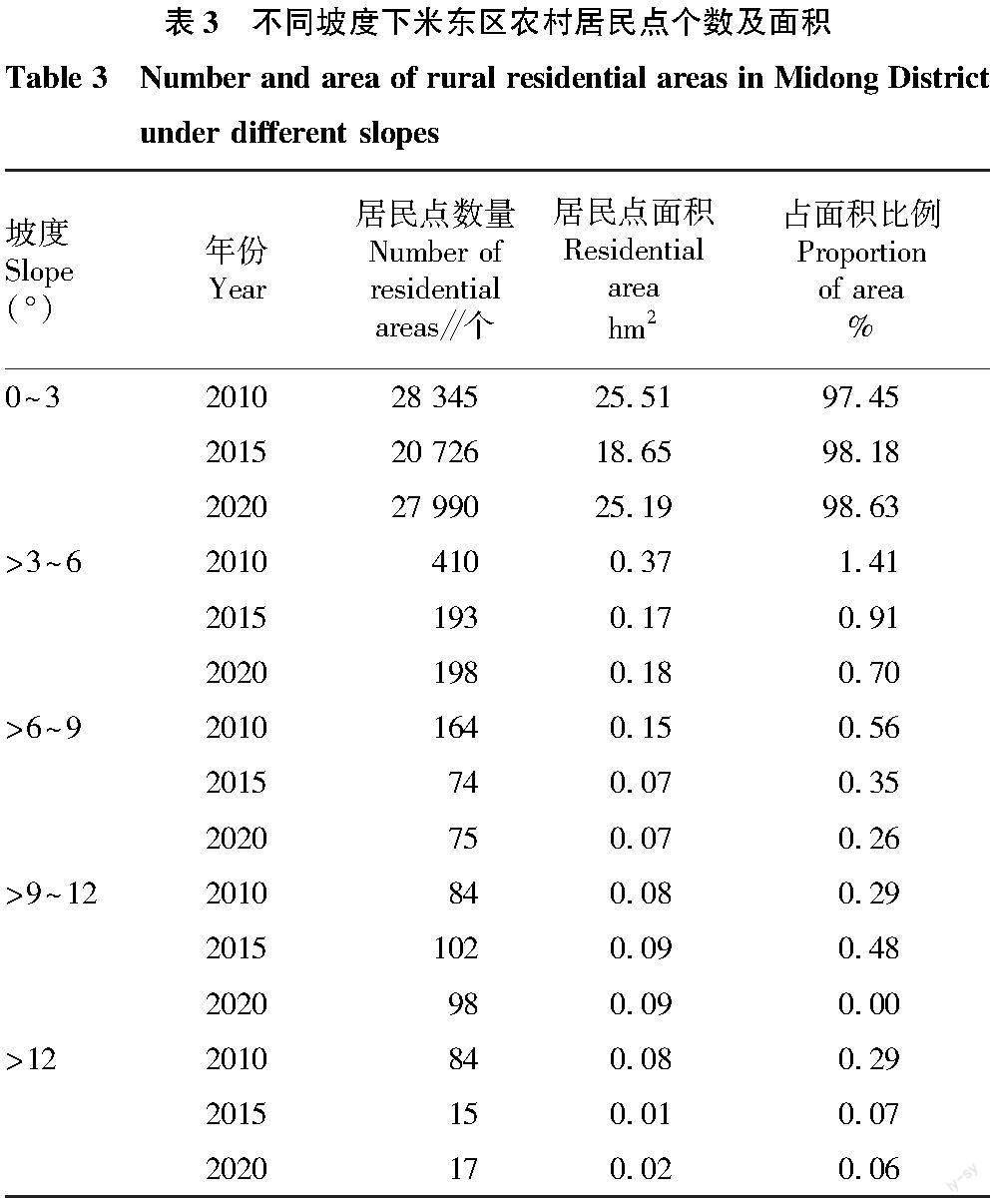
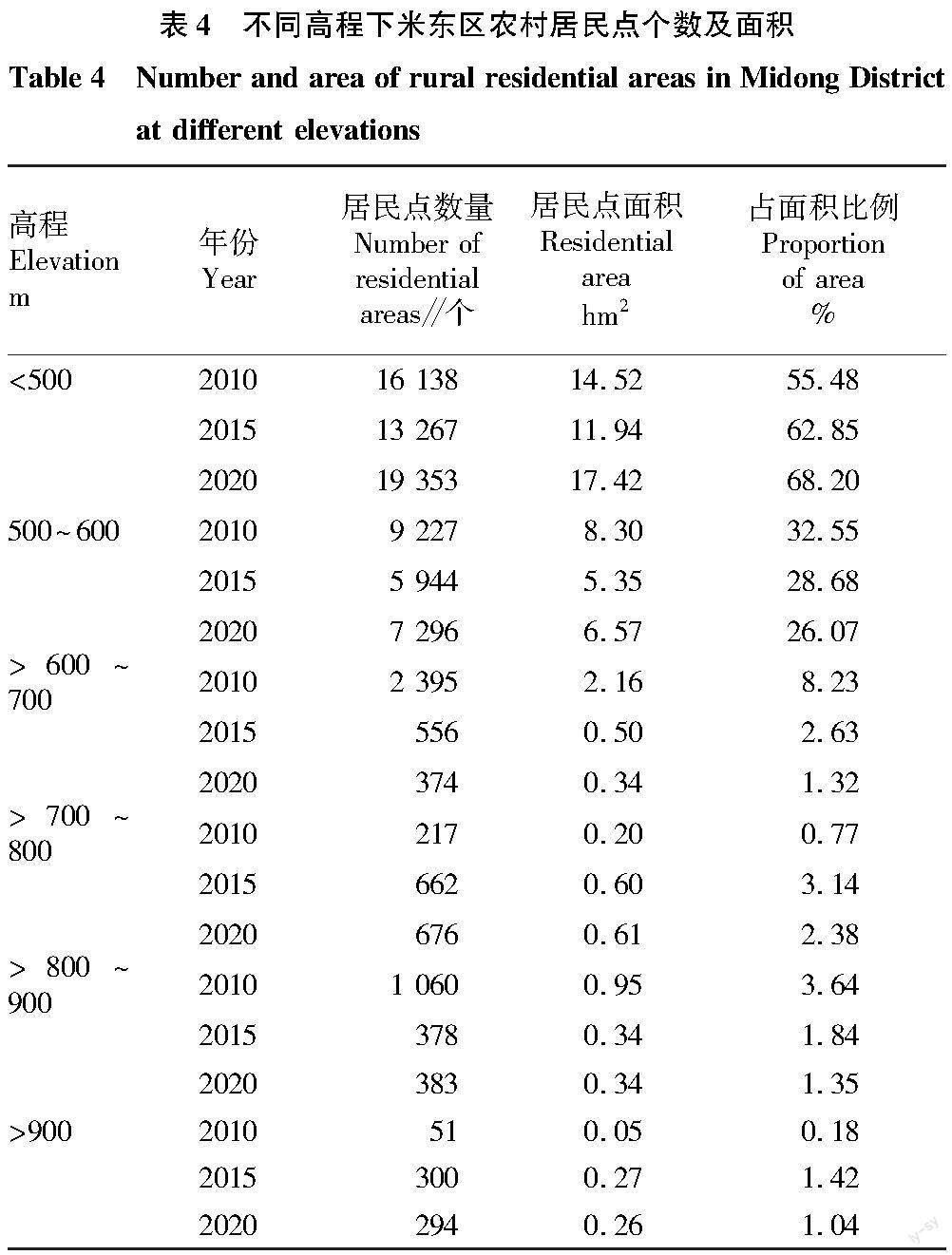
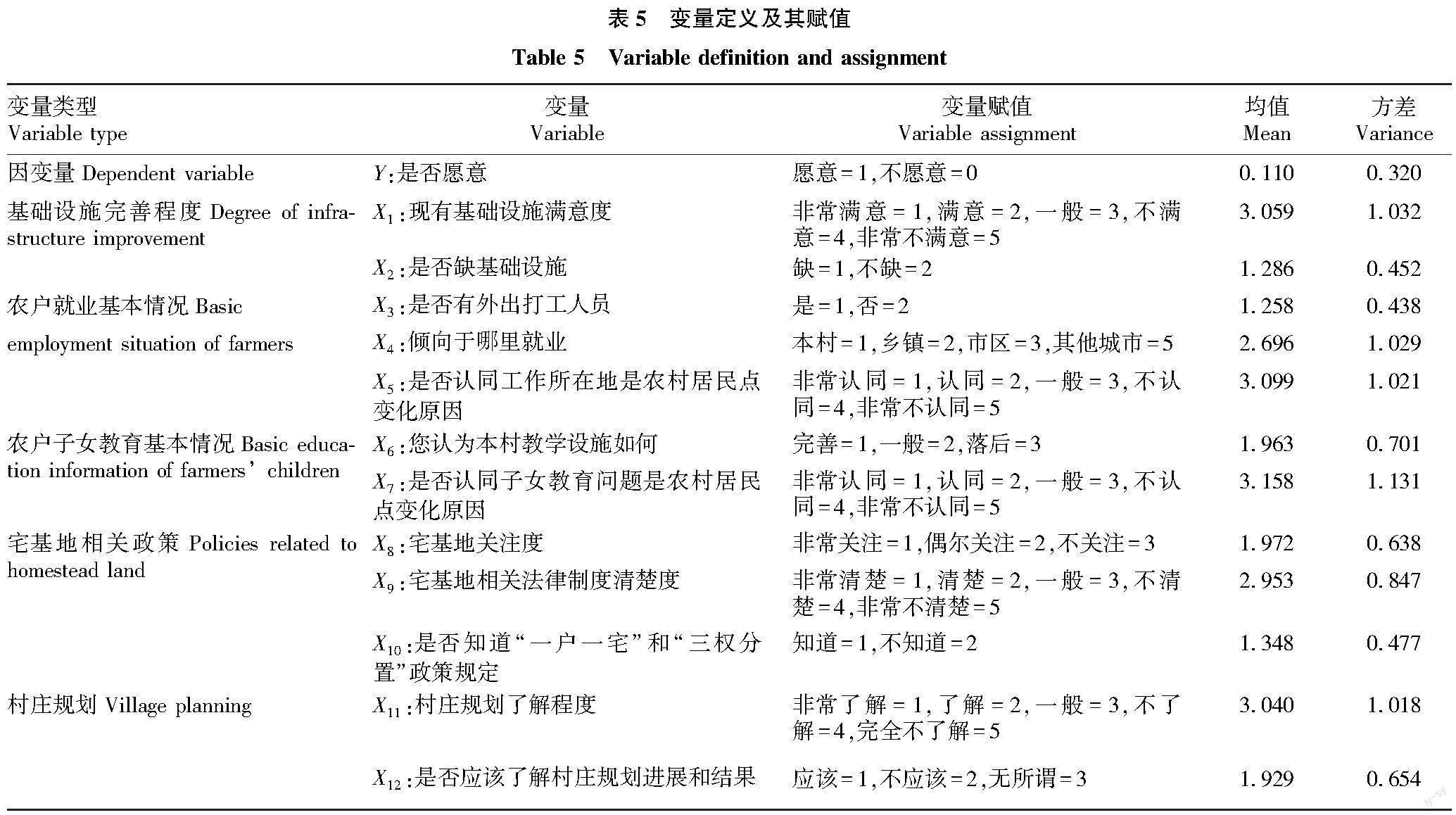
摘要 运用遥感影响提取2010—2020年乌鲁木齐市米东区农村居民点时空分布数据,利用Fragstats软件、GIS技术等工具研究米东区农村居民点演变特征,从自然因素分析不同坡度和高程区间范围内农村居民点的数量和面积,社会经济因素通过二元Logistics回归分析进行分析。结果表明:①研究区内农村居民点整体变化呈现出先减少再增加的趋势;②米东区农村居民点集聚发展具有不稳定性,展现出分散到聚集的状态,密度整体分布由西部地区向中部地区聚集;③米东区农村居民点分布的数量以及占比随着坡度和高程的增加而显著下降,农民倾向于在低坡度、低高程地区设立居民点;④通过二元Logistic回归分析,结果发现现有基础设施满意度等9个社会经济指标对米东区农村居民点变化产生显著影响。
关键词 时空演变;农村居民点;影响因素;米东区
中图分类号 TU982.29 文献标识码 A 文章编号 0517-6611(2024)03-0262-04
doi:10.3969/j.issn.0517-6611.2024.03.059
Spatiotemporal Evolution and Influencing Factors of Rural Residential Layout in Midong District, Urumqi City
Abstract Using remote sensing influence to extract spatiotemporal distribution data of rural residential areas in Midong District, Urumqi City from 2010 to 2020, using tools such as Fragstats software and GIS technology to study the evolution characteristics of rural residential areas in Midong District.The number and area of rural residential areas within different slope and elevation ranges were analyzed from natural factors, and socio-economic factors were studied through binary Logistics regression analysis.The results indicate that the overall change of rural residential areas in the study area shows a trend of first decreasing and then increasing;the development of rural residential agglomeration in Midong District is unstable, showing a state of dispersion to agglomeration, with the overall density distribution from the western region to the central region;the number and proportion of rural residential areas in Midong District significantly decrease with the increase of slope and elevation, and farmers tend to establish residential areas in low slope and elevation areas;based on binary Logistic regression analysis, it was found that 9 socio-economic indicators such as satisfaction with existing infrastructure have a significant impact on the changes in rural residential areas in Midong District.
Key words Spatiotemporal evolution;Rural residential areas;Influencing factors;Midong District
近些年來,随着我国农业现代化进程不断加快,农村建设与发展受到了党和国家的高度重视,农村居民点是农民生活、居住的重要载体,在城镇的快速扩张和人口流动的影响下,居民点在分布、形态、结构上都发生了明显的变化[1-2]。近些年来,学者们对农村居民点的空间离散分布、时空格局演变及特征等进行研究分析[3-5]。在研究区域上,部分学者选择喀斯特地区[6-7]、丘陵地区[8-9]、干旱区绿洲[10]、山地都市边缘区[11],在研究方法方面,学者们用空间自相关[12]、GIS[13]、变异系数[14]等多种方法对农村居民点的和影响因素进行分析,此外,学者们还综合分析了多种因素对农村居民点的影响[15-16],或者通过一类或者几类因子进行研究[17]。……