黄河流域(陕西段)景观生态风险评价及预测分析
2023-06-07潘博华李骏南
潘博华 李骏南
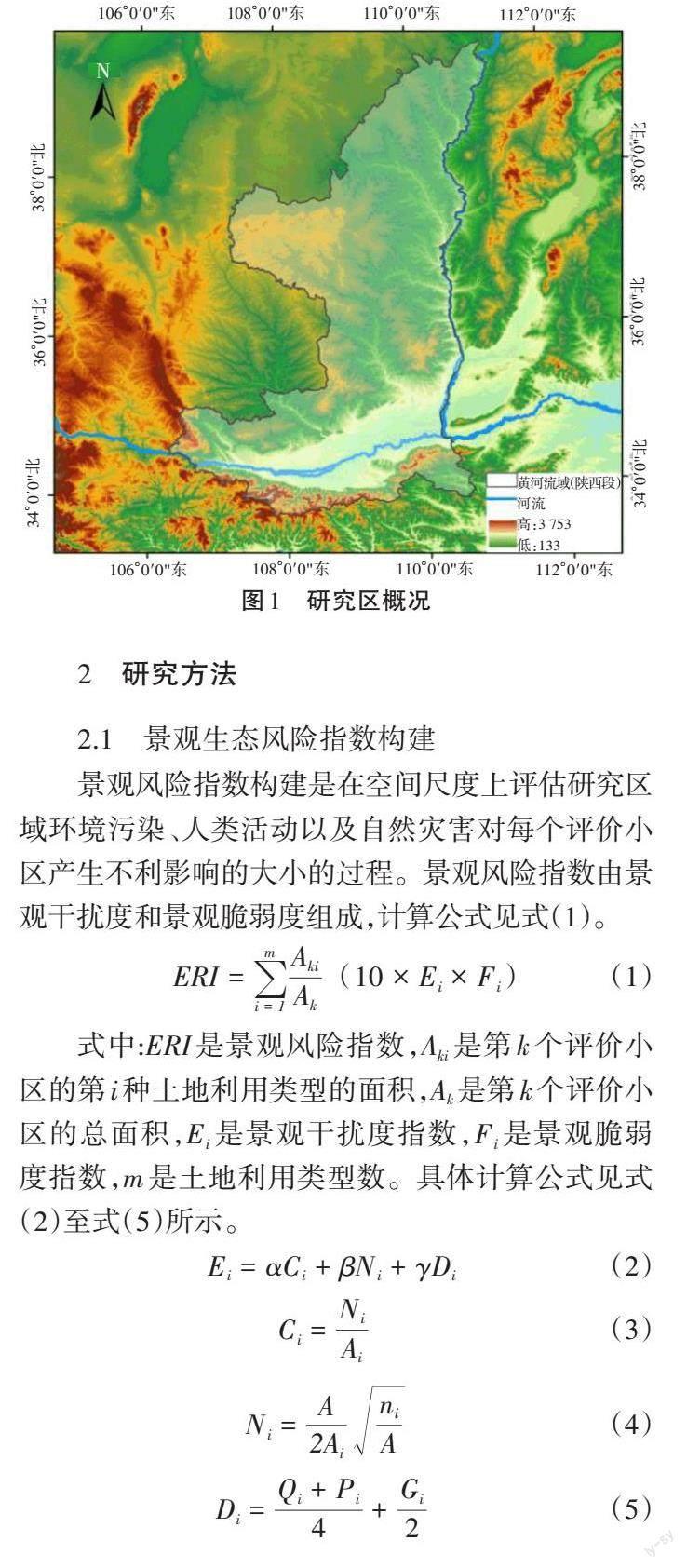
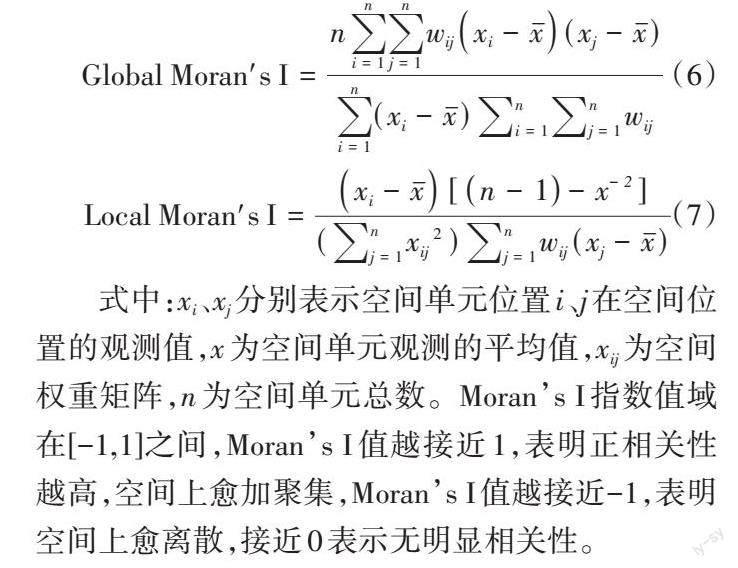
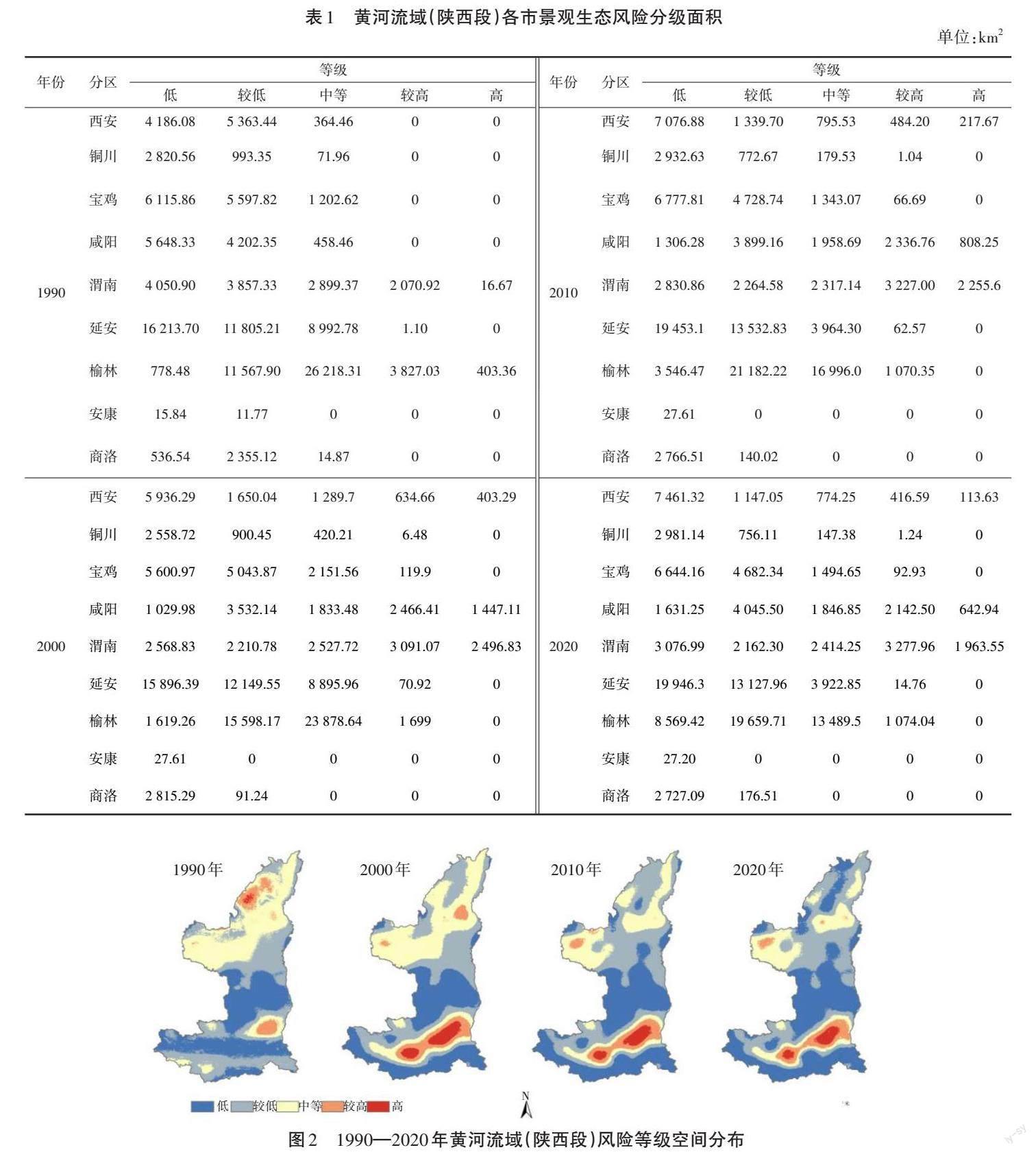
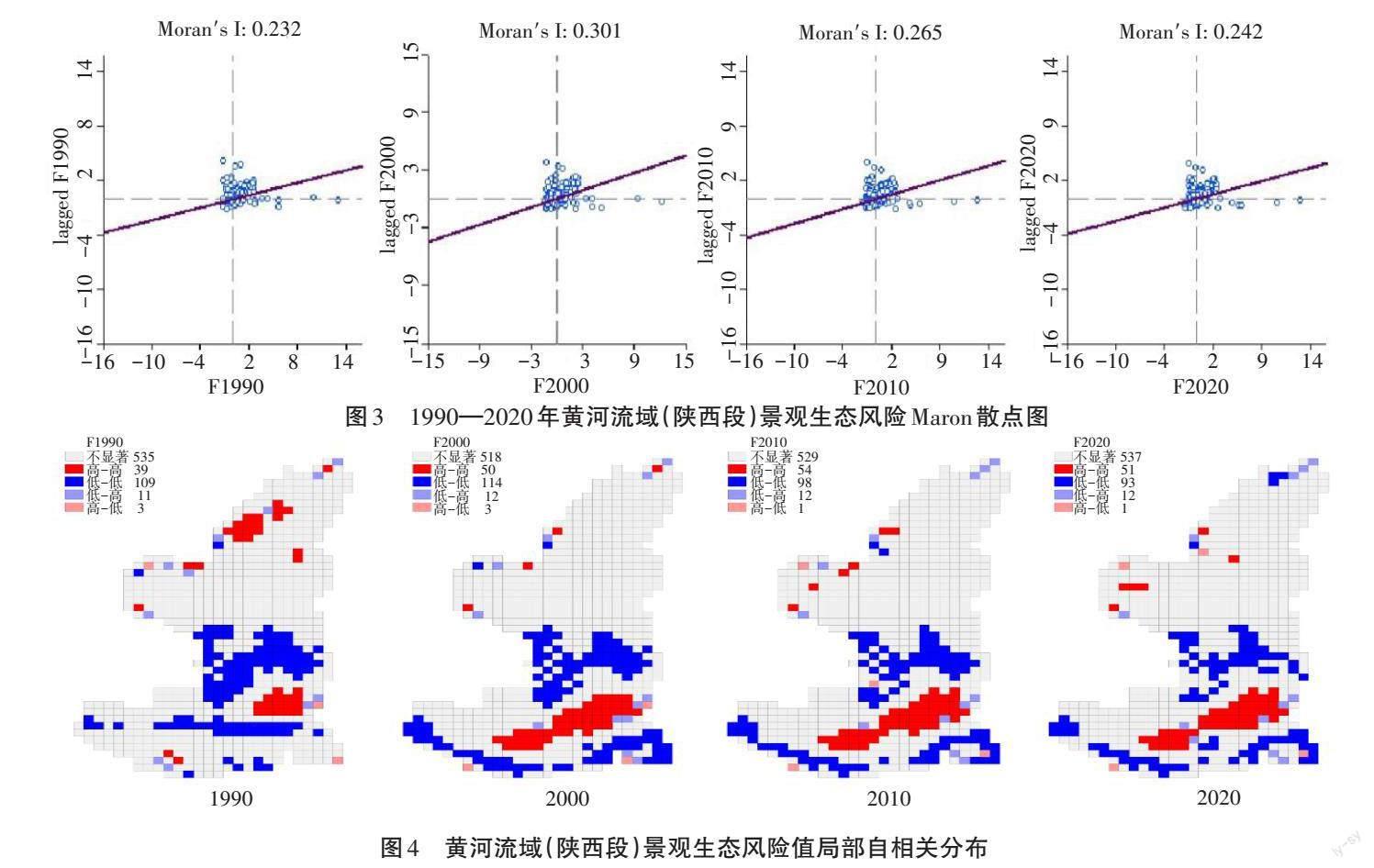
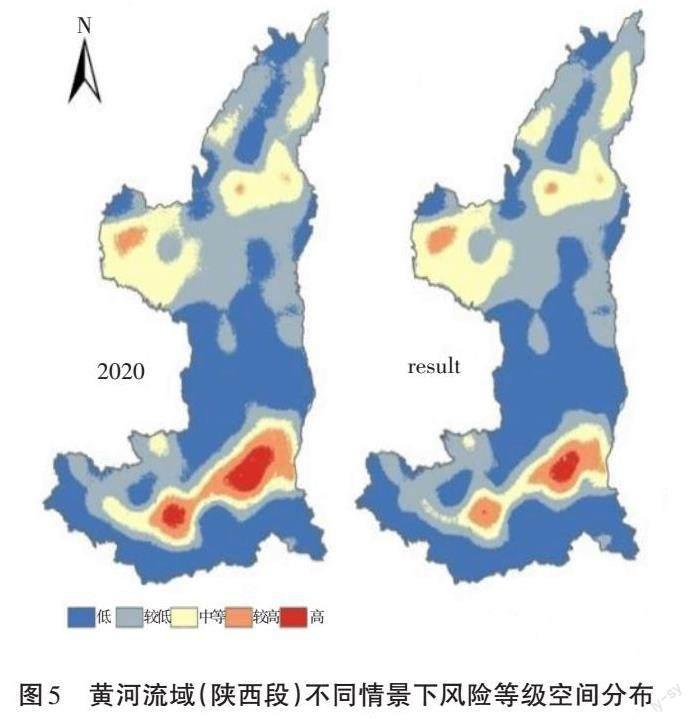
摘 要:【目的】以可持续发展为准则,分析黄河流域的景观生态风险时空演变特征,为黄河流域的高质量发展提供科学依据。【方法】基于1990—2020年土地利用数据计算景观生态风险指数。进行空间自相关分析,在空间上探索景观生态风险指数与驱动因素的空间相关性。并设定自然发展、耕地保护、生态保护和可持续发展四个情景,采用Markov-Flus模型对未来景观生态风险指数进行预测。【结果】研究区内,榆林市、渭南市以及咸阳市北部的景观风险较高,近年来高风险区、较高风险区逐渐收缩;整体的分布呈现“南冷北热”的特点。【结论】不同区域的景观生态风险收缩或扩张情况不同,应以可持续发展为准则,在不同地区采取不同的保护措施。
关键词:景观生态风险评价;地统计分析方法;空间自相关
中图分类号:X826 文献标志码:A 文章编号:1003-5168(2023)09-0101-06
Abstract: [Purposes] Based on the principle of sustainable development, this paper analyzes the temporal and spatial evolution characteristics of landscape ecological risks in the Yellow River basin, providing scientific basis for high-quality development of the Yellow River basin. [Methods] The landscape ecological risk index is calculated based on land use data from 1990 to 2020. Conduct spatial autocorrelation analysis to explore the spatial correlation between landscape ecological risk index and driving factors. Four scenarios of natural development, farmland protection, ecological protection, and sustainable development were set up, and the Markov-Flus model was used to predict the future landscape ecological risk index. [Findings] In the study area, the landscape risks in Yulin City, Weinan City, and the northern part of Xianyang City are relatively high. In recent years, the high-risk areas and relatively high-risk areas have gradually shrunk; The overall distribution is characterized by "cold in the south and hot in the north". [Conclusions] The contraction or expansion of landscape ecological risks varies in different regions, so sustainable development should be taken as the criterion and different methods of protection measures should be taken in different regions.
Keywords: landscape ecological risk assessment;geostatistical analysis method;spatial autocorrelation
0 引言
景觀格局的动态变化是一个缓慢的过程,受到干扰时会通过景观格局结构的变化表征风险受体范围和危害情况[1]。景观生态风险评价就是通过不同组分的不同变化方向及速度来对研究区域的生态风险进行定量的评估,相较于传统的评价其更加注重于景观要素镶嵌、景观格局演变和景观生态过程。目前景观生态风险评价的研究成果丰富[2-7],相关学者针对不同方法和模型、不同研究尺度、不同研究区域等开展了大量景观风险评价体系的探索[8-9]。在众多模型中,本研究选取了Markov-Flus模型进行景观生态风险的预测,该模型既结合了马尔科夫链栅格数量的预测,也结合了Flus模型获取多因素作用下景观转化规则的能力,其模拟精度普遍高于CA-Markov、CLUE-S等模型。……