制造业科技创新投入强度的组态路径
2021-10-09王秋云
王秋云
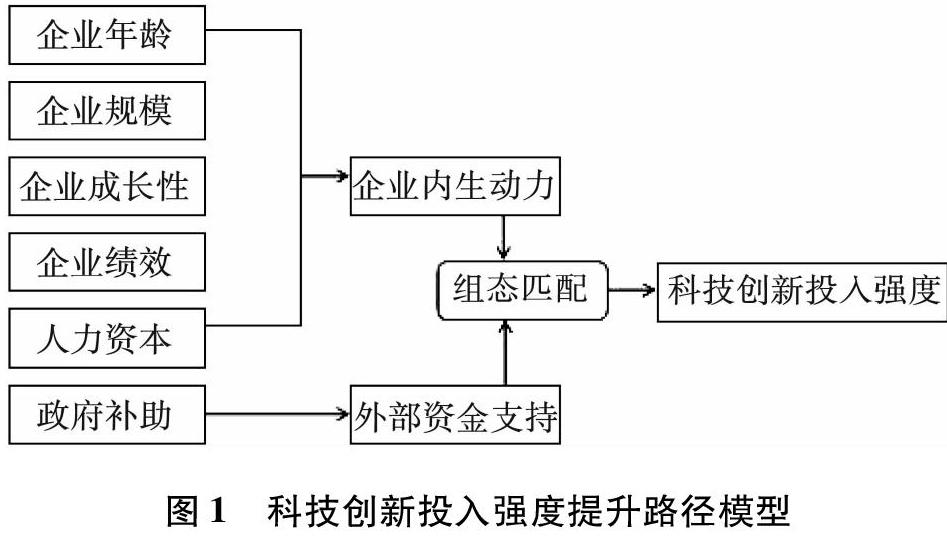
摘 要:以深交所主板26家制造业上市企业为研究对象,采用模糊集定性比较分析法(fsQCA),探讨6个影响因素及其如何联合作用于企业在科技创新方面的投入。研究显示:制造业科技创新投入强的组态路径有3种:人才导向型路径、内外联动型路径和内部驱动型路径。研究结果进一步验证了科技创新投入强度与影响因素之间的非对称性因果关系。
关 键 词:科技创新;投入强度;组态路径;模糊集定性比较分析
DOI:10.16315/j.stm.2021.04.007
中图分类号: F275
文献标志码: A
文章编号:1008-7133(2021)04-0050-07
Abstract:Using 26 listed manufacturing enterprises on the main board of the Shenzhen Stock Exchange as the research object, the fuzzy set qualitative comparative analysis (fsQCA) was used to explore six influencing factors and how they combine to affect the enterprises' investment in science and technology innovation. The study reveals that there are three paths of strong grouping of STI investment in manufacturing industry: talent-oriented path, internal and external linkage path and internally driven path. The findings further address the asymmetric causal relationship between the intensity of STI inputs and the influencing factors.
Keywords:science and technology innovation;input intensity;configuration path;qualitative comparative analysis of fuzzy sets
科技创新是提升国家综合实力的战略支撑,加大科技创新投入可以促进产业高质量发展和转型升级,对产业集聚具有正向效应[1]。党的十九届五中全会明确指出“要提升企业技术创新能力,强化企业创新主体地位。”“十三五”以来,我国科技创新能力有了大幅提升,这主要归功于我国研发经费投入持续增长:2019年,我国有507家企业进入全球研发投入2 500强;全社会研发投入从2015年的1.42万亿元增长到2020年的约2.4万亿元,科技进步贡献率预计超过60%;在“全球创新指数”中,我国排名从2015年的第29名跃至2020年的第14名。虽然我国在创新型国家建设上取得了决定性进展,但随着当前世界制造领域格局加速重构,中国企业特别是高新技术企业不断遭遇全球化贸易壁垒,如华为遭遇美国制裁,其关键原因是全球半导体材料供货不足,这说明企业目前发展重点在于解决技术问题而非规模和速度,思考如何避免让关键核心技术“卡脖子”。……