氢燃料电池船舶动力的发展与展望
2021-09-13黄河徐文珊李明敏
黄河 徐文珊 李明敏

摘 要:目前船舶通常采用柴油机、燃气轮机等提供动力,其排放大量的硫氧化物、氮氧化物、CO2气体、颗粒物等大气污染物,对大气造成严重污染。为此,IMO不断出台限制污染物排放量的规定,航运界也采取了相应的措施:内燃机技术更新、使用低硫燃油、氢燃料等。氢燃料具有可再生、无污染、热值高等特点。采用氢燃料可实现零排放,是解决船舶对环境污染最有效的措施之一。本文将对氢燃料电池船舶动力的发展与应用加以探讨、展望。
关键词:氢能;燃料电池; 船用;展望
中图分类号:U664.14 文献标识码:A
Abstract: Diesel engines and gas turbines are widely used in ship power systems, their emissions of a large number of sulfur oxides, nitrogen oxides, CO2 gas, particulate matter and other atmospheric pollutants, will cause serious pollution to the atmosphere. For this reason, IMO regulations to limit pollutant emissions are constantly introduced and gradually upgraded, the shipping industry has also taken corresponding countermeasures: internal combustion engine technology update, using low–sulfur fuel, installing desulfurization devices, using clean energy including natural gas, electric energy, hydrogen fuel, wind energy and solar energy. Hydrogen energy has the advantages of renewable, pollution-free, high calorific value. The use of hydrogen fuel can achieve zero emission, which is one of the most effective measures to solve environmental pollution. In this paper, the development and application of hydrogen fuel cell as ship power are discussed and prospected.
Key words: Hydrogen energy; Fuel cell; Marine; Prospect
1 前言
近年来,国际公约法规对船舶排放要求日益严格。2018年4月国际海事组织(IMO)制定了海运温室气体减排初步战略要求:与2008年相比,在2030年船舶二氧化碳排放量至少降低40%,到2050年降低50%以上;从2020年起,全球船舶所用燃油硫含量不得超过0.5%,硫氧化物排放控制区域(SECA)硫含量不超过0.1%。2018年6月国务院发布《打赢蓝天保卫战三年行动计划》,其目标是经过3年努力,大幅减少主要大气污染物排放总量;
2018年11月,交通运输部颁布《船舶大气污染物排放控制区实施方案》,划定了中国境内排放控制区域,明确规定2020年1月1日起,船舶进入排放控制区应使用硫含量不大于0.1%的船用燃油。
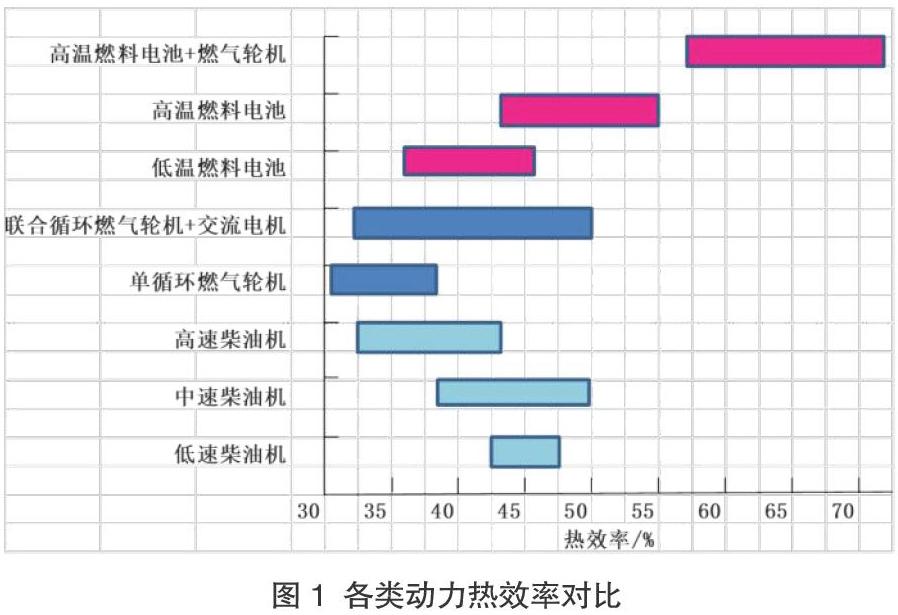
氢燃料电池是将氧气与氢气的化学能转换成电能的发电装置,生成物为水,具有高效、无污染、设备运行噪音低等特点。氢燃料电池具有广泛的应用前景,船舶采用氢燃料电池推进方案是其满足新法规要求的主要措施之一。……
