1059例慢性收缩性心力衰竭住院患者回顾性分析
2021-09-13方丽妮黄永方黄博黄照河
方丽妮 黄永方 黄博 黄照河

【摘要】 目的 回顧性分析慢性收缩性心力衰竭住院患者情况。
方法 收集2013~2018年右江民族医学院附属医院收治的1059例慢性收缩性心力衰竭患者资料,包括一般临床资料、合并症、心功能分级、治疗药物、治疗效果等,以2013~2014年、2015~2016年、2017~2018年3个不同时期分为三组,对住院患者进行回顾性分析比较。
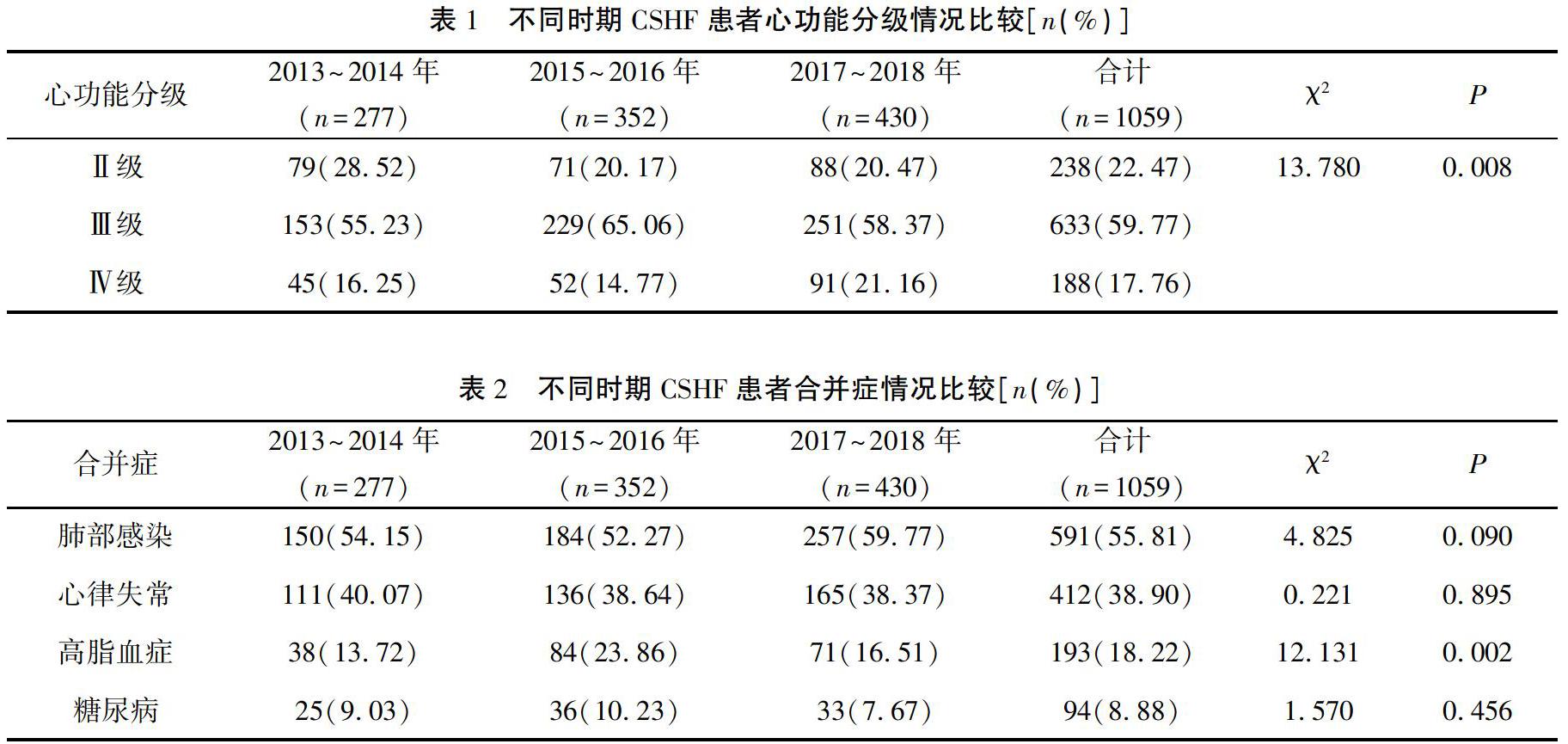
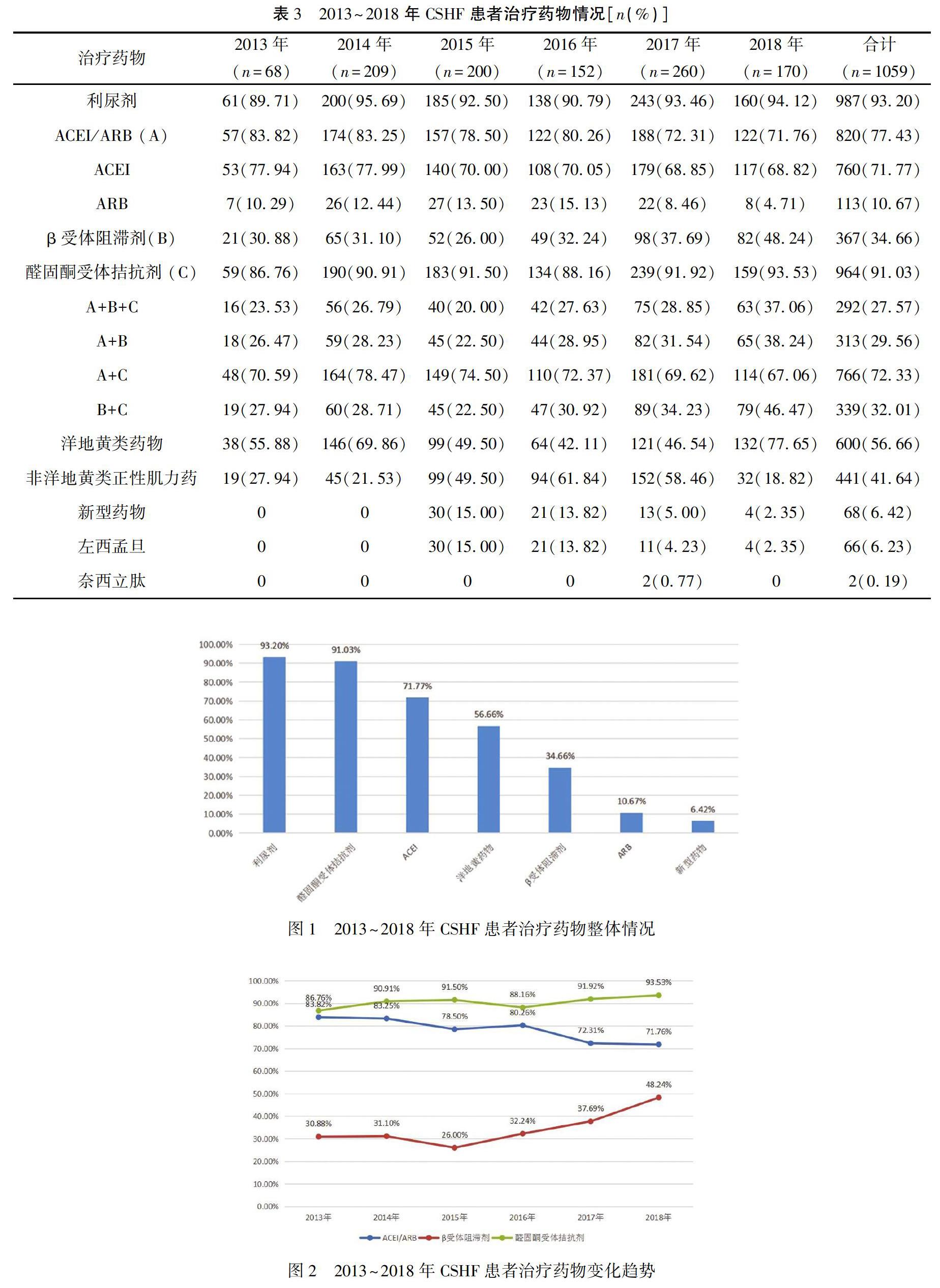
结果 研究对象中,以心功能NYHA Ⅲ级为主。合并症前三位为:肺部感染、心律失常、高脂血症。药物治疗所占比例如下:利尿剂占93.20%,比例最高;血管紧张素转换酶抑制剂(angiotensin converse enzyme inhibitor, ACEI)占71.77%;血管紧张素Ⅱ受体拮抗剂(angiotensin Ⅱ receptor blocker, ARB)占10.67%;β受体阻滞剂占34.66%;醛固酮受体拮抗剂占91.03%;ACEI/ARB、β受体阻滞剂、醛固酮受体拮抗剂三种药物联合使用占27.57%;洋地黄类占56.66%;非洋地黄类正性肌力药占41.64%;新型药物占6.42%。在2013~2014年、2015~2016年、2017~2018年3个不同时期,利尿剂、醛固酮受体拮抗剂、ACEI/ARB联合醛固酮受体拮抗剂使用比例差异无统计学意义(P>0.05),ACEI/ARB、ACEI使用比例下降,差异有统计学意义(P<0.05),ARB、β受体阻滞剂、ACEI/ARB与β受体阻滞剂及醛固酮受体拮抗剂联合、ACEI/ARB与β受体阻滞剂联合、β受体阻滞剂与醛固酮受体拮抗剂联合、洋地黄药物、非洋地黄类正性肌力药使用比例差异有统计学意义(P<0.05)。在2013~2014年、2015~2016年、2017~2018年3个不同时期,治疗效果差异有统计学意义(P<0.05)。1059例患者的治疗总有效率为96.13%。
结论 近6年慢性收缩性心力衰竭治疗药物仍以利尿剂为主,β受体阻滞剂的使用明显上升,慢性收缩性心力衰竭住院患者治疗总有效率较高。
【关键词】 慢性收缩性心力衰竭;住院患者;合并症;药物治疗;回顾性分析
中图分类号:R541.6 文献标志码:A DOI:10.3969/j.issn.1003-1383.2021.07.003
【Abstract】 Objective To retrospectively analyze the situation of inpatients with chronic systolic heart failure.
Methods Data of 1059 patients with chronic systolic heart failure admitted to the Affiliated Hospital of Youjiang Medical University for Nationalities from 2013 to 2018 were collected, including general clinical data, complications, cardiac function grading, therapeutic drugs, treatment effect, etc. All patients were divided into three groups according to three different periods (2013-2014, 2015-2016 and 2017-2018), and the inpatients were retrospectively analyzed and compared.
Results The subjects were mainly NYHA Ⅲ grade of cardiac function. The top three complications were pulmonary infection, arrhythmia and hyperlipidemia. The proportions of drug treatment were as follows: diuretics had the highest proportion, accounting for 93.20%; angiotensin converse enzyme inhibitor (ACEI) accounted for 71.77%; angiotensinⅡreceptor blocker (ARB) accounted for 10.67%; β-blockers accounted for 34.66%; aldosterone receptor antagonist accounted for 91.03%; the combined use of ACEI/ARB, β-blocker and aldosterone receptor antagonist accounted for 27.57%; digitalis accounted for 56.66%; non-digitalis positive inotropic drugs accounted for 41.64%; new drugs accounted for 6.42%. During 2013-2014, 2015-2016 and 2017-2018, there was no statistically significant difference in the proportions of diuretic, aldosterone receptor antagonist, ACEI/ARB combined with aldosterone receptor antagonist(P > 0.05), the proportion of ACEI/ARB and ACEI decreased, and the difference was statistically significant (P < 0.05). There were statistically significant differences in the proportions of ARB, β-blocker, ACEI/ARB combined with β-blocker and aldosterone receptor antagonist, ACEI/ARB combined with β-blocker, β-blocker combined with aldosterone receptor antagonist, digitalis drugs and non-digitalis positive inotrogenics (P < 0.05). In three different periods of 2013-2014, 2015-2016 and 2017-2018, there was statistically significant difference in treatment effects (P < 0.05). The total effective rate of 1059 patients in this study was 96.13%.
Conclusion In recent 6 years, diuretics are still the main drugs for treating chronic systolic heart failure, and the use of β-blockers has increased significantly. The total effective rate of treatment for inpatients with chronic systolic heart failure is higher.
【Key words】 chronic systolic heart failure; inpatients; complications; drug treatment; retrospective analysis
慢性收縮性心力衰竭(chronic systolic heart failure,CSHF)是各种心血管疾病的终末期表现,明显降低患者的生活质量[1]。2014年美国心脏病学会的研究数据表明,预计到2030年心力衰竭人数将超过800万[2]。亚洲流行病学报道,普通人群中心力衰竭的发病率从1.26%上升至6.7%[3]。同时,在2017年中国心血管疾病报告显示,中国心血管疾病现患人数约为2.9亿,其中心力衰竭有450万[4]。尽管……
