基于判别信息的复合核极限学习机算法
2021-09-13马斯宇刘德山闫德勤丁一民
马斯宇 刘德山 闫德勤 丁一民
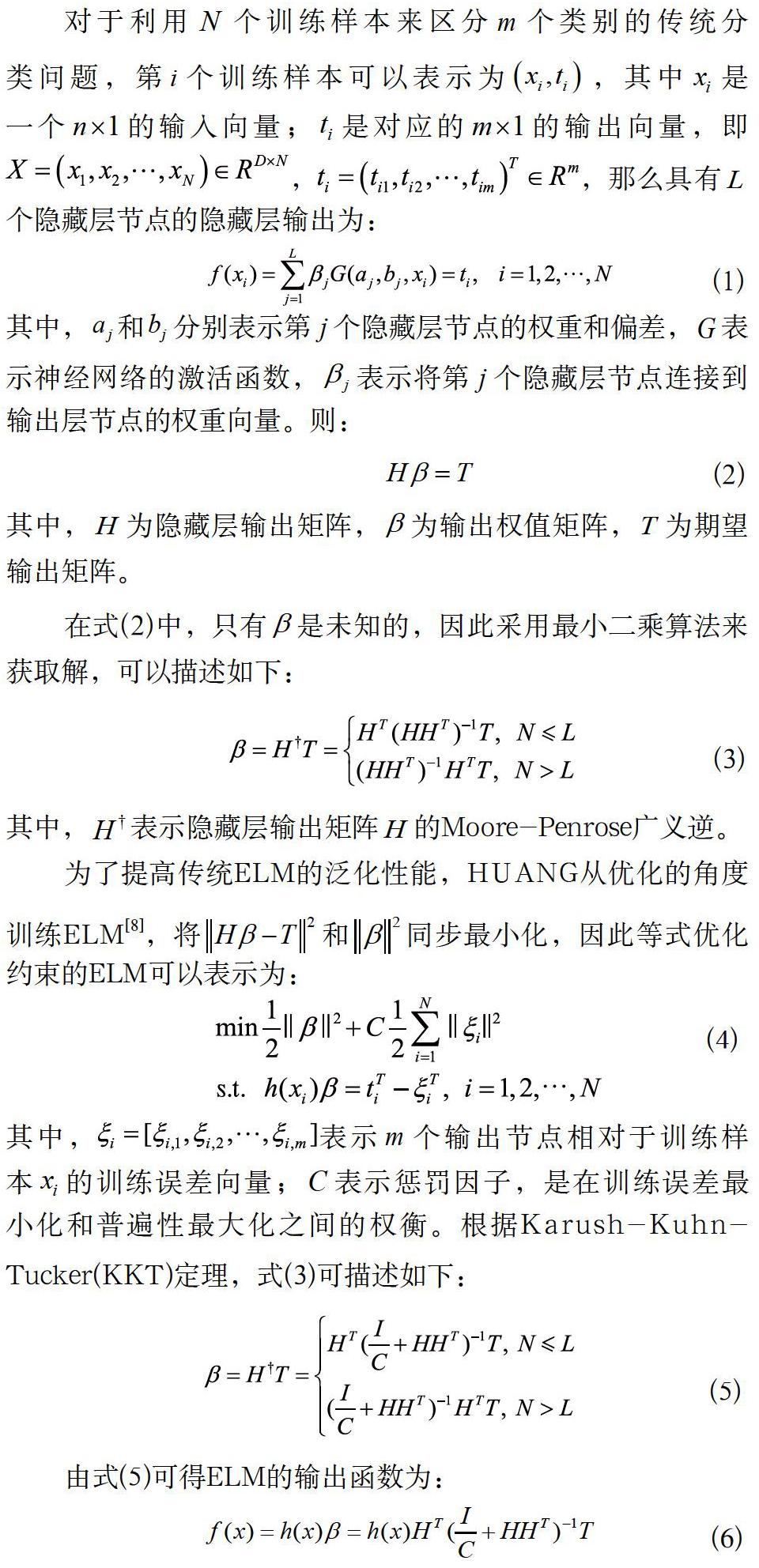
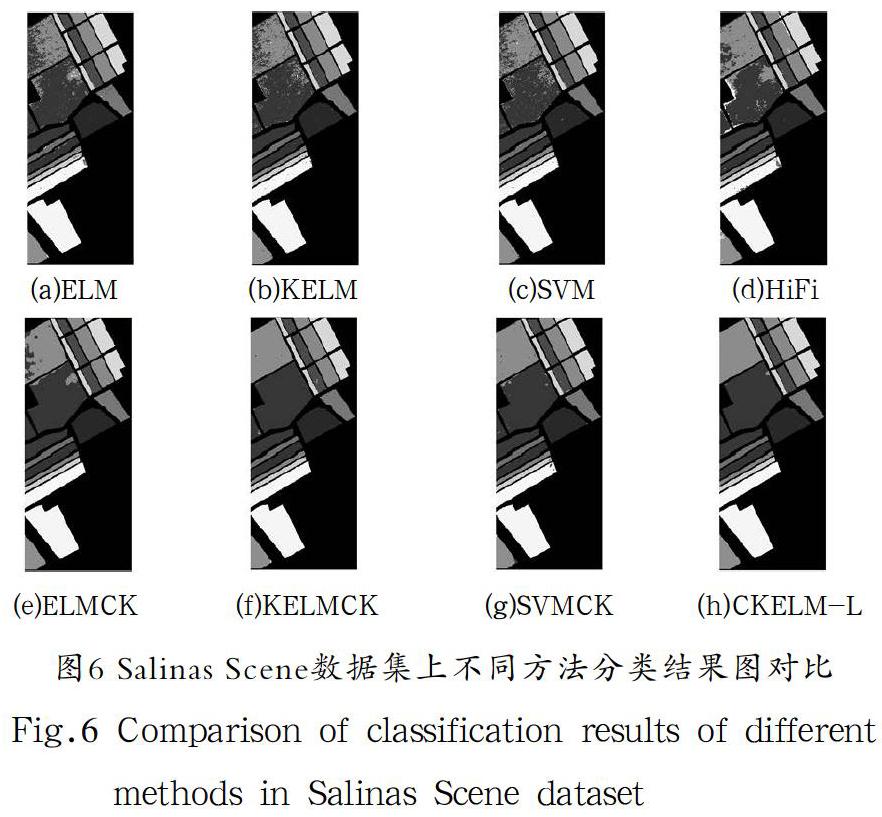
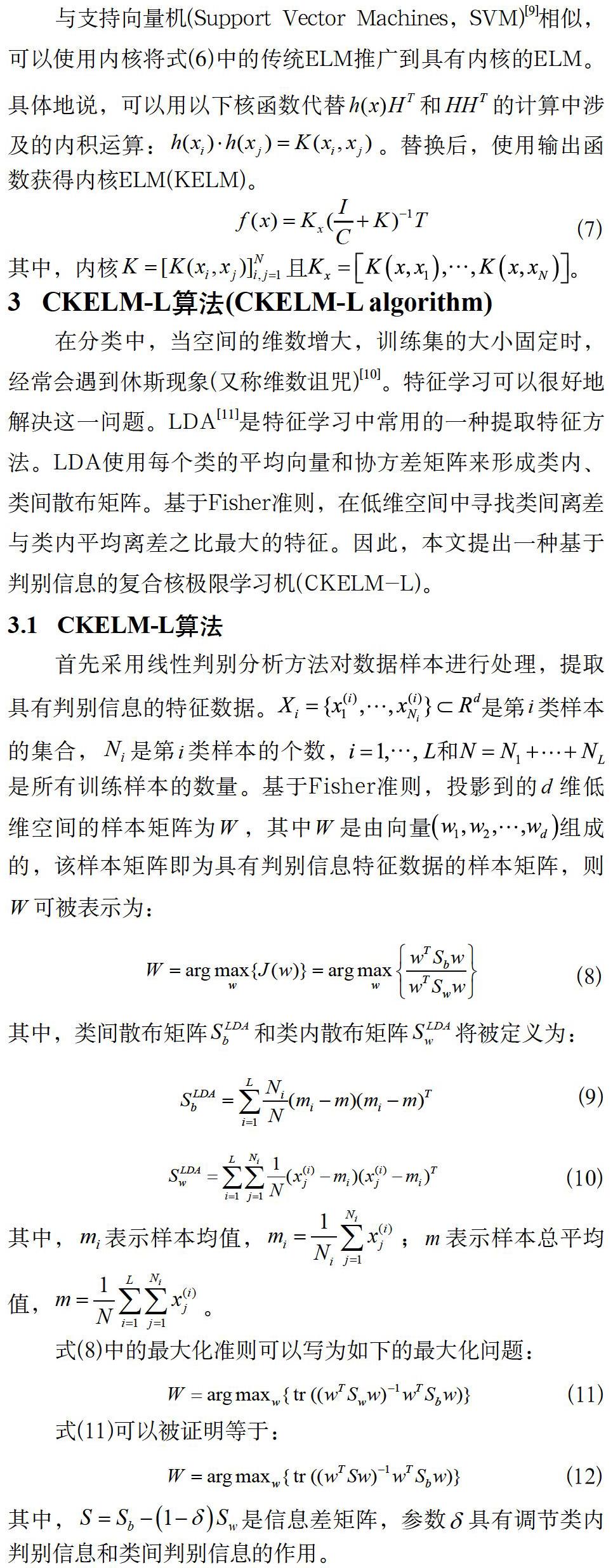
摘 要:高光谱图像包含光谱和空间信息,这增加了其在分类与识别方面的难度。特征学习作为高光谱图像分类技术之一,能较好地提取图像中包含的特征。针对经典极限学习机算法难以较好地提取光谱特征,引入特征学习技术,提出了一种基于判别信息的复合核极限学习机(CKELM-L)方法。CKELM-L通过最大化类间矩阵与最小化类内矩阵,使投影后的低维数据同类越近而异类越远。实验结果表明,所提方法保留了更好的光谱特征,计算复杂度低且实现了出色的可分离性。
关键词:极限学习机;高光谱图像分类;线性判别分析;特征学习
中图分类号:TP391 文献标识码:A
文章编号:2096-1472(2021)-09-32-06
Abstract: Hyperspectral images contain spectral and spatial information, which increases the difficulty of classification and recognition. Feature learning, as one of the hyperspectral image classification techniques, can better extract features contained in the image. Aiming at the difficulty of classical extreme learning machine algorithms in extracting spectral features, this paper introduced feature learning technology, and proposes a composite kernel extreme learning machine (CKELM-L) method based on discriminant information. CKELM-L maximizes the between-class matrix and minimizes the intra-class matrix, so that the projected low-dimensional data is closer to the same class and farther away from the different class. Experimental results show that the proposed method retains better spectral features, low computational complexity and achieves excellent separability.
Keywords: extreme learning machine; hyperspectral image classification; linear discriminant analysis; feature learning
1 引言(Introduction)
高光谱图像(Hyperspectral Image, HSI)包含大量数据和冗余信息,并且波段间具有高度相关性[1]。因此,在不丢失有用信息的前提下,高光谱图像的特征学习[2]可以获得更准确、可靠的信息。
HUANG等人提出了一种基于单隐层前馈神经网络的求解方法——极限学习机(Extreme Learning Machine, ELM)[3],与传统的神经网络相比,其学习速度较快,泛化性能较好。但ELM及其改进算法并未充分考虑HSI分布信息中的判別特征和数据中的局部几何结构。引入特征学习技术[4]可以解决上述问题。线性判别分析(Linear Discriminant Analysis, LDA)[5-6]是一种有效的特征学习技术,主要用于图像分类和特征缩减[7]。本文提出一种基于判别信息的复合核极限学习机(CKELM-L)。对于数据样本分类问题,CKELM-L可以考虑到数据样本中的局部几何结构和图像分布信息中的判别特征,通过最大化类间距离和最小化类内距离,优化极限学习机的输出权重,增强KELM在有限的高光谱图像训练样本下的分类性能,从而在一定程度上提高ELM的学习速度、泛化性能及辨识精度。……