敦煌岷州庙塔发愿文补释
2021-09-12陈浩
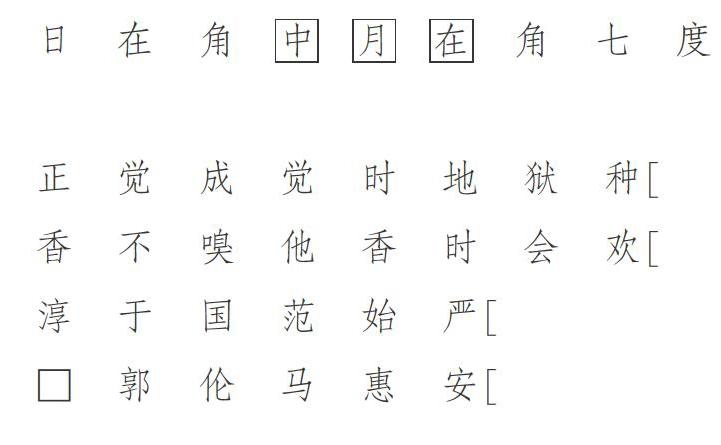
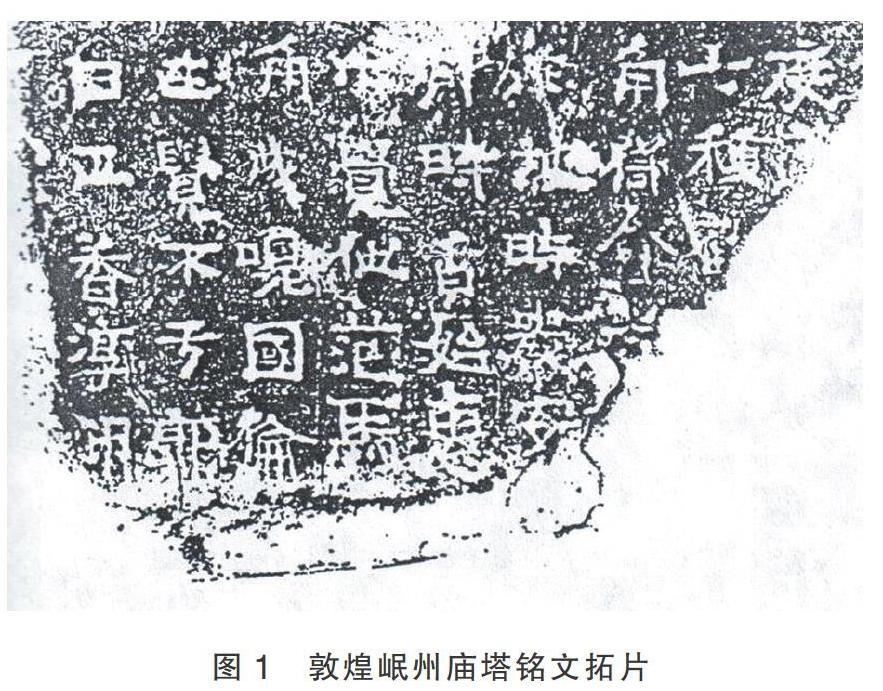

内容摘要:敦煌岷州庙塔是14座北凉石塔中唯一一座有婆罗迷文字的石塔,显得很特别。岷州庙塔发愿文是用汉文书写,却不符合汉语的书写习惯,采用从左向右横写的方式。长期以来,学者们始终没能完全读通岷州庙塔上汉文发愿文的内容。笔者通过仔细辨认石塔拓片上的文字,并参阅正史中的天文历法记录,补释了其中“日在角中,月在角七度”一段文字。“中”字,前辈学者皆录作“七”。仔细辨认拓片可以发现,“中”字左边的一竖是可以识别出来的。“日在角中,月在角七度”说明日月同廛角宿,是新月的天象,前此一两天,日月合朔。《晋书·律历志》载秋分时节太阳在角宿“五弱”,“弱”是十二分之一度,而角宿共十二度,那么可以认为太阳的位置在“角中”。《晋书》虽为唐代所修,但其记载的天象是晋代的,与石塔的年代相去不远,即使考虑到岁差的存在,秋分点也不会有太大的变化,所以“日在角中”应该是在秋分时节左右观测的天象。
关键词:岷州庙;石塔;《玄始历》;河西文化
中图分类号:K879.26;K871.45 文献标识码:A 文章编号:1000-4106(2021)03-0079-07
Abstract:Among the 14 Northern Liang stone pagodas at Dunhuang, the one preserved in the Minzhou Temple is the only pagoda with a votive text in Brahmi script. The bilingual votive text is engraved in both Brahmi and Chinese but the Chinese is written horizontally from left to right rather than the customary top to bottom of traditional Chinese. For a long time, the content of the Chinese text was not fully deciphered, but by carefully reading stone rubbings of the text and by consulting the astronomical and calendrical records in official historical documents, the author of this paper presents a supplementary interpretation of an important paragraph of this votive text. The passage reads:“The sun lies in the center of the Jiao constellation, the moon at the seventh degree of Jiao”(日在角中,月在角七度). The word for “center”(中zhong)was previously transcribed as “seven”(七qi), but a careful reexamination suggests that there is a vertical stroke to the left of the character. The above sentence therefore indicates the relative positions of the sun and the moon in the celestial sphere, suggesting that it was time for the crescent moon to appear. Two days previous to this date, the sun and the moon would have been located along the same longitude and the moon would not been visible from earth. By analyzing the astronomical records in official annals like the Book of Jin, the author comes to the conclusion that the time the votive text records is likely near the Autumn Equinox(秋分qiufen). Further, it can be determined that the calendar on which the votive text was based is the Xuanshi Calendar (玄始歷xuanshili), which was published between 421 and 423 CE.
Keywords:Minzhou Temple; stone pagoda; Xuanshi Calendar; Hexi culture
一 岷州庙塔铭文考释
敦煌岷州庙塔是由向达先生于1943年在敦煌岷州坊的一座庙里发现的,当时石塔已经被乡人改作压场的碌碡[1]。岷州庙塔残损严重,残高96cm,直径约48cm,塔肩残存5尊龛像,塔腹残存一段婆罗迷文字和两段汉文[2]。因为铭文中没有明确的纪年,所以学者们只能根据形制特征和铭文字体来推测此塔的年代,例如向达先生认为“字是六朝人隶书”,戈哈里教授(V.V.Gokhale)认是5世纪中叶的产物[3]。……