基于k-临近算法构建大棚番茄灰霉病预警及其生物农药干预系统
2021-08-23李映葛喜珍
李映 葛喜珍
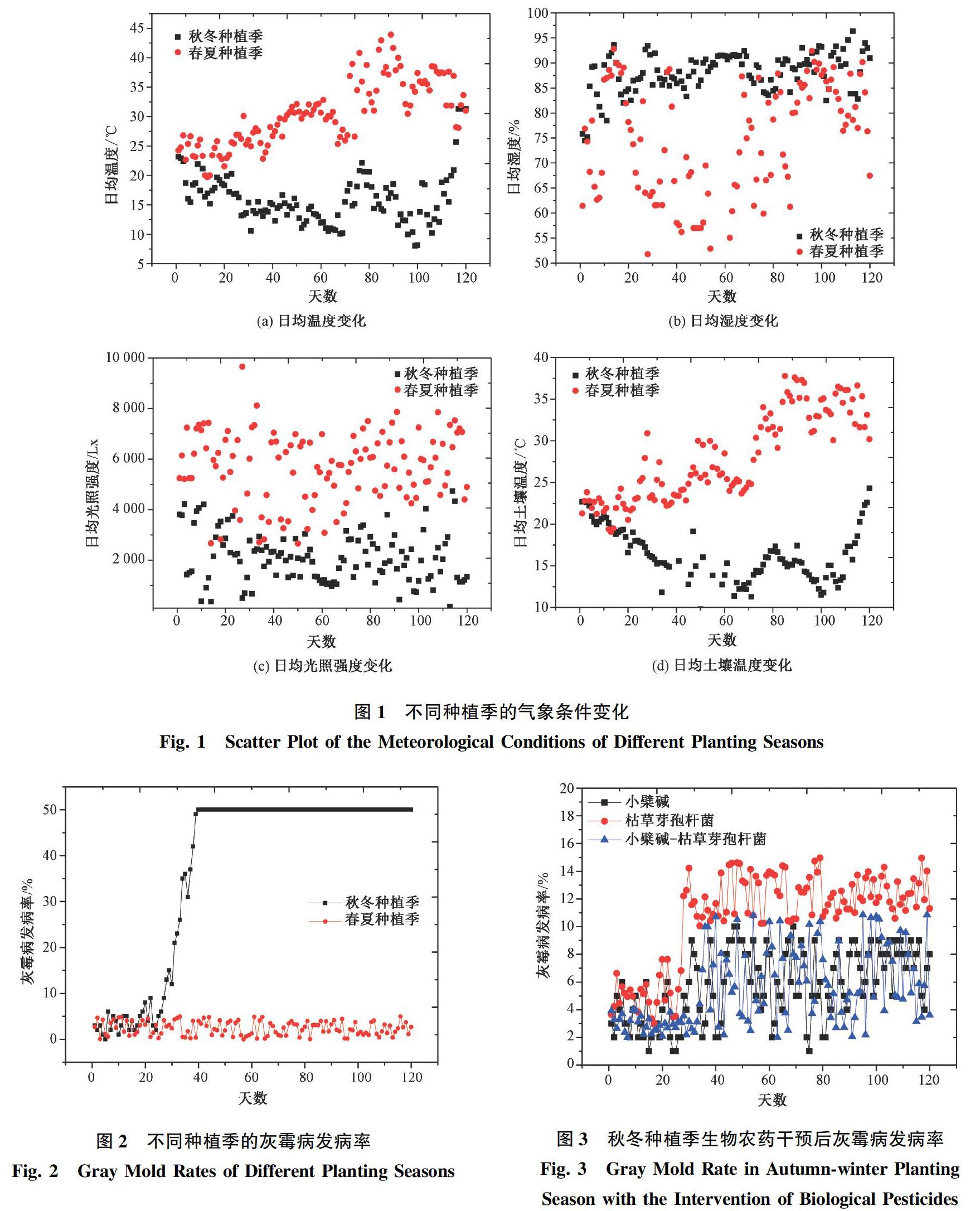
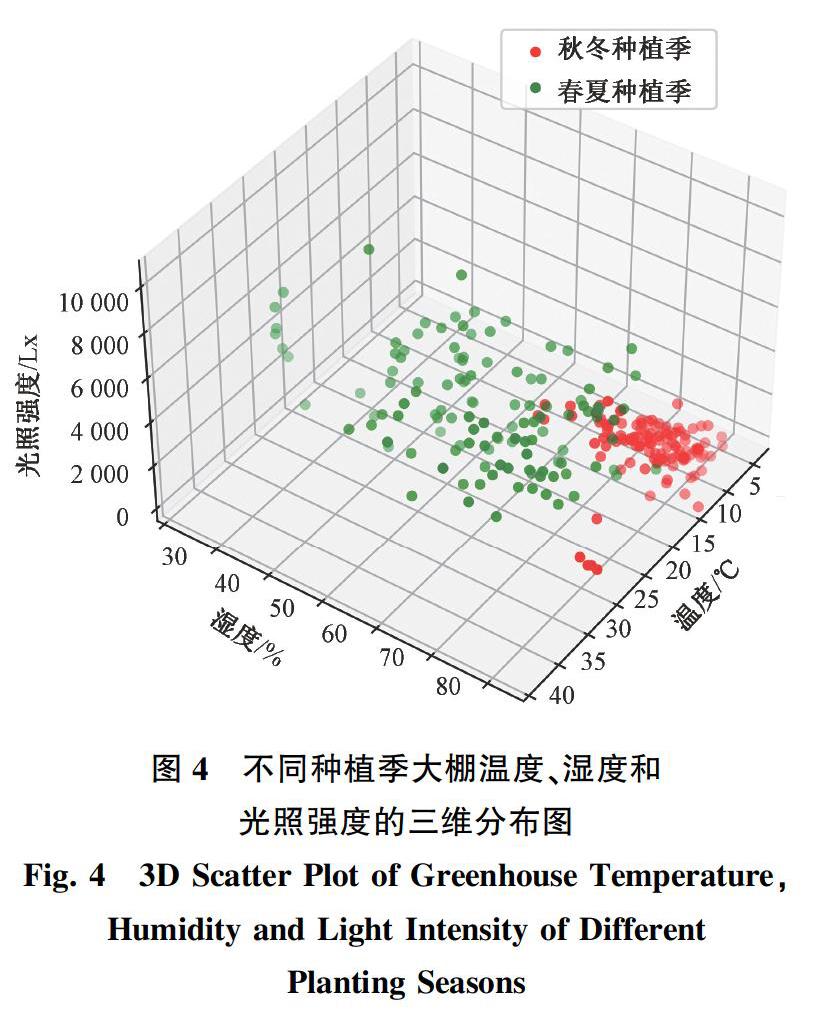
[摘 要] 采用大棚气象条件监测系统记录了大棚番茄两种种植季的温度、湿度和光照的变化,结合大棚番茄灰霉病发病率的规律,使用机器学习中的k-临近算法构建了大棚番茄种植过程中的灰霉病预警系统。监测结果表明,生物农药小檗碱或枯草芽孢杆菌均可针对灰霉病的发生起到良好的预防作用,且小檗碱的预防作用更佳,可将发病率控制在5%以下。运用该种预警系统与生物农药干预的结合,为大棚番茄灰霉病的防治提供了良好的理论基础。
[关键词] 大棚番茄;灰霉病;生物农药;预警系统
[中图分类号] S 436.412.13
[文献标志码] A [文章编号] 1005-0310(2021)03-0066-04
Abstract: An early-warning system on tomato gray mold was established based on the greenhouse temperature, humidity, light intensity and incidence rate during two planting seasons. The k-approaching algorithm in machine learning was used for calculation of the possibility of gray mold. At the same time, the results indicated that biological pesticide berberine and Bacillus subtilis are useful for prevention of gray mold, and berberine displayed better result of less than 5% of total gray mold rate. These early-warning system and biological pesticide intervention system are promising for the control of gray mold in greenhouse planting.
Keywords: Greenhouse tomato;Gray mold;Biological pesticide;Early-warning system
0 引言
灰霉病是大棚番茄种植过程中的常见病害,其发病率高、传播性强、难以防治,极易造成大棚作物的减产甚至绝收[1]。灰霉病可侵蚀番茄的叶片、茎、花和果实,且在温度低、湿度大的环境下发病率更高。近年来随着大棚作物种植面积的增加,大棚番茄灰霉病的发生非常普遍,且长期大量使用化学农药如多菌灵、腐霉利等,造成了灰霉病对化学农药抗性的提高[2]。因此,构建大棚番茄灰霉病的预警机制及使用生物农药预防灰霉病的发生,成为解决该问题的关键。
相比于化学农药,生物农药有环境友好、不易产生抗性、不伤害天敌等多种优势。在灰霉病防治的应用中,小檗碱、枯草芽孢杆菌、木霉菌、苦参碱等一系列生物农药展现出了极好的效果和应用前景[3]。然而生物农药的成本普遍高于化学农药,使得种植过程成本提高,因此农民对生物农药的使用产生了抵触心理。……