自然保护区周边社区食用菌产业发展模式研究
2021-07-16杨顺强杨科吴银梅黄朝富杨成翠唐忠艳李柒玉龙
杨顺强 杨科 吴银梅 黄朝富 杨成翠 唐忠艳 李柒玉龙
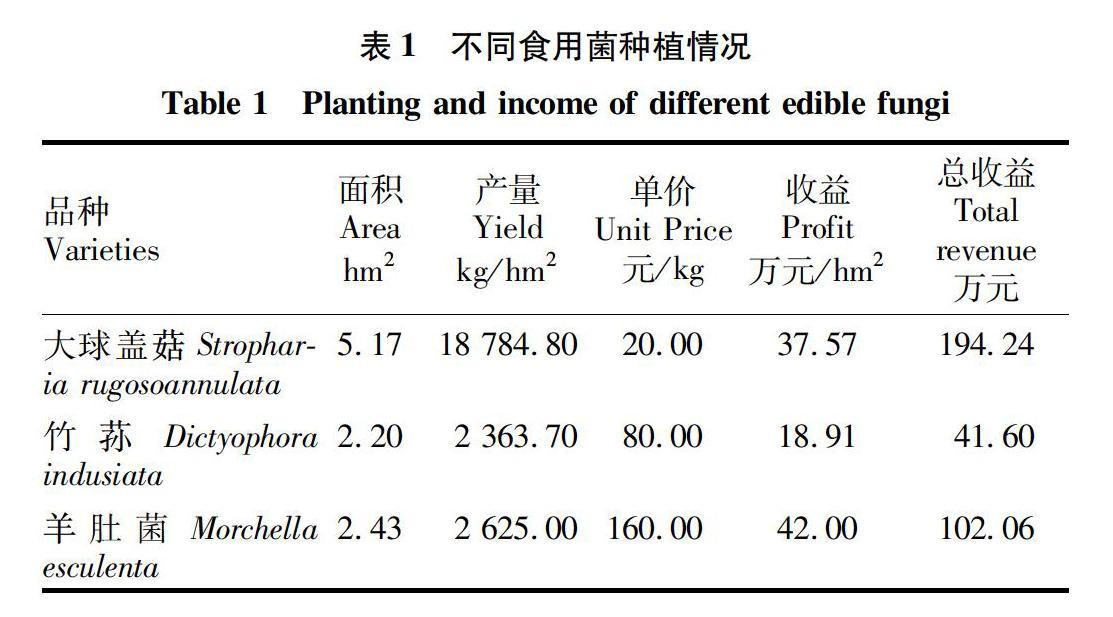
摘要 以云南乌蒙山国家级自然保护区为例,在保护区周边社区推广种植大球盖菇、竹荪、羊肚菌和猴头菇,4种食用菌鲜菇产量分别达18 784.80、2 363.70、2 625.00 kg/hm2和0.95 kg/袋;采用“管护局+当地高校+种植户”的推广种植模式,通过管护局的组织管理、当地高校的技术支撑和种植户的积极参与,保障了项目的有序、高效推进;食用菌栽培资源化利用了1 000余t农林业废弃物。该项目促进了周边社区产业发展,实现了生态保护与社区发展的协调统一,为自然保护区的保护管理和社区发展提供了有效途径。
关键词 云南乌蒙山;社区发展;食用菌;自然保护区
中图分类号 S-7-9 文献标识码 A 文章编号 0517-6611(2021)11-0119-02
doi:10.3969/j.issn.0517-6611.2021.11.033
开放科学(资源服务)标识码(OSID):
Study on the Development Model of Edible Fungi Industry in the Communities around the Nature Reserve—A Case Study of Wumengshan National Nature Reserve in Yunnan
YANG Shun-qiang1, YANG Ke2, WU Yin-mei1 et al
(1.College of Agronomy and Life Sciences, Zhaotong University, Zhaotong, Yunnan 657000;2. Administration Bureau of Wumengshan National Nature Reserve, Zhaotong, Yunnan 657000)
Abstract Taking the Wumengshan National Nature Reserve in Yunnan as an example, the project promoted the cultivation of Stropharia rugosoannulata, Dictyophora indusiata, Morchella esculenta and Hericium erinaceus in the surrounding communities of the protected area, the yields of four kinds of edible fungi were 18 784.80,2 363.70,2 625.00 kg/hm2 and 0.95 kg/bag, respectively;adopting the mode of “management and protection bureau + local universities + growers”, through the organization and management of management bureau, technical support of local universities and active participation of growers, the orderly and efficient progress of the project is ensured;more than 1 000 tons of agricultural and forestry wastes were utilized in the cultivation of edible fungi. The project promotes the development of the surrounding community industry, realizes the coordination and unity of ecological protection and community development, and provides an effective way for the protection management and community development of nature reserves.
Key words Wumengshan of Yunnan;Community development;Edible fungi;Nature reserve
自然保護区是指对有代表性的自然生态系统、珍稀濒危野生动植物物种的天然集中分布区、有特殊意义的自然遗迹等保护对象所在的陆地、水体或海域,依法划出一定面积予以特殊保护和管理的区域[1]。自然保护区的建立对社区发展有多方面影响,Eagleston等[2]研究认为,自然保护区建立能够促进周边社区发展,自然保护与社区发展是互惠互利的;自然保护区的建立可同时调动社区农户参与资源保护和经济发展的积极性,生态保护的主体功能与促进社区管理、经济和文化发展等功能是融为一体的[3];张引等[4]研究认为,自然保护区的资源保护与社区利益存在冲突,主要体现在权属混乱、体制不顺、资金缺位、法律缺失、思想不一、能力不够、方法不当和研究不足等方面。……