河南部分地区番茄黄化曲叶病毒和番茄褪绿病毒复合侵染的分子鉴定
2021-06-30王东刘帅张燕杨世玮苏玉静陈红旭丁飞薛东齐贾芝琪
王东 刘帅 张燕 杨世玮 苏玉静 陈红旭 丁飞 薛东齐 贾芝琪
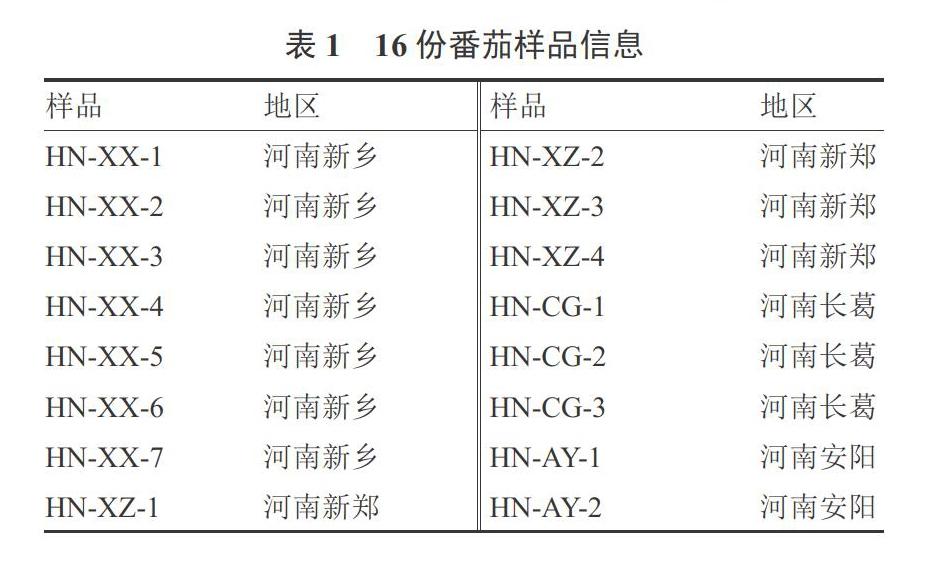
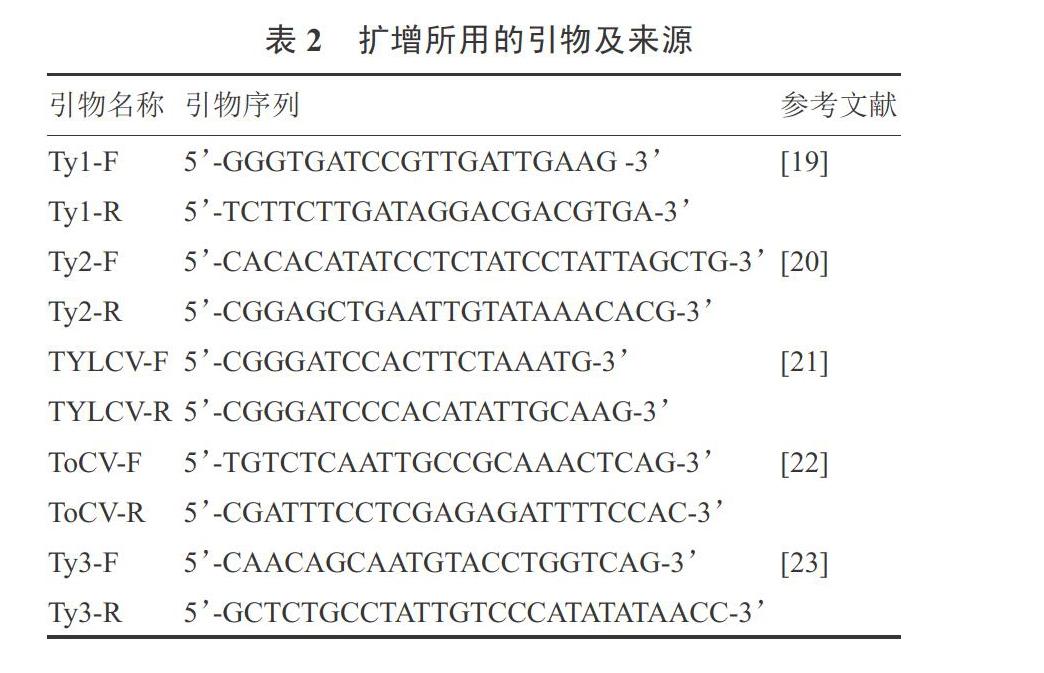

摘 要:为调查河南省部分地区番茄病毒病危害情况,于2019年10月采集16份表现黄化、曲叶症状的番茄植株,利用分子生物学技术对其进行鉴定。结果表明:供试样品均被TYLCV(Tomato yellow leaf curl virus)侵染,31.75%的样品被TYLCV和ToCV(Tomato chlorosis virus)复合侵染;DNA全序列比对分析发现,供试样品中分离的TYLCV河南菌株与TYLCV-Is等地区的核苷酸序列同源性均达到94%以上,其中TYLCV-HN-AY-1分离物与TYLCV-Almeria(NC004005.1)序列相似性最高,为99.5%;对供试样品TYLCV抗病基因分子检测发现,部分番茄样品含有Ty-1、Ty-2、Ty-3/Ty-3a,表明部分TYLCV株系已突破Ty-1、Ty-2、Ty-3/Ty-3a的抗性。该结果对指导河南省番茄的安全生产具有重要意义。
关键词:番茄;黄化曲叶病毒;番茄褪绿病毒;复合侵染
中图分类号:S641.2+S436.412.1+1 文献标志码:A 文章编号:1673-2871(2021)02-012-006
Molecular identification of Tomato yellow leaf curl virus and Tomato chlorosis virus in some areas of Henan province
WANG Dong, LIU Shuai , ZHANG Yan, YANG Shiwei, SU Yujing, CHEN Hongxu, DING Fei, XUE Dongqi, JIA ZhiqiA
(College of Horticulture, Henan Agricultural University, Zhengzhou 450002, Henan, China)
Abstract: In order to investigate the damage of tomato virus disease in some areas of Henan province, 16 tomato samples with symptoms of yellow leaf curl were collected in October 2019 and identified by molecular biology techniques.Results showed that the samples were all infected by TYLCV(tomato yellow leaf curl virus), and 31.75% of the samples were infected by TYLCV and ToCV(tomato chlorosis virus). DNA sequence alignment analysis showed that the nucleotide sequence homology between the Henan isolates and other regions reached over 94%. The sequence identity between TYLCV-HN-AY-1 and TYLCV-Almeria (NC004005.1) isolation is 99.5%. The detection of TYLCV resistance genes found that some tomato samples contained TYLCV resistance genes Ty-1, Ty-2 and Ty-3/Ty-3a, indicating that TYLCV Henan strains have broken the resistance of Ty-1, Ty-2 and Ty-3/Ty-3a. The results are of great significance to guide the safe production of tomato in Henan Province.
Key words: Tomato; Tomato yellow leaf curl virus(TYLCV); Tomato chlorosis virus(ToCV); Mixed infections
番茄黃化曲叶病毒(Tomato yellow leaf curl virus,TYLCV)属于双生病毒科(Geminiviridiae)菜豆金色花叶病毒属(Begomovirus)。该病毒由烟粉虱传播,发病迅速,严重危害番茄生产,甚至导致番茄绝产[1]。番茄感病植株表现为植株生长发育缓慢、矮化,节间明显变短,叶片变厚、变小,叶片边缘至叶脉区域黄化,叶缘向上卷曲,果实坐果数量明显减少,且易出现变小和畸形[2]。TYLCV首次在以色列被发现,然后随着媒介烟粉虱的传播在全球范围内大暴发,我国在2006年首次在上海检测到TYLCV后,北京、河北、河南、浙江等20个省市的番茄产区陆续检测到该病毒,给番茄生产带来巨大影响,造成严重的经济损失[1,3-5]。番茄褪绿病毒(Tomato chlorosis virus,ToCV)是由烟粉虱传播的单链RNA病毒,属于长线型病毒科(Closteroviridae)毛形病毒属(Crinivirus),番茄感病植株主要表现为叶片褪绿和黄化症状,在番茄生产上常被误认为缺素症,导致诊断和防治的延误。……