沙地节水莲-渔共作对莲藕生长发育、品质的影响及效益评价
2021-06-30王文斌王磊刘金文张趁玲王金方李海萍
王文斌 王磊 刘金文 张趁玲 王金方 李海萍
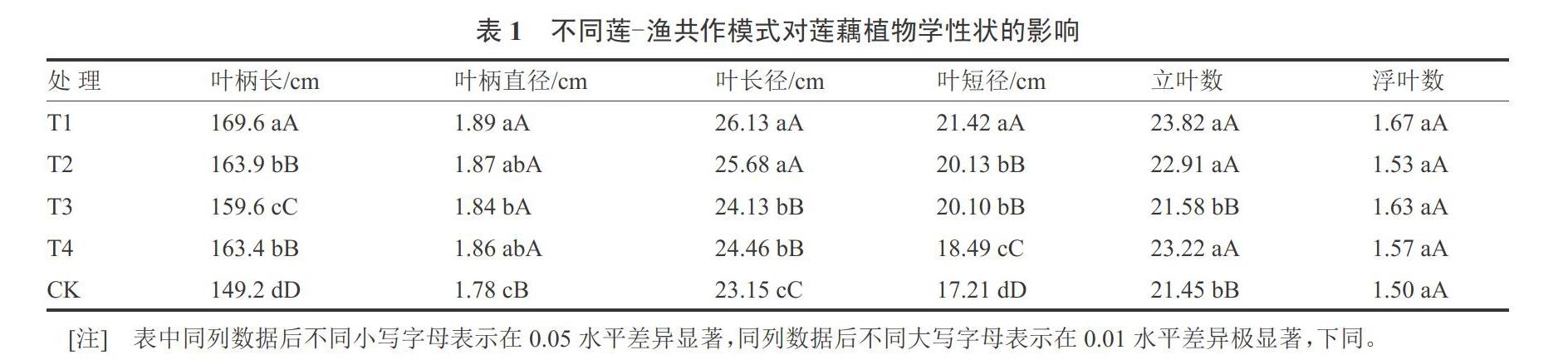

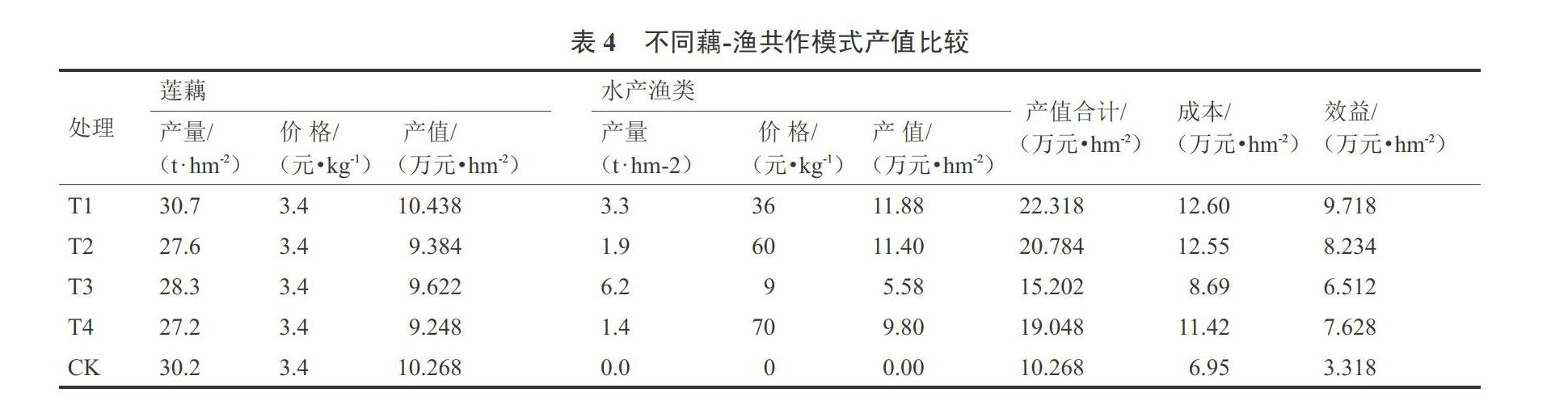
摘 要:研究了不同蓮-渔共作的生态种养模式对莲藕的生长发育、产品商品性、营养品质及经济效益的影响。结果表明,莲-渔共作模式有利于莲藕的生长发育和营养品质的提升。其中,T1莲-鳅共作模式处理表现最好,其莲藕根状茎的全藕质量、主藕质量、最大藕节质量分别为1.58 kg、1.39 kg和423 g,与对照相比分别提高了29.5%、36.3%和6.3%;在莲藕根状茎营养品质方面,T1处理莲藕产品的粗蛋白、淀粉、还原糖、粗纤维、维生素C含量均高于其他处理及对照,T1处理莲藕产品的氨基酸总量低于其他共生处理而高于对照,T1处理莲藕产品的硝酸盐含量低于其他共生处理并显著低于对照;在效益方面,T1处理增产效益最高,达97 180元·hm-2,比对照增加64 000元·hm-2,T2莲-小龙虾共作模式与T4莲-大闸蟹共作模对莲藕幼芽破坏较大,造成莲藕产量降低,但这2个处理的水产品产值较高,弥补了莲藕产量的产值损失,其经济效益均高于对照,而T3莲-鲤共作模式处理的增产效益最小,也比对照增加31 940元·hm-2。综上所述,沙地节水莲-渔共作模式中以T1处理表现最佳,值得在生产中推广应用。
关键词:莲藕;种养结合;生长发育;营养品质;经济效益
中图分类号:S645.1 文献标志码:A 文章编号:1673-2871(2021)02-036-006
Effect of water-saving and fish farming on the growth and quality of lotus root and benefit evaluation
WANG Wenbin, WANG Lei, LIU Jinwen, ZHANG Chenling, WANG Jinfang, LI Haiping
(Zhongmou County Agricultural and Rural Work Committee, Zhongmou 451450, Henan, China)
Abstract: The effects of different lotus-fish farming models on the growth and development of lotus roots, product commercialization, nutritional quality and economic benefits were investigated in this research. The results showed that the lotus-fish cooperative mode was beneficial to the growth and development of lotus root and the improvement of nutritional quality. Among them, the T1 treatment performed the best, the total lotus root weight, main lotus root weight, and maximum lotus root weight of the lotus root were 1.58 kg, 1.39 kg, and 423 g, respectively, which were increased by 29.5%, 36.3% and 6.3% when compared with the control. In terms of nutrient quality of lotus root, the crude protein, starch, reducing sugar, crude fiber, and vitamin C content of lotus root treated by T1 were higher than those of other treatments and control, while the total amino acid amount was lower than those of other treatments and higher than it of the control, and the nitrate content of lotus root treated by T1 was lower than those of other treatments and significantly lower than it of control. In terms of benefits, T1 treatment was found the highest benefit, reaching 97 180 yuan·hm-2, which was higher than that of the control, which increased by 64 000 yuan·hm-2, the lotus root buds were damaged by the T2 and T4 treatments, resulting in a decrease in lotus root production, however, the output value of aquatic products of these two treatments was higher, which made up for the output value loss of lotus root, and their economic benefits were all higher than that of the control. The T3 treatment showed the smallest benefit increase, but increased by 31 940 yuan·hm-2 compared with the control. It was concluded that T1 treatment was the best, and it was worthy of popularization and application in production.
Key words: Lotus root;Combination of planting and raising;Growth and development;Nutritional quality;Economic benefit
莲藕(Nelumbo nucifera Gaertn)是我国重要的水生蔬菜之一,栽培历史悠久,常年种植总面积达50万~70万hm2,总产量1 122万t以上[1]。沙地节水莲藕栽培最早于20世纪90年代末在河南省新郑市推广应用,主要采用塑料薄膜垫底、井水灌溉方式,具有省工、节约水肥、管理方便、无污染、产量高、品质好、效益高等特点,是一项合理开发“三荒”资源、改善生态环境、调整农业结构、提高农民收入的富民工程[2]。……