海绵城市理念下开封市雨水资源利用效益分析
2021-03-28刘翠冯峰靳晓颖
刘翠 冯峰 靳晓颖
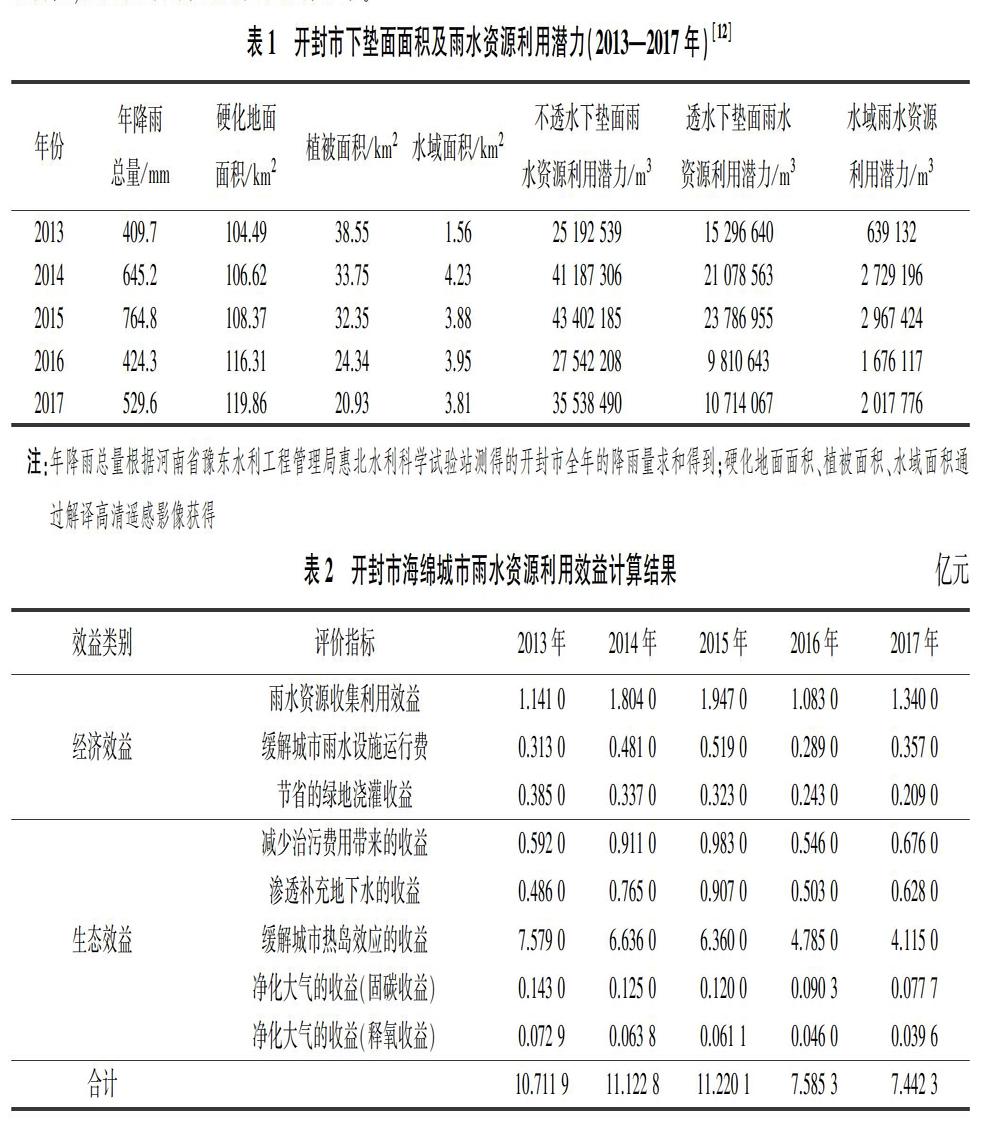

摘 要:针对开封市海绵城市雨水资源利用效益问题,首先基于扩散效益树方法,遵循“渗、滞、蓄、净、用、排”海绵城市建设关键技术,识别海绵城市雨水资源利用产生效益,并进行归类;然后构建海绵城市雨水资源利用效益量化模型;最后量化计算开封市雨水资源利用所产生的经济效益和生态效益,并对社会效益进行定性分析。结果表明:开封市雨水资源利用产生的效益可观,2013—2017年的经济效益、生态效益总和分别为10.711 9亿、11.122 8亿、11.220 1亿、7.585 3亿、7.442 3亿元。
关键词:海绵城市;雨水资源;利用效益;模型构建;开封市
Abstract:In order to provide theoretical basis and technical reference for the construction of sponge city in Kaifeng, this paper analyzed the benefits brought by the utilization of rainwater resources. Firstly, based on the method of diffusion benefit tree and following the key technology of sponge city construction of “infiltration, stagnation, storage, net, utilization and drainage”, it identified the benefit of the utilization of rainwater resources in sponge city and classified them. Then, taking kaifeng as an example, a quantitative model of utilization efficiency of rainwater resources was constructed. Finally, the economic and ecological benefits were calculated quantitatively and the social benefits were analyzed qualitatively. The results show that rainwater resources produces considerable benefits, the total economic and ecological benefits are 1.071 19 billion Yuan, 1.112 28 billion Yuan, 1.122 01 billion Yuan, 758.53 million Yuan and 744.23 million Yuan respectively from 2013 to 2017.
Key words: sponge city; rainwater resources; utilization benefit; model building; Kaifeng City
随着城市建设的快速发展,地面硬化面积不断扩大,部分城区存在排水管网系统设计标准低等问题,导致城市内涝频繁出现,加剧了城市水环境恶化。同时,城市人口不断增加引起城市用水量增加,水资源短缺是不少城市發展面临的重大问题。习近平总书记在2013年中央城镇化工作会议上明确指出:解决城市缺水问题,必须顺应自然,要优先考虑把有限的雨水留下来,优先考虑更多利用自然力量排水,建设自然积存、自然渗透、自然净化的海绵城市[1]。通过海绵城市建设,科学、合理、高效地利用城市雨水资源,充分发挥雨水资源的利用效益是我国生态文明建设的一项重要任务。
在我国,海绵城市雨水资源利用是最近几年的新兴产业,关于海绵城市雨水资源利用效益的研究,目前主要集中在单项利用措施的效益研究方面,对区域性海绵城市雨水利用效益的研究较少。……