标准化生产牦牛不同肌肉组织中矿物质元素含量研究
2021-03-01李铸吴锦波何世明余忠华王泰塔英谭本旭
李铸 吴锦波 何世明 余忠华 王泰 塔英 谭本旭
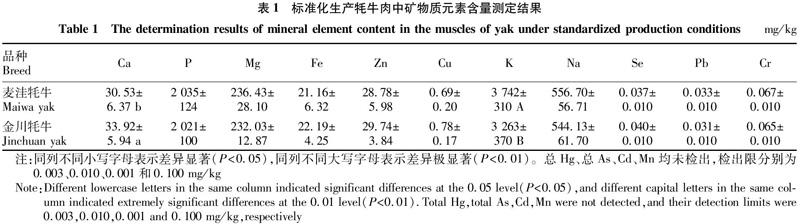
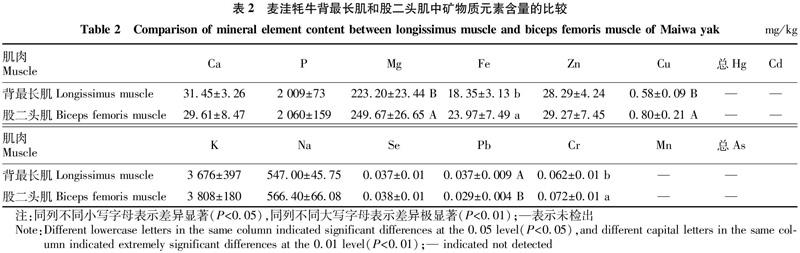
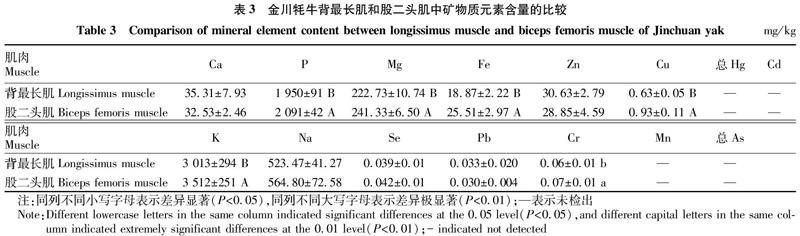
摘要 为研究标准化生产牦牛不同肌肉组织中矿物质元素含量差异,选取年龄和体重相近的麦洼牦牛和金川牦牛各15头,标准化饲养100 d后进行屠宰,采集背最长肌和股二头肌样品测定Ca、P、Mg、K、Na、Fe、Zn、Cu、Mn、Cr等矿物质元素的含量,测定总Hg、总As、Pb、Cd等重金属的含量。结果表明:除个别元素外,标准化生产出栏的牦牛股二头肌中矿物元素含量普遍高于背最长肌;在2种牦牛肌肉中仅检测到Pb,且其含量远低于限定值。这说明经标准化生产出栏的牦牛肉富含各种矿物质元素且无重金属污染,是一种值得推广的优质肉类。
关键词 标准化生产;矿物质元素;牦牛肉;麦洼牦牛;金川牦牛
中图分类号 S823.8+5 文献标识码 A 文章编号 0517-6611(2021)01-0080-03
doi:10.3969/j.issn.0517-6611.2021.01.021
Abstract In order to study the content differences of mineral elements in different muscle tissues of yak under standardized production conditions, we selected 15 Maiwa yaks and 15 Jinchuan yaks with similar age and body weight. Then all the animals were slaughtered after breeding 100 days. Samples of the longissimus muscle and biceps femoris muscle were collected to determine the content of mineral elements such as Ca, P, Mg, K, Na, Fe, Zn, Cu, Mn and Cr, as well as heavy metal elements such as Hg, As, Pb, Cd. The results showed that the content of mineral elements in the femoral biceps muscle of yaks under standardized production conditions were higher than that of the longissimus muscle except for several kinds of elements. Only Pb content in the muscles of two breeds of yaks was far lower than the limit value. The above results showed that yak muscle was rich in various kinds of mineral elements and free from heavy metal pollution, which was a kind of high quality meat and worthy of market promotion.
Key words Standardized production;Mineral elements;Yak meat;Maiwa yak;Jinchuan yak
牦牛属青藏高原特有的家畜品种之一,自驯化饲养以来长期采用靠天养畜的养殖方式,养殖方式相对原始且经济效益低,常常出现产犊率低、出栏率低和牛肉品质低劣等现象。受自然环境的影响,高原藏区的种植业受到极大限制,绝大多数地区畜牧业居于主导地位;在纯牧区,畜牧业产值占农业总产值的90%以上,即使在半农半牧区畜牧业产值也占农业总产值的50%以上。
传统饲养的牦牛通常6岁以上出栏,不仅经济效益差,而且长期过度放牧导致草地大面积退化,造成当地生态环境恶化[1]。自20世纪80年代以来,阿坝州开始探索牦牛放牧加补饲的牦牛育肥技术,获得了良好效果;21世纪初,阿坝州率先开展了牦牛舍饲育肥,总结出全套养殖技术;近年来,阿坝州养殖基础设施得到了极大改善,牦牛育肥技术不断完善,牦牛育肥产业蓬勃发展。……