高等融合教育学习障碍解决策略研究
2020-10-21蒋贤维张妙娴
蒋贤维 张妙娴
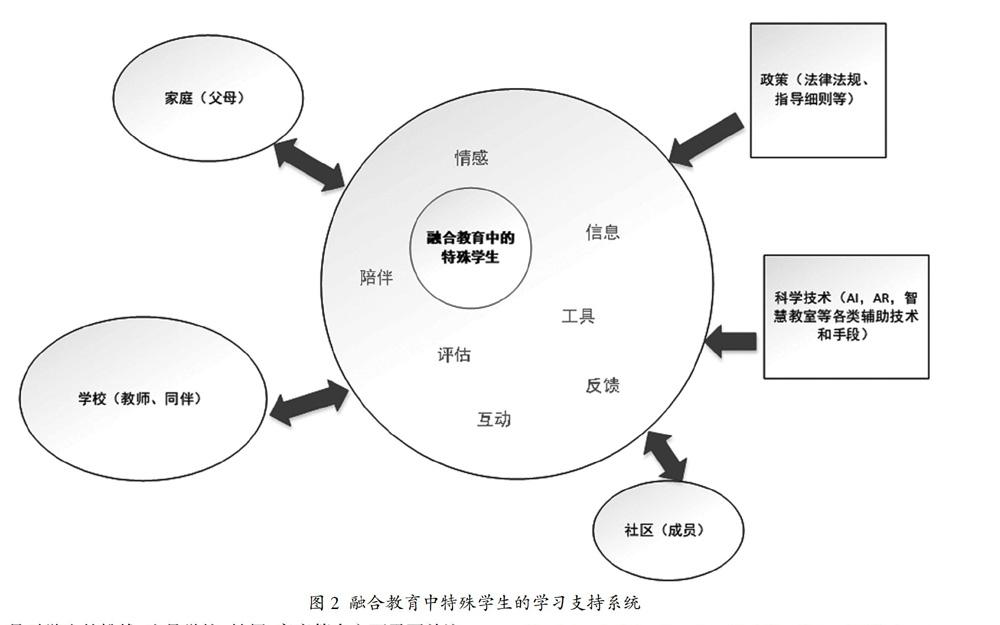
摘 要:随着特殊教育事业的蓬勃发展,高等融合教育学生的学习障碍问题成为关注的焦点。正视特殊学生内在因素和外部面临困难,从教育理念,学习方法,学校、家庭、社区投入,政策关怀和技术支持等多层面展开,基于建构主义学习观的教学模式和多层次的学习支持系统可以有效地弥合高等融合教育中学习障碍带来的鸿沟。
关键词:融合教育;学习障碍;建构主义学习观;学习支持系统
中图分类号:G640 文献标志码:A 文章编号:2096-000X(2020)05-0059-03
Abstract: With the vigorous development of special education, the learning disabilities of high inclusive education students has become a focus. Due to multiple challenges such as their own factors and external influences, they are facing a barrier to further development. Combined with the internal factors and difficulties of special students, this paper discusses them from educational concepts, learning methods, input of school, family and community, policy care and technical support. Employing the teaching model of the constructivist learning concept and the multi-level learning support system are considered to be effective solutions.
Keywords: inclusive education; learning disabilities; constructivist learning concept; learning support system
一、学习障碍概述
二十世纪六十年代,世界各国的特殊教育以隔离为主,随后北欧特殊教育界提出“正常化”运动,这成为融合教育最早的萌芽。七十年代,美国开展了“回归主流”运动(又称“融合”教育)。九十年代,连续召开的国际会议提出了“全纳性教育”思想,這使融合教育的思想更为成熟[1]。我国于1988年正式提出在普通教育机构中对特殊学生进行教育(即“随班就读”),并把它作为我国实现融合教育的主要途径。伴随着《国家中长期教育改革和发展规划纲要(2010-2020年)》的出台,我国政府对特殊教育的关注和投入越来越多,这也给特殊教育的高等发展夯实了基础。很多特殊学生经过多年的努力和奋斗,通过层层选拔最终进入高等院校继续深造。但高等教育涉及的知识和学术领域比基础教育阶段更广、更深,这使得这些特殊学生普遍出现了不适应的情况[2]。尤其是融合教育中的特殊学生面临的学习障碍,已经成为亟待破冰的问题。……