积极心理学视角下应用型本科院校贫困生心理健康的实证分析
2020-10-21刘青霞王莉
刘青霞 王莉
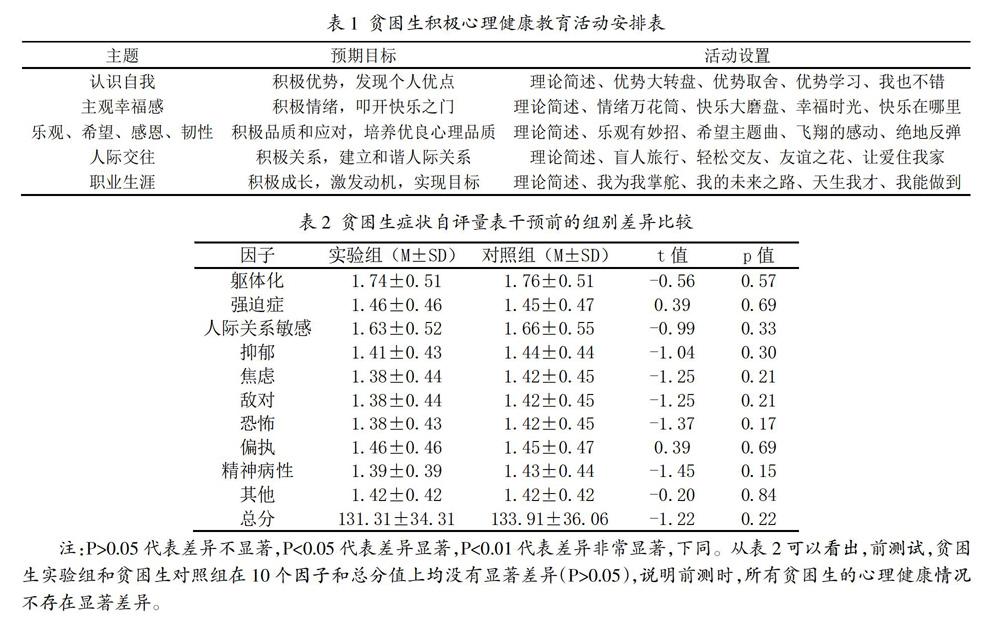
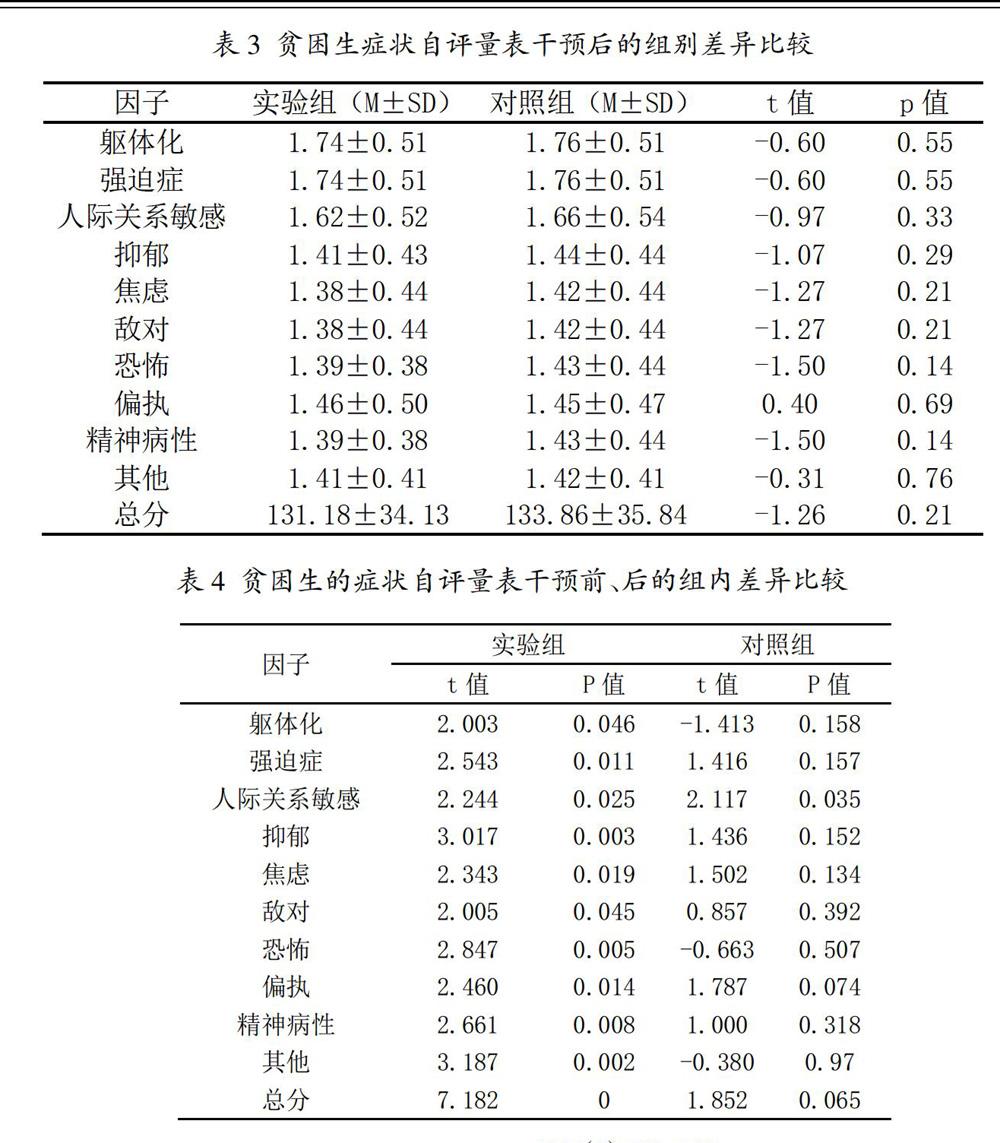
摘 要:针对贫困生这一特殊人群,采用积极心理学的新视角。将应用型本科院校1084名贫困生随机分为实验组543人、对照组541人,只对实验组实施积极心理健康教育活动干预,使用《症状自评量表》研究两组贫困生的心理状态,最终得到的结果显示:实验组在人际关系敏感、焦虑等10个指标及总分上都有显著差异,而对照组在躯体化、抑郁、敌对等9个指标上都没有显著差异。研究表明,积极的心理能够有效提升贫困生的心理健康水平。
关键词:贫困生;心理健康;积极心理学
中图分类号:G641 文献标志码:A 文章编号:2096-000X(2020)05-0186-03
Abstract: For the special group of poor students, a new perspective of positive psychology is adopted. 1084 impoverished students in applied undergraduate colleges were randomly divided into experimental group 543 and control group 541, and only positive mental health education intervention was implemented in the experimental group. The self-rating symptom scale was used to study the mentality of the two groups State, the final results showed that the experimental group had significant differences in 10 indicators such as interpersonal sensitivity and anxiety and total scores, while the control group had no significant differences in 9 indicators such as somatization, depression, and hostility. Studies have shown that positive psychology can effectively improve the mental health of poor students.
Keywords: poor students; mental health; positive psychology
贫困生指的是学生自身和其所在家庭能够筹到的资金,不足以支撐其在学校中的学习以及生活基本花费的高校学生[1]。大部分贫困生除了要面临家庭困难问题,还要承受由于家庭困难所导致的心理困惑和就业压力,家庭穷困、心理困惑、就业压力的“三困生”日益增多[2]。
有关资料显示,近些年来,全国大学生中贫困生的占比大约为30%,特困生占比在10%到15%之间,并且在山区以及偏远区域,上述两类群体的占比更高[3]。大量研究证明,贫困生相对普通学生而言, 更易出现抑郁与焦虑、自卑与自我封闭、强迫症状、依赖心严重[4]等问题,他们的身心健康状况不容乐观。
积极心理学是一种主张以积极理念来研究普通人心理现象的科学,其中心理现象自然包含了心理问题,其目的是以全新视角,解读普通人自有的或者潜在的积极心理品质与力量,促进人们找到幸福[5]。……