基于F1000的学术成果影响力评价指标研究
2020-08-31李莉琼
李莉琼
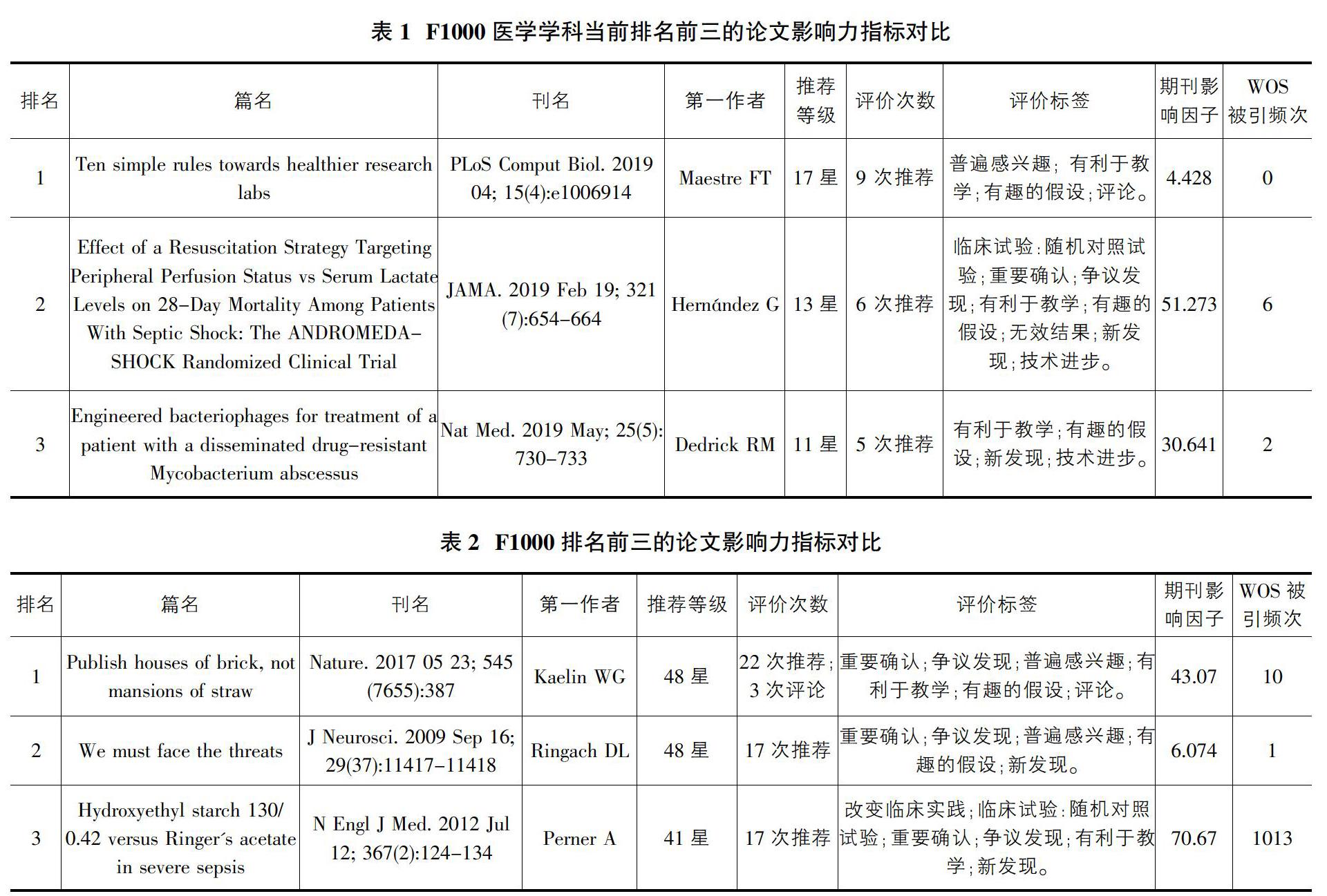
摘要:学术成果影响力评价是科技管理工作的重要组成部分。由于评价机制不同,量化指标和同行评议之间存在巨大差异。本文以临床医学学科文献为例,通过论文F1000指标、被引频次和期刊影响因子的对比,对学术成果影响力的主要评价标准进行比较研究,为科研人员掌握本学科领域的最新研究进展和发展趋势,提升学术成果影响力提供决策参考。
Abstract: The impact evaluation of academic achievements is an important part of scientific and technological management. Because of different evaluation mechanisms, there are huge differences between quantitative indicators and peer review. Taking the documents of clinical medicine as an example, this paper makes a comparative study on the main evaluation criteria of academic achievements by comparing the F1000 Index, Citation Frequency and Journal Influencing Factors, so as to provide decision-making reference for scientific researchers to master the latest research progress and development trend and enhance the influence of academic achievements.
关键词:F1000;学术成果影响力;同行评议;量化指标
Key words: F1000;the impact of academic achievements;peer review;quantitative indicators
中图分类号:F426 文献标识码:A 文章编号:1006-4311(2020)24-0208-03
0 引言
学术成果影响力评价是科技管理工作的重要组成部分。随着数字出版的发展,学術成果的出版形式逐渐多样化,各学科自身特性及发展状况存在不同差异,目前仅仅利用影响因子、被引频次等计量学指标评价不同学科的学术期刊质量及学术成果影响力越来越受到质疑[1]。同行评议是遴选论文、提高学术质量的重要途径之一。SCI创始人尤金·加菲尔德博士认为“在理想情况下,评价者应阅读每篇文献并作出个人主观评价”[2]。本文以临床医学学科文献为例,通过论文F1000指标、被引频次和期刊影响因子的对比,对学术成果影响力的主要评价标准进行研究,以完善各类评价体系,为科研人员掌握本学科领域的最新研究进展和发展趋势,提升学术成果影响力提供决策参考。
1 F1000(Faculty of 1000)简介
SCI、EI、PUBMED等数据库均不能就文献内容质量进行评价与分析。2002年,英国现代生物出版集团(BioMed Central)创建并推出“Faculty of 1000 Biology”,并与2006年推出“Faculty of 1000 Medicine”,邀请全球……
