心肺脑复苏护理与心肺复苏护理在心搏骤停急救中的作用
2019-12-09邱益妹吴素平赵青青陈苗妙
邱益妹 吴素平 赵青青 陈苗妙
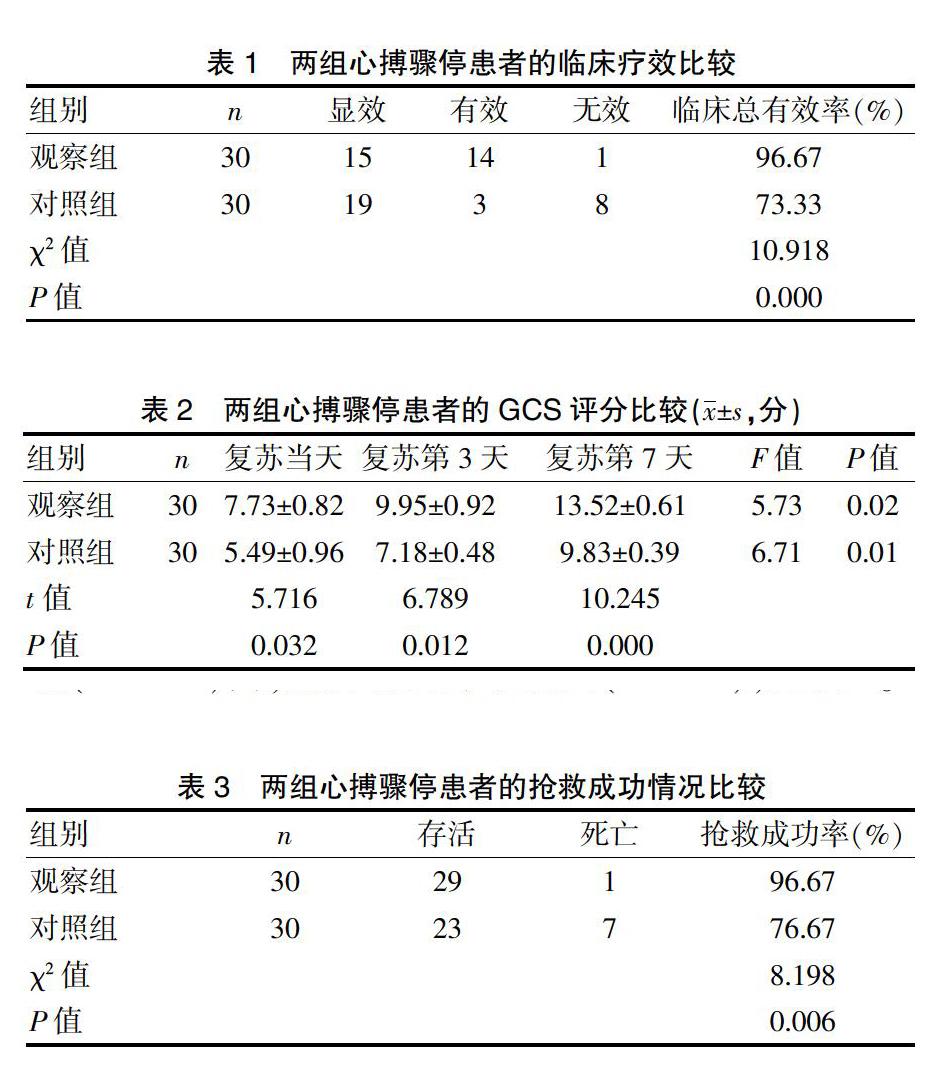
[摘要] 目的 观察心肺脑复苏护理与心肺复苏护理在心搏骤停急救中的作用。 方法 选择2017年4月~2018年4月期间本院收治的心搏骤停患者60例为观察对象,依据患者所接受的急救护理措施将其分为两组,对照组(心肺复苏护理)与观察组(心肺脑复苏护理)各30例。对两组患者的抢救成功率、抢救成功后不同时间点GCS评分以及抢救效果进行比较。 结果 观察组患者的抢救成功率明显较对照组高,其总有效率、复苏当天、复苏第3天以及复苏第7天GCS评分均明显高于对照组(P<0.05)。 结论 心肺脑复苏护理在心搏骤停患者的急救中有显著的应用效果,可提升患者的搶救成功率,促进患者机体康复,改善预后。
[关键词] 心肺脑复苏护理;心肺复苏护理;心搏骤停;急救
[中图分类号] R472.2 [文献标识码] B [文章编号] 1673-9701(2019)28-0143-03
[Abstract] Objective To observe the roles of cardiopulmonary-cerebral resuscitation care and cardiopulmonary resuscitation care in first aid for cardiac arrest. Methods 60 patients with cardiac arrest treated in our hospital from April 2017 to April 2018 were selected and divided into two groups according to their treatment. Patients in the control group were given cardiopulmonary resuscitation care and those in the observation group were given cardiopulmonary resuscitation care, each with 30 cases. The successful rate of rescue, GCS scores at different time points after rescue, and effects of rescue were compared between the two groups. Results The successful rate of rescue was significantly higher in the observation group than that in the control group, and the total effective rate, and GCS scores at the day of rescue, the third day after rescue and the seventh day of rescue were significantly higher in the observation group than those in the control group(P<0.05). Conclusion The application effect of cardiopulmonary-cerebral resuscitation care is significant in first aid for cardiac arrest, which can improve the successful rate of rescue, promote the recovery of patients, and improve the outcome.
[Key words] Cardiopulmonary-cerebral resuscitation car; Cardiopulmonary resuscitation care; Cardiac arrest; First aid
心搏骤停亦为心脏骤停,临床表现为突然心脏射血功能停止,心音消失,大动脉搏动减弱甚至停止,脑部血氧循环停止,人体生命体征消失[1-3]。临床常将心搏骤停称为猝死,心室纤维颤动为导致心搏骤停的直接因素,若患者的眼反射消失,且有意识丧失表现出现,即可以初步断定其已进入昏迷状态,确定患者进入昏迷状态后对其胸腹腔是否有起伏呼吸运动进行仔细观察[4]。若各动脉搏动点已经停止搏动,且听诊时未有心跳声存在,即可断定患者处于心搏骤停的状态,临床常通过“心肺复苏”进行抢救。恢复患者的身体机能和意识为开展心肺复苏的主要目的,近年来心肺复苏伴随着医疗水平的提升逐渐发展为心肺脑复苏[5]。本研究特选取在本院接受治疗的心搏骤停患者进行比较研究,旨在分析比较心肺脑复苏护理与心肺复苏护理的实施效果,现报道如下。……