武汉与重庆典型地质结构下的地埋管换热性能
2017-06-27王勇谢烨李文欣
王勇++谢烨++李文欣
摘要:
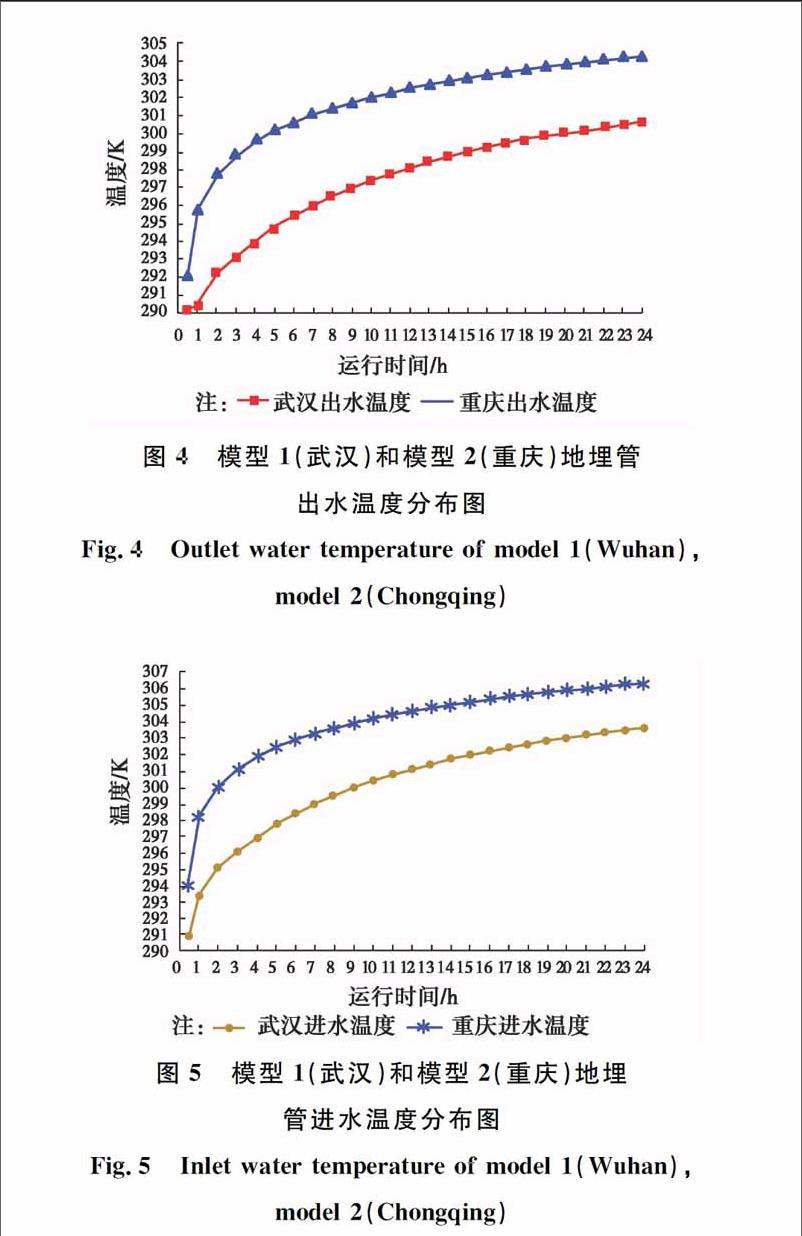
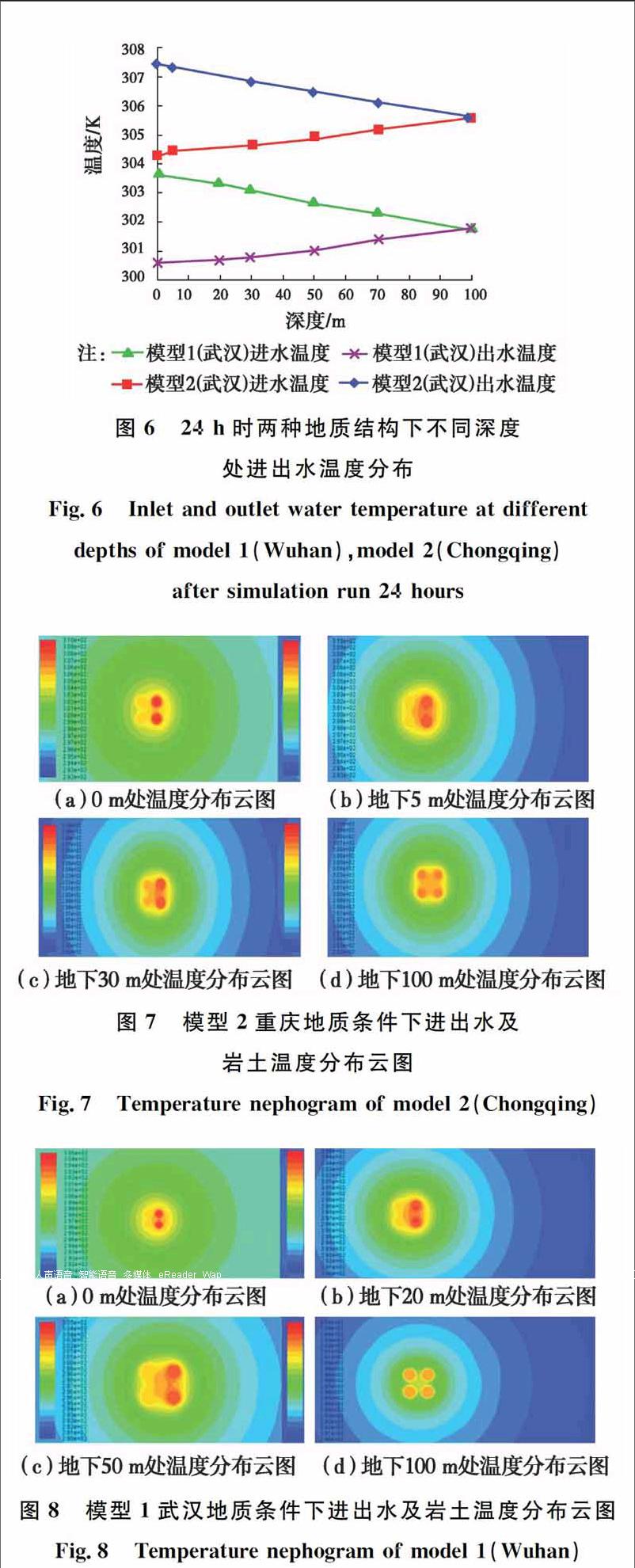
地埋管地源热泵换热器的换热性能受到不同地质结构的影响。以武汉和重庆地区的典型地质构成为边界条件,建立了三维地埋管的单孔双U管换热模型,通过模型计算,获得了两种地质条件下的地埋管换热性能,以重庆地区的地源热泵热响应测试结果以及工程运行数据出发,对模型的计算结果进行了验证,结果表明,模型吻合度较好,可以应用于工程分析。以模型为条件,进行地质结构对换热性能的影响度分析,预测了两地地埋管地源热泵的换热性能并计算得到换热器的平均换热系数分别为武汉地区K1=1.65(W/m·K),重庆地区K2=1.51(W/m·K)。
关键词:
地埋管;地质结构;换热模型;换热性能
Abstract:
The heat transfer performance of ground heat exchangers (GHEs) is influenced by different geological structures. A threedimensional heat transfer model of double Utype GHEs is established with typical geological structure of Wuhan and Chongqing as boundary conditions separately. The heat transfer performances are obtained through the model calculation. The simulation results are validated by a practical thermal response test of a ground source heat pump (GSHP) system, which shows a good match between the simulated and experimental results. The influence of geological structure on heat transfer performances is investigated and the heat transfer performance of GSHP systems can be predicted. Besides, the average heat transfer coefficient of GHEs is calculated in these two area with the proposed model, and the average heat transfer coefficient of the heat exchanger is K1=1.65 (w/m.K) in Wuhan area, K2=1.51 (w/m.K) in Chongqing area, respectively.
Keywords:
ground heat exchangers;geological structure; heat transfer models;heat transfer performance
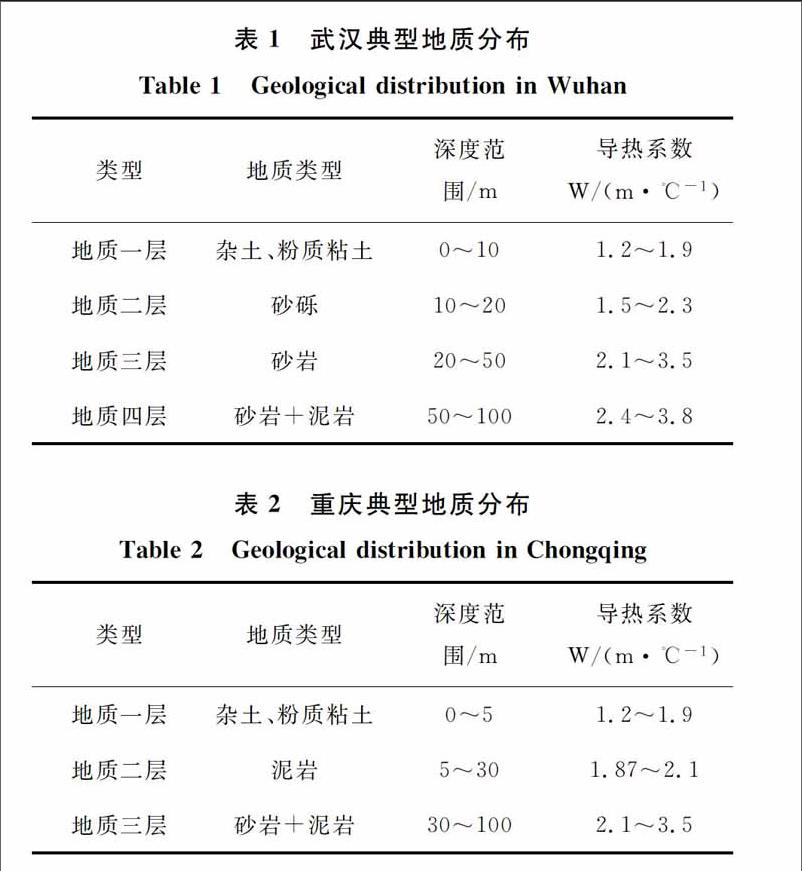
不同地质结构的导热系数是影响地埋管换热器(GHEs)换热性能的重要因素[1]。已有研究[26]表明,地埋管的傳热主要受到土壤热物性的影响。实际工程中地质结构并非是单一类型的,而是由几个平行或者近于平行的物性参数一致的岩层构成,呈现水平分层的特点。不同地质类型的热物性参数有很大的不同,即使是同一地质层也存在差异[7],之前的研究[810]已经就考虑了均匀地质结构的地埋管换热性能进行了研究。某实验工程实测各分层热阻在0.134 4~0.171 7(m·K)/W之间变化,所以在确定地源热泵系统的岩土物性参数时应考虑竖向地质存在不均匀性的分层结构[1112]。张琳琳等[13]以有限长线热源为基础,考虑了地质分层、渗流等情况,建立了钻孔内、外的埋管传热解析模型,指出了分层模型可反映分层土壤中温度沿轴向非均匀分布的特征。……