菖芩Ⅰ号联合西医治疗重型颅脑损伤临床研究
2017-06-10陈彦伊王东生朱惠彬徐霞戴幸平
陈彦伊+王东生+朱惠彬+徐霞+戴幸平

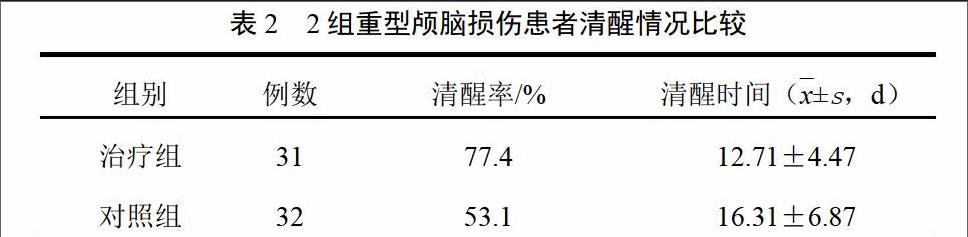
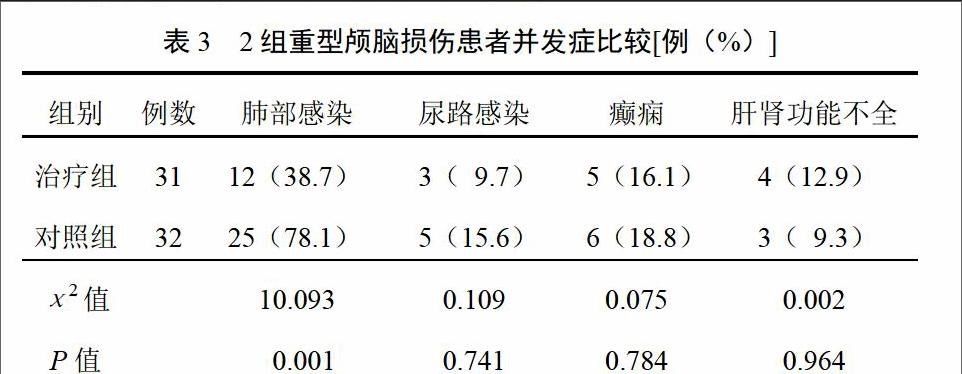
摘要:目的 观察菖芩Ⅰ号治疗重型颅脑损伤患者的临床疗效及对预后的影响。方法 纳入重型颅脑损伤患者65例,随机分为治疗组32例和对照组33例。对照组予西医基础治疗(脱水降颅压、营养神经、清除氧自由基、改善脑循环、营养支持及维持内环境稳定、抗感染、防治并发症、高压氧等)。治疗组在此基础上予菖芩Ⅰ号,每日1剂,分2次胃管鼻饲或冲服。连续治疗14 d。治疗后1个月,比较2组患者清醒率、清醒时间、并发症情况及简易精神状态检查表(MMSE)评分,治疗后3个月进行格拉斯哥预后评分(GOS)以评价预后。结果 治疗后1个月,治疗组清醒率为77.4%(24/31),对照组为53.1%(17/32),2组比较差异有统计学意义(χ2=4.089,P=0.043),病死率均为0。治疗组清醒时间明显早于对照组(t=2.458,P=0.017)。肺部感染率治疗组低于对照组(P=0.001),尿路感染、癫痫、肝肾功能不全率2组比较差异无统计学意义(P>0.05)。治疗组和对照组分别清醒24、17例,MMSE认知功能评价正常者分别为3、2例,治疗组认知功能优于对照组(Z=-2.205,P=0.027)。GOS评价,治疗组预后良好率为58.06%(18/31),对照组为28.12%(9/32),2组比较差异有统计学意义(χ2=5.763,P=0.016)。结论 菖芩Ⅰ号联合西医治疗有助于重型颅脑损伤患者早日清醒,減少肺部感染并发症,提高清醒患者的认知功能并改善预后。
关键词:菖芩Ⅰ号;重型颅脑损伤;促醒;并发症;认知功能
DOI:10.3969/j.issn.1005-5304.2017.06.005
中图分类号:R277.71 文献标识码:A 文章编号:1005-5304(2017)06-0017-05
Abstract: Objective To investigate the clinical efficacy of Changqin No. 1 combined with Western therapy for severe traumatic brain injury and its effects on prognosis. Methods Totally 65 cases of severe traumatic brain injury were randomly divided into the treatment group (n=32) and the control group (n=33). The control group was treated with basic Western therapy (dehydration reduction of intracranial pressure, nutrition nerve, scavenging oxygen free radicals, improve cerebral circulation, nutritional support and maintain the internal environment stability, anti-infection, prevention and treatment of complications, hyperbaric oxygen). The treatment group was treated with Changqin No. 1 plus the basis of routine treatment, 1 dosage per day, 2 times stomach tube nasal feeding or blunt, for 14 d. One month after treatment, awake rate, awake time, the incidence of complications and MMSE in both groups were compared. Three months after treatment, the prognosis of two groups were compared by GOS. Results One month after treatment, the awake rate in treatment group was 77.4% (24/31) and 53.1% (17/32) in the control group, with statistical significance (χ2=4.089, P=0.043), and the death rate was 0. The awake time in the treatment group was significantly shorter than that of the control group (t=2.458, P=0.017). The incidence of pulmonary infection in the treatment group was lower than the control group (P=0.001). There was no statistical significance in urinary tract infection, epilepsy, liver and kidney dysfunction rate of the two groups (P>0.05). The number of awake case was 24 in the treatment group and 17 in the control group. The number of normal MMSE cognitive function was 3 in the treatment group and 2 in the control group, and the treatment group was better than the control group (Z=-2.205, P=0.027). Three months after treatment, the good prognosis was 58.08% (18/31) in the treatment group and 28.12%endprint
(9/32) in the control group, with statistical significance (χ2=5.763, P=0.016). Conclusion Changqin No. 1 combined with Western basic treatment can help patients with severe traumatic head injury awake early, reduce pulmonary infection complications, and improve the cognitive function of sober patients and improve the prognosis.
Key words: Changqin No. 1; severe traumatic brain injury; wake promoting; complications; cognitive function
近年来,颅脑损伤已成为重要的公共卫生和社会经济问题,是引起死亡和残疾的主要原因之一,被称为“沉默的流行病”。研究发现,美国45岁以下成人死亡的首要原因为颅脑损伤,每年在颅脑损伤方面花费的醫疗成本高达600亿美元[1]。在中……