火电厂污染源自动监控中CEMS流量测量问题的研究
2017-03-18王燕枫杨清
王燕枫++杨清
摘要: 系统介绍了火电厂污染源自动监控工作中流量测量问题的技术及政策背景,阐述了矩阵式流量计的工作原理,结合流量监测改造项目应用实例,对其技术特点、优势及应用效果进行了分析、论证。通过实例对比发现,矩阵式面测量流量监测方法较传统测量方法有明显优势,流量监测结果准确、代表性好、趋势性强。
Abstract: This paper systematically introduces the technology and policy background of flow measurement in the automatic monitoring of the pollution source in the thermal power plant, expounds the work principle of matrix flowmeter, and combining with the flow monitoring renovation project, analyzes and convinces the technical characteristics, advantages and application effect. Through the example comparison, it is found that the flow monitoring method with matrix measurement has obvious advantages compared with the traditional measurement method, whose flow monitoring results are accurate, representative and have a strong trend.
关键词: 火电厂;CEMS(烟气排放连续监测系统);流量测量;矩阵式流量计
Key words: thermal power plant;CEMS (continuous emission monitoring system);flow measurement;matrix flowmeter
中图分类号:TM621 文献标识码:A 文章编号:1006-4311(2017)05-0122-03
0 引言
我国火电厂数量众多,污染物排放量巨大。目前,全国共1361家火电厂(包括自备电厂),共计4276台机组。火电厂在全国均有分布,其中占比居于全国前八的省份共占 56.5%,详见表1。根据“十二五”环境统计业务系统[1],2015年火电厂烟尘、二氧化硫以及氮氧化物的排放量分别是381.7万吨、660.7万吨和646.5万吨,占当年废气污染物总排放量的比例依次为 22.5%、38.9%和 38.1%。
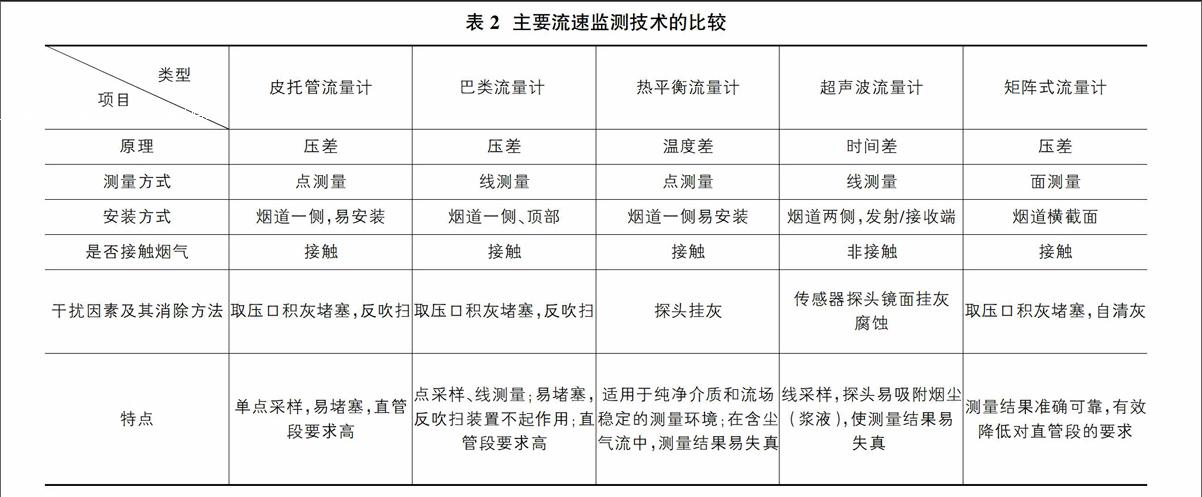
烟气污染物排放量以浓度与流量的乘积计,烟气浓度测量技术目前已十分成熟,而烟气流量监测还存在一些问题[2]。《固定污染源烟气排放连续监测技术规范》[3](HJ/T 75-2007)等对CEMS采样断面位置有明确的限制:对于流速的测定,要求尽可能避开弯头、断面等急剧变化的部位,并与这些部位的距离满足“前四后二”的要求[4]。实际生产中,受制于场地、经济性等因素,烟道普遍较短,且多变径、弯头,流速流量监测存在如下问题:烟气高温、高湿、高尘,内部流场紊乱,加之烟气、强振动,含酸、含浆液,环境较为恶劣,传统点测量及线测量式流量测量方法的效果较差[5]。……