敦煌隋代故事画艺术
2016-07-21赵声良
敦煌隋代故事画艺术
赵声良
(敦煌研究院, 甘肃 兰州 730030)
内容摘要:敦煌壁画中的佛教故事画北朝时已逐渐形成了长卷式画面的表现方法,隋朝时表现更加细腻和丰富。同时,来自中原的绘画风格大规模地影响到敦煌石窟,新型经变画的产生就是重要的标志,而隋代的经变画仍有不少采用了长卷式画面的表现手法,反映了本土艺术的厚重传统。佛教经典的主题,由选取故事性内容以连续性长卷画面表现,改变为综合一部佛经的主题思想以大画面构图来表现佛国世界,这是佛教绘画的一个巨大变革,隋代是这个变革的重要时期。文章通过对隋代莫高窟故事画艺术的分析,来探讨佛教绘画样式的变化。
关键词:莫高窟;隋朝;故事画;经变画;山水
中图分类号:K879.41 文献标识码:A 文章编号:1000-4106(2016)03-0001-08
Abstract: The Buddhist narrative paintings in Dunhuang murals gradually developed a method of painting successive scenes in long strips, which became particularly exquisite and rich in the Sui dynasty. During the same period, the painting style from the Central Pains exerted a dominant influence on Dunhuang cave paintings, as characterized by the appearance of a style of sutra illustration new for the time. Many Sui dynasty sutra illustrations still adopted the use of long, successive strips, however, which reflects the lasting profundity of local art traditions. Previously, the themes of Buddhist sutras were represented by painting narrative scenes in long strips, but at this time the main ideas of the sutras were condensed into a single large picture that often symbolized Buddhist paradise. This was a dramatic turn for Buddhist painting, and the Sui dynasty became an important period for such innovation. This paper discusses these changes in painting styles by analyzing the art of Sui dynasty narrative paintings at Mogao.
Keywords: Mogao Grottoes; Sui dynasty; narrative painting; sutra illustration; landscape
(Translated by WANG Pingxian)
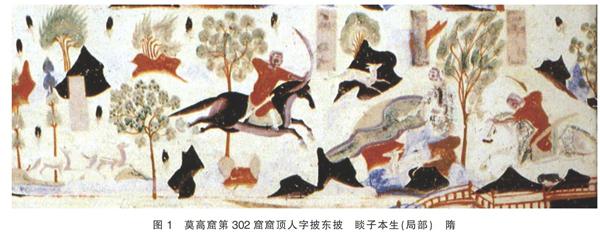
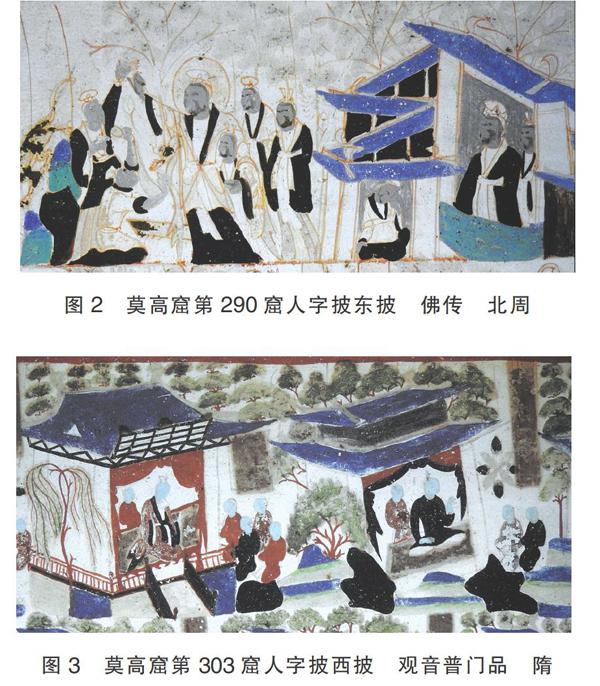
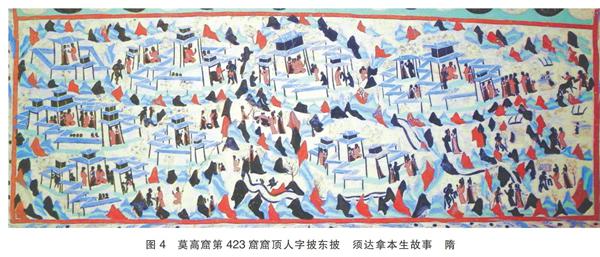
隋代是莫高窟佛教艺术高度发达的时代,在隋代短短的三十多年时间里,莫高窟营建洞窟达一百多个{1},而且有不少是大型洞窟。这体现了隋代强大的经济力量,同时也反映了这个时代正是佛教和佛教艺术处于上升的发展阶段。从壁画中的故事画来看,隋代主要继承了北朝以来的长卷式连环画形式,但表现得更为精致和细腻,刻画人物的线描更加成熟,色彩表现更加丰富。
据调查,现存隋代洞窟中有12个窟中存在故事画的形式(附表)。需要说明的是,有些壁画的主题内容并非连续性的故事(如《法华经》的内容),但其形式完全与其他的故事画一样,本文从美术形式的角度,也把它作为故事画来分析。……