莫高窟壁画疱疹病害调查研究
2016-07-21陈港泉李燕飞刘瑞柴勃隆崔强
陈港泉 李燕飞 刘瑞 柴勃隆 崔强
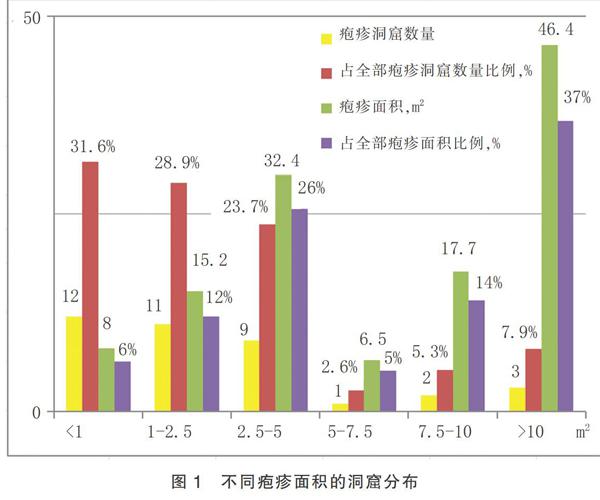
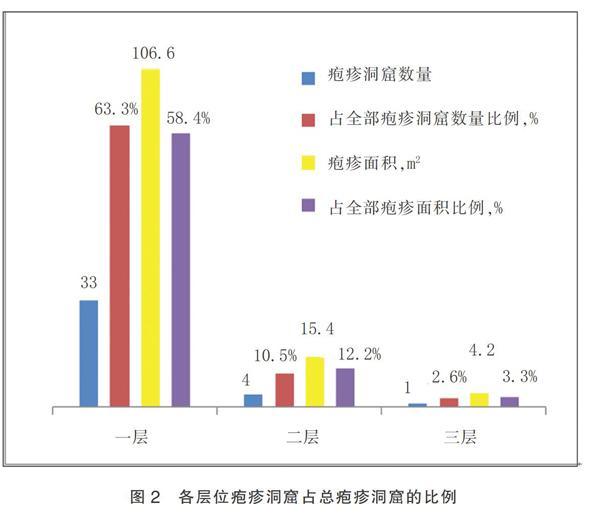
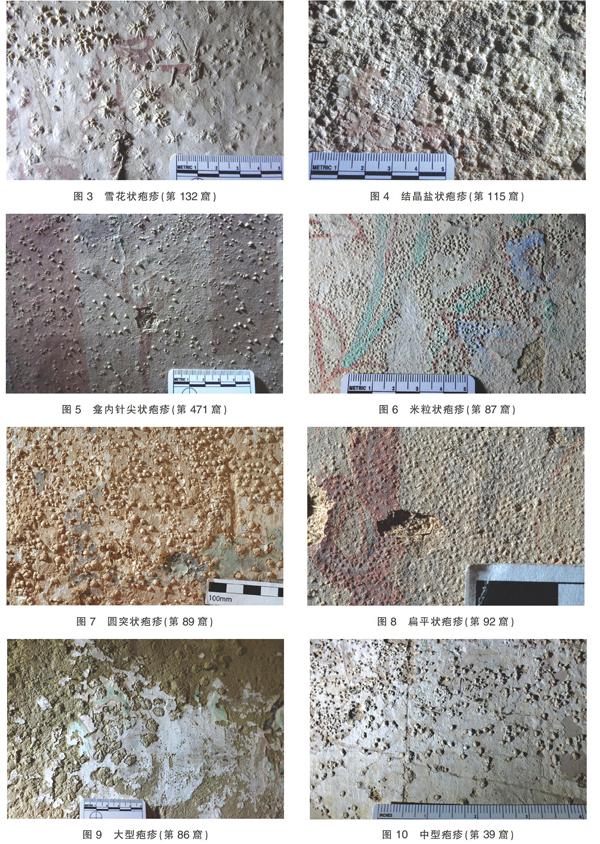
内容摘要:盐害是莫高窟壁画病害的一种主要形式。疱疹盐害壁画,莫高窟多个洞窟均有分布。调查表明,莫高窟492个有壁画的洞窟中,有38个洞窟存在面积不等的疱疹病害,总面积约126平方米。有76%的疱疹病害洞窟处于底层洞窟。疱疹类型多样,经调查研究,按照疱疹的外貌、大小、分布特点等,对疱疹类型进行了分类、命名。绝大部分的疱疹分布呈规律性,表明疱疹病害的形成与水的侵蚀、流向有密切关系。通过本次调查研究,掌握了莫高窟壁画疱疹病害的分布面积、分布特点,对进行莫高窟壁画盐害机理及盐分活动规律研究,以及采取对盐害壁画的保护措施具有重要意义。
关键词:莫高窟;壁画;疱疹;盐害
中图分类号:K854.3 文献标识码:A 文章编号:1000-4106(2016)03-0110-07
An Investigation of the Blisters on the Murals of
Abstract: Salt damage is a major cause of mural deterioration in the Mogao Grottoes. The blisters this paper focuses on, which are one kind of salt damage, are distributed extensively over the artwork of the caves. The murals of thirty-eight out of 492 painted caves at the Mogao Grottoes exhibit blisters of differing sizes, totaling an area of 126 m2. About 76% of the damages have been found in the bottom caves. According to their physical appearance, size, and distribution characteristics, the blisters have been classified and named. Most of the blisters show a regular distribution, which indicates that their formation is closely related to water flow and erosion. This research clarifies the distribution area and characteristics of the blisters on the Mogao Grottoes murals, information that is very important for studying the salt deterioration mechanism and salt activity in these murals, and for planning preventive conservation measures.
Keywords: Mogao Grottoes; mural; blister; salt damage
0 引 言
世界文化遗产莫高窟位于敦煌城东南25公里的鸣沙山东麓的崖壁上,自前秦建元二年(366)开始,经历南北朝、隋代、唐代、五代、宋、西夏和元等朝代10个世纪的开凿,现存壁画和彩塑的洞窟共计492个,其中彩塑2400多身、壁画4.5万多平方米,还有唐宋时代木构窟檐5座、莲花柱石和舍利塔20余座、铺地花砖2万多块。
莫高窟492个有壁画的洞窟中绝大多数都存在着壁画颜料脱落、酥碱、疱疹、空鼓、裂隙、褪色、烟熏、霉变等多种病害。由于盐的原因引起的酥碱、空鼓、疱疹病害非常严重。壁画地仗中含有的可溶盐随环境温湿度的变化而溶解——结晶——溶解——再结晶,如此反复,在一定的原因下会产生酥碱病害[1-5],而可溶盐若以NaCl为主,则形成疱疹病害[6-7]。……