水平与竖向加速度时程曲线叠加效应下边坡永久位移计算的极限上限分析
2016-05-31王志斌汤祖平赵炼恒程肖
王志斌 汤祖平 赵炼恒 程肖
摘要:实际边坡动力稳定性受地震竖向与水平方向效应共同作用,传统边坡地震永久位移计算方法较少考虑竖向地震波影响,采用实际地震的竖向与水平方向加速度时程曲线共同效应更符合工程实际。基于极限分析上限法和Newmark刚塑性滑块模型,提出一种基于实际水平向与竖向地震加速度时程曲线的边坡永久位移计算改进方法,以3个工程边坡为例,探讨了两组具有代表性实测典型水平和竖向地震地面运动记录对边坡地震永久位移计算的影响。研究结果表明:不考虑竖向地震加速度时程曲线时,本文方法可蜕化为与前人方法兼容;不同地震波的竖向与水平地震动时程曲线的叠加效应不同,竖向地震对边坡永久位移的影响不可忽略。
关键词:边坡;地震永久位移;加速度时程曲线;Newmark法;极限分析上限法
中图分类号:TU435
文献标志码:A 文章编号:1674-4764(2016)02-0035-09
Abstract:The dynamic stability of slopes is influenced by the horizontal and vertical earthquake forces. The traditional method of calculating the seismic permanent displacement does not take enough consideration about the vertical seismic effect. However, considering the combined effect of horizontal and vertical accelerations is more accord with the engineering practice. Based on the upper bound limit analysis and the model of Newmarks rigid-plastic block, an approach for evaluating the permanent displacement of slopes based on the actual horizontal and vertical earthquake acceleration time-history curves is proposed. Three types of engineering slopes are studied to discuss the impact of two typical earthquake ground motions on seismic permanent displacement. The results show that: this method is compatible with the previous method without considering the vertical acceleration; the combined effect of horizontal and vertical accelerations is different for various earthquake records, and the influence of vertical acceleration on the permanent slope displacement cannot be ignored.
Keywords: slope; seismic permanent displacement; acceleration time-history curves; Newmarks method; upper bound limit analysis
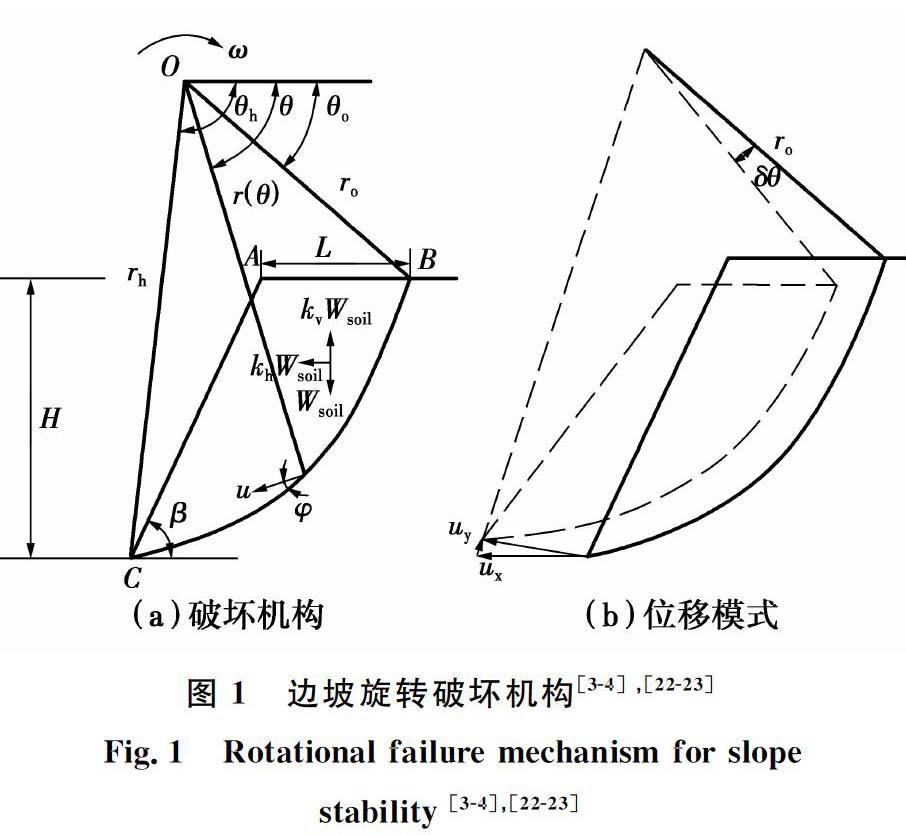
1965年,Newmark[1] 提出了估算地震滑移量的刚塑性滑块模型,并给出了采用边坡滑移量代替安全系数以评价边坡的抗震性能的建议。过去50年中,基于Newmark“滑块模型”,许多学者结合土工试验与实际震害资料,进一步探讨了地震作用下边坡的永久位移问题[2] 。Chang等[3] 将Newmark的刚塑性滑块模型应用在自然边坡的地震稳定性分析中,基于极限分析上限法推导了直线型滑面和对数螺旋滑面边坡永久位移的计算公式;You 等[4-5] 采用极限分析上限法,结合Newmark“滑块模型”的概念,给出了水平地震效应下边坡与加筋边坡永久位移的设计图表。……
