运动复合颗粒物影响神经系统病变的机制辨析
2016-04-08钱帅伟张瑞萍张安民
钱帅伟 张瑞萍 张安民
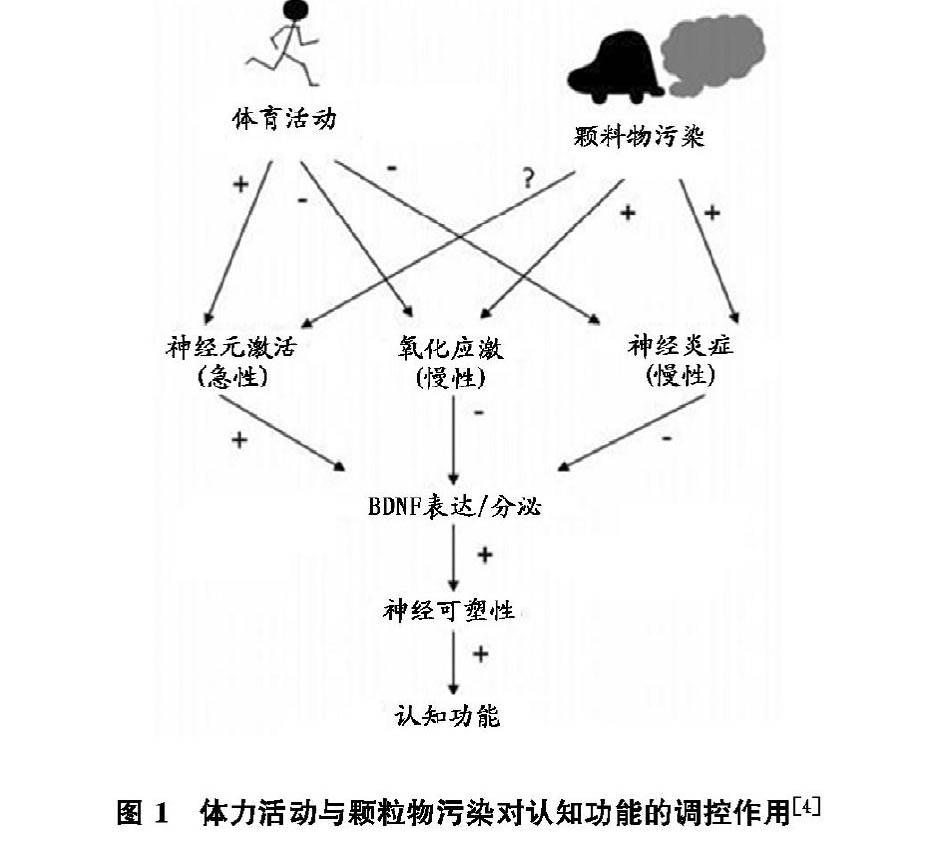
摘要:颗粒物是严重损害神经系统健康的重要危险因子,其主要通过系统性氧化应激、炎症反应和细胞Ca2+失稳态等病理机制对神经系统产生毒性效应,导致认知功能损伤或衰退,甚至诱发或加重神经退行性疾病。规律性运动是增益健康最积极、最经济的手段,可有效防治多种神经系统疾病,因此,二者交互叠加对神经系统健康的影响是急需研究与探讨的重要问题。从神经退行性疾病和认知功能等角度对运动复合颗粒物影响神经系统病变的机制进行评述,发现:颗粒物暴露下进行不同形式运动均可对神经系统造成严重损害,导致认知功能损伤或衰退,甚至诱发或加重神经退行性疾病;但慢性颗粒物暴露致神经系统病变之后进行规律性运动却可适度改善疾病进程,抑制健康过度流失。
关键词: 颗粒物;运动;氧化应激;炎症反应;神经退行性疾病;认知功能
中图分类号: G 804文章编号:1009783X(2016)02018305文献标志码: A
Abstract:Particulate matter is an extremely dangerous factor which poses a serious threat to nervous system.It exerts toxic effects to nervous system via a great many pathological mechanism,such as systematic oxidative stress,inflammation,disorder of Ca2+ and what not.Regular exercise is a very active and economical means which can improve health a great deal,as well as harbor a potential ability to prevent or treat the development of a variety of nervous system diseases.Therefore,the effect of particulate matter combined with exercise on nervous system is in urgent need to discuss and solve.From the perspective of neurodegenerative diseases and cognitive function,This review tried to analyze the mechanism of exercise combined with particulate matter on lesions of nervous system,and eventually found that exposure to air pollution during different forms of exercise could do harm to nervous system,and even induced or aggravated neurodegenerative diseases.However,regular exercise could moderately improve these nervous system diseases induced by long term particulate matter exposure,and eventually inhibited health loss.
Keywords:particulate matter;exercise;oxidative stress;inflammation;neurodegenerative diseases;cognitive function
近年来,随着经济的快速发展和城市化进程的加快,特别是机动车数量的增加及尾气的排放,城市颗粒物浓度逐年升高,空气质量严重下降,对健康的负面效应也日渐突出;因此,颗粒物的健康效应日益成为政府和社会各界关注的焦点。2012年,国际著名医学权威期刊《柳叶刀》(Lancet)杂志发表的《全球疾病负担2010年评估报告》[1]指出,在全球范围内所有健康危险因子中,细颗粒物排在第7位;而在中国,细颗粒物的健康危险仅次于不良膳食习惯、高血压和吸烟,成为严重危害公众健康的第4大风险因子[1]。……