《肩水金关汉简》所见“燧”及其命名探析
2016-03-02黄艳萍
黄艳萍

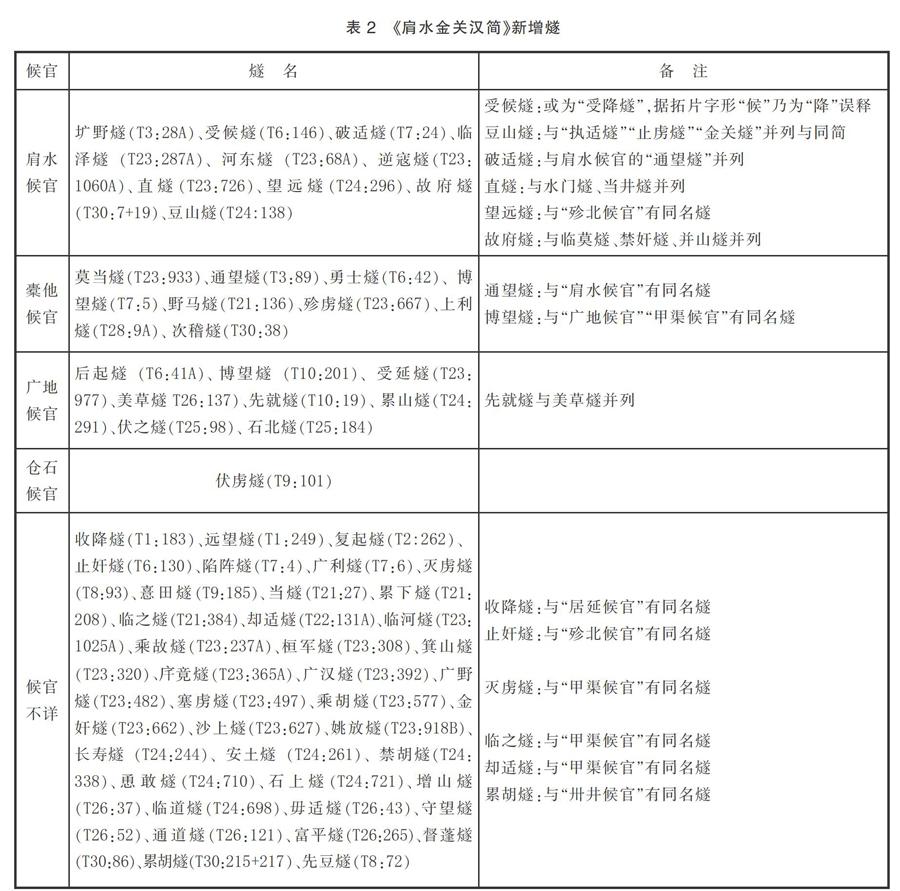

内容摘要:烽燧是边境候望系统中的基层军事组织。据我们统计《肩水金关汉简》1至3卷中不重复的燧名至少有161个(未包括残损严重的燧名),实际的烽燧数量应超过此数字。可见汉时金关地区烽燧组织十分庞大,彰显了其重要的战略地位。本文根据简牍出土地点的相对集中性、简牍内容的提示性和相关性来判断各燧所属候官,再依据候官辖燧数量的差别来判断其规模及战略地位;同时,在陈梦家燧简表《第十表》的260个燧名和这批金关简161个燧名基础上,归纳烽燧的命名习惯,揭示汉时庞大烽燧系统中“燧”的命名规则。
关键词:肩水金关汉简;燧;燧名;燧命名
中图分类号:K877.5 文献标识码:A 文章编号:1000-4106(2016)01-00116-07
Abstract: Fire beacon towers were the most basic military organization constructions in the border defenses of the Han Dynasty. There are at least 161 names of sui in the first three volumes of the Han Dynasty Wooden Slips from Jianshuijinguan, and the actual number of such beacon towers would have been larger. This indicates the enormous military organization in Jianshuijinguan as well as the importance of this strategic position. This paper presents a study on this topic according to the relative concentration of sites where the slips were unearthed, clues and correlations of the contents of the slips, and the number of beacon towers. It further summarizes the names for beacon towers used in the Han dynasty based on 260 designations mentioned by Chen Mengjia and the 161 names in the wooden slips from Jianshuijinguan.
Keywords: Han dynasty wooden slips from Jianshuijinguan; “sui”(beacon tower); “names of sui”; designation
汉代边郡军事系统为:郡—都尉—候—燧。烽燧是古代边境通报敌情的烽火台,是古代边防侦察预警系统中最基层的哨所,也是边境军事组织中最底层的军事单位。西北汉代简牍记载有大量的燧名,透过这些燧名可以管窥汉代边境的烽燧规模及分布,从而进一步了解汉代的候望系统。与此同时,在众多的燧名中我们发现其命名方法具有一定的规律,进而揭示庞大的烽燧系统中如何便捷地给各燧命名,同时又尽量避免同名。
一 相关研究概述
西汉内郡通常一郡一都尉,“西汉边郡内往往设置不止一个都尉,不止一种都尉”[1]。就张掖郡而言,就有肩水都尉、居延都尉、居延农都尉、张掖农都尉、张掖属国部都尉等多个不同种类的都尉,前两个都尉是按行政区划而设立的都尉,后三个都尉是按性质设立的都尉。……