基于技术选择差异的我国区域全要素生产率分析
2015-07-30张月玲等
张月玲等
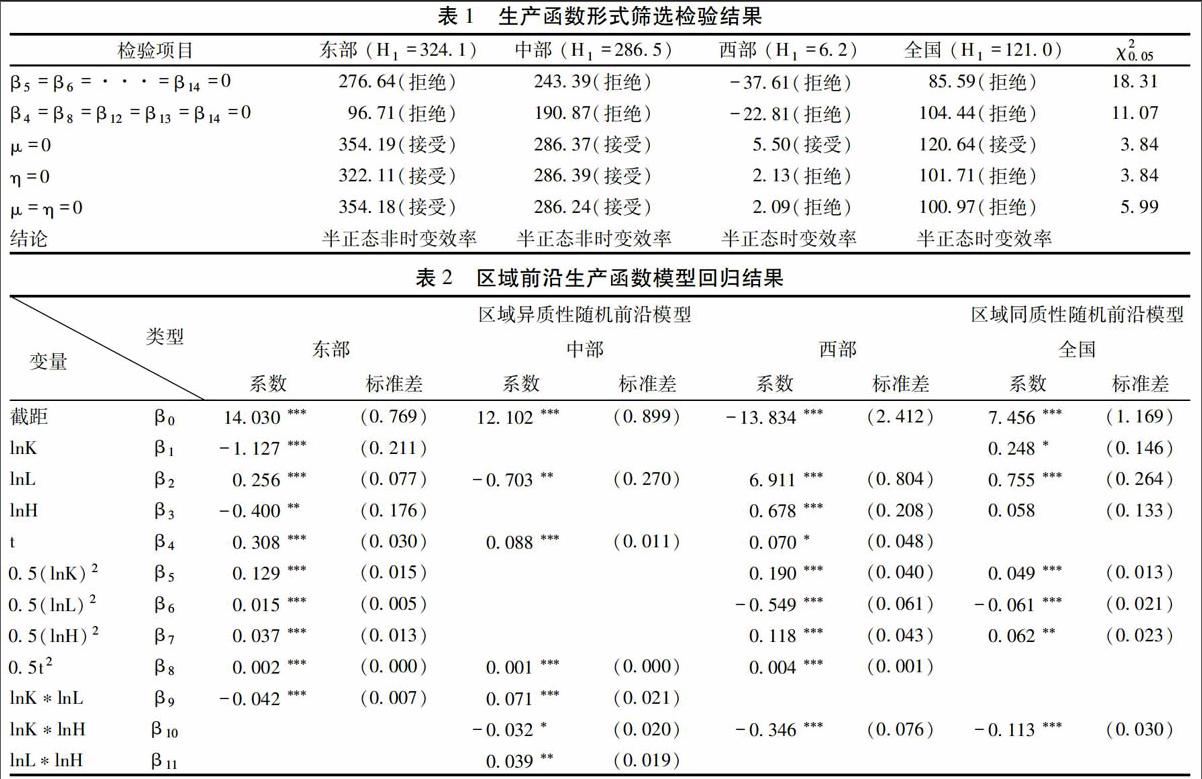
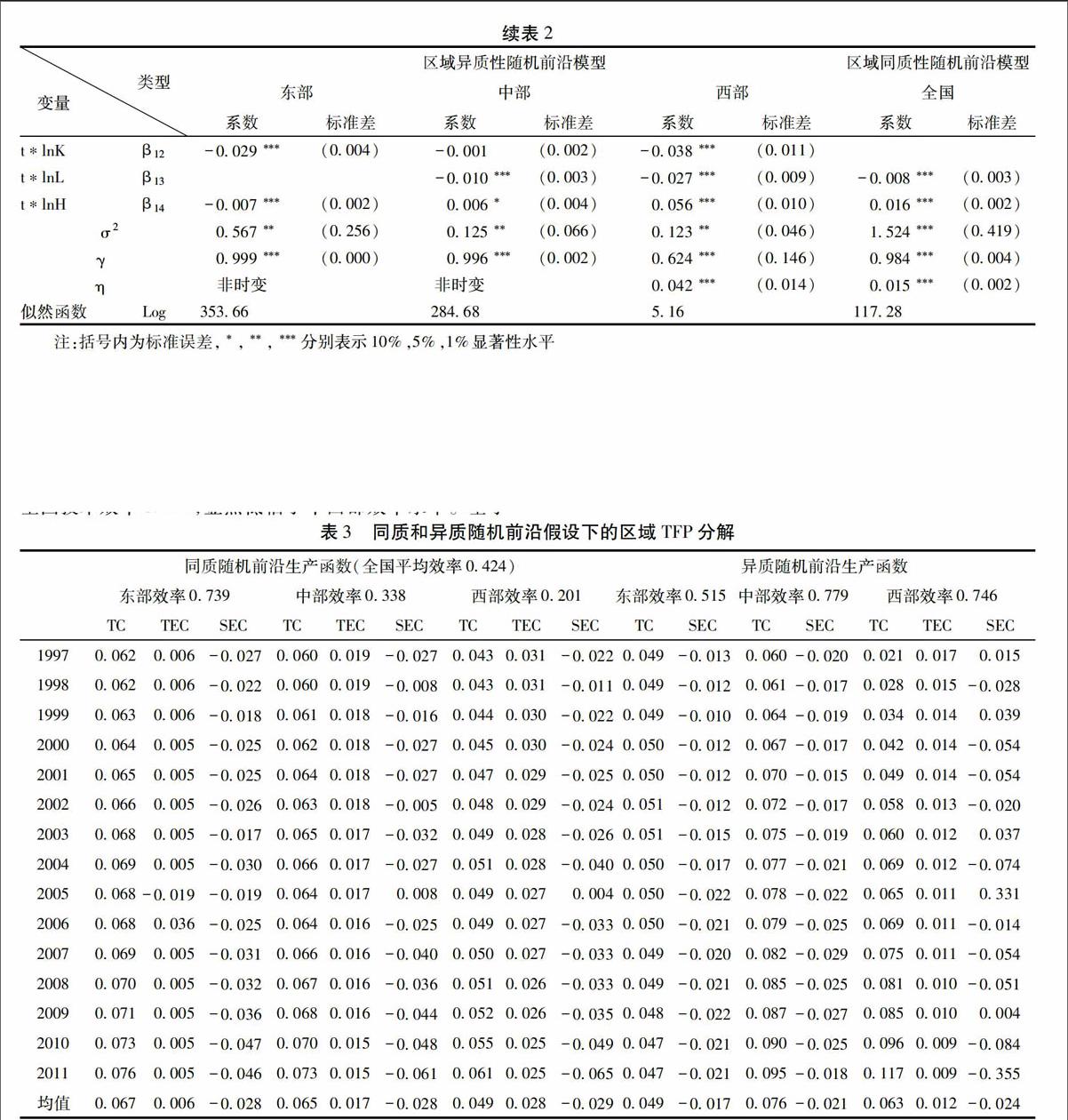
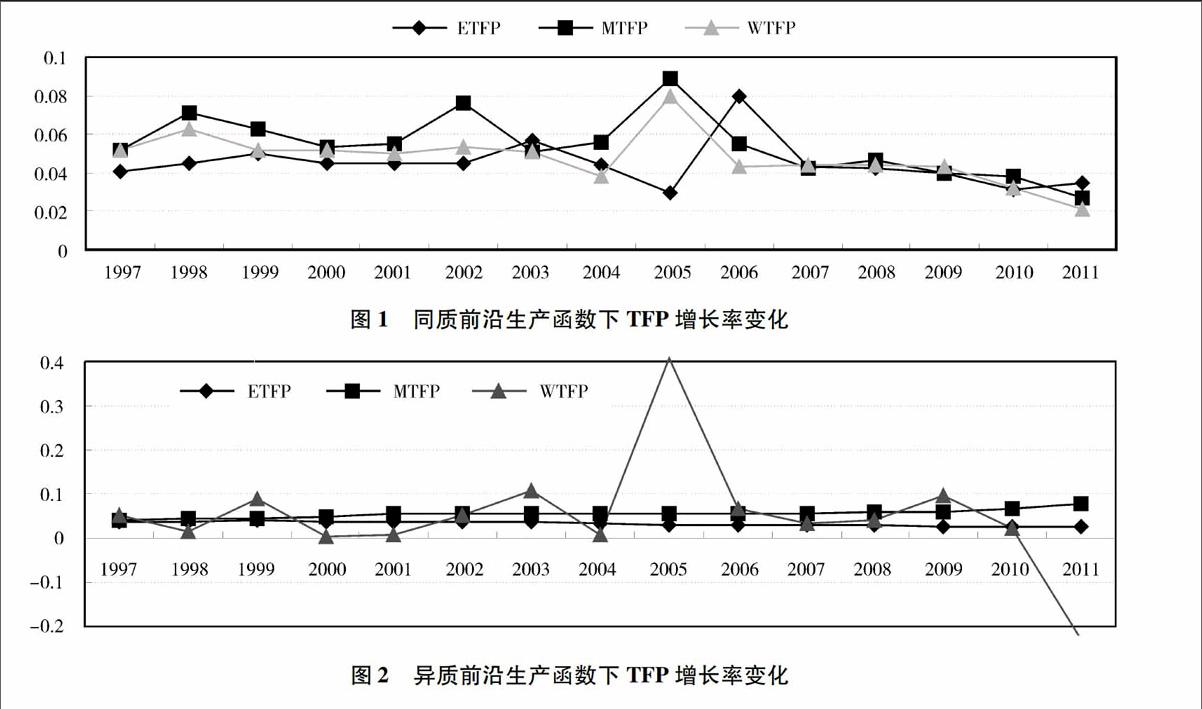
摘要:基于随机前沿分析的地区增长收敛研究普遍假设中国所有区域生产函数相同,忽视不同区域受自身要素禀赋制约而选择适宜技术以实现经济增长。利用我国1996~2011年29省面板数据构建区域异质性随机前沿生产函数模型,并解构全要素生产率变化。结果发现:一、异质技术前沿下区域TFP增长率的变化趋势更契合地区经济发展差异;二、东部TFP增长呈稳中有降的“下台阶型”变化,中部呈稳中有升的“上台阶型”增长,西部则呈持续的“锯齿型”波动;三、相对于区域经济发展阶段,东西部技术选择存在欠适宜性。
关键词:适宜技术选择;随机前沿模型;TFP增长率分解
中图分类号:F124.3 文献标识码:
Analysis on Total Factor Productivity Rooted in Different Technology Selection among China's Regions
ZHANG Yue-ling, YE A-zhong, WU Ji-gui
(School of Economics & Management, Fuzhou University Fuzhou 350116)
Abstract: The existing stochastic frontier analysis literature on productivity growth rate often assumes all provinces in China have the same production function. This paper constructs different production models using panel data of 29 provinces during 1996-2011, and then decomposes TFP growth. Results: one, the TFP trends from different frontier models are more in line with non-balanced regional economic development; two, the Eastern TFP has “down step” change, the Central, a steadily increasing “on stage”; while the western is continued wave of "zigzag"; diseconomies of scale has been the biggest constraints in each TFP; three, compared to its economic development, the technology selection of Eastern and Western is less feasible.
Keywords: appropriate technology selection; stochastic frontier model; TFP decomposition
引言
经济增长是资本、劳动、技术、体制诸要素交互影响的结果,任何单独要素都不可能总是对经济增长产生单方向的促进或抑制作用,而是各个增长要素协同地非线性地作用于经济增长[1]。以Basu和Weil[2]、Los和Timmer[3]、Acemoglu和Zilibotti[4]为代表的适宜技术理论强调,经济体在既定时期的技术选择受自身资源禀赋数量及质量约束。发展中国家之所以技术利用效率低下而与发达国家存在巨大生产率差异,是因为其技术引进与本国要素禀赋不匹配。林毅夫[5]的技术选择假说则指出,一个国家最适宜的技术结构内生决定于这个国家的要素禀赋结构,因而更关注政府推行的经济发展战略能否充分发挥其资源禀赋的比较优势。世界经济发展历史的实践表明:技术选择问题是发展中国家制定经济发展战略的重要问题,技术选择直接影响经济增长绩效。……