我国制造业参与产品内国际分工影响因素的实证研究
2015-05-22任燕
任燕

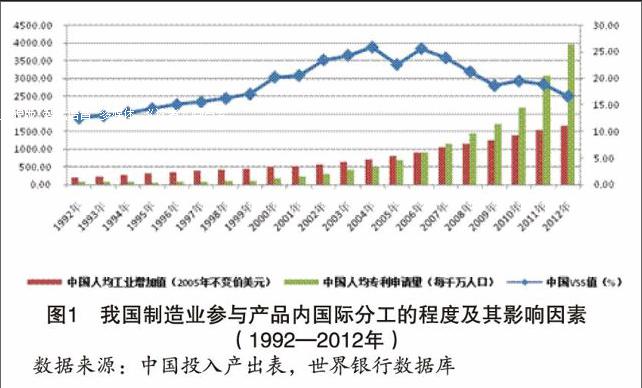
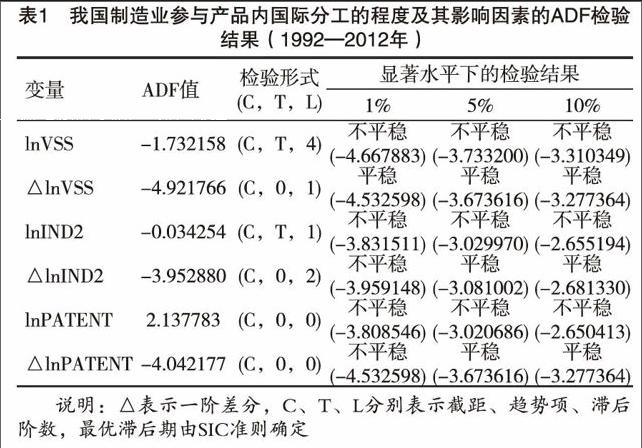
[摘 要]当代国际分工表现为产品内国际分工的态势,我国经济改革开放的历程也即积极参与产品内国际分工的历程。根据1992—2012年我国制造业参与产品内国际分工的程度、我国工业人均增加值及我国人均专利申请量,采用协整分析和Granger因果检验等方法,实证研究相关变量对我国制造业参与产品内国际分工程度的影响。研究结论表明,产业规模和技术水平对我国制造业参与产品内国际分工程度的影响为负,我国经济发展要重视这种负面效应的冲击,从倚重国际分工转向重视内需和国内分工。
[关键词]产品内国际分工;影响因素;产业规模;技术水平
[中图分类号]F740 [文献标识码]A [文章编号]1671-8372(2015)01-0089-04
Abstract:The contemporary international specialization shows the tendency of the international intra-product specialization, and the history of Chinese economic reform and opening up is taking an active part in the process of international intra-product specialization. According to the extent of Chinese manufacturing industries participating in the intra-product specialization, Chinese industrial value-added per capita and patents application per capita from 1992 to 2012, the effects of relevant variables to Chinese manufacturing industries participating in the international intra-product specialization are analyzed with the help of co-integration analysis and Granger causality test. The results show that the industrial scale and technological level make negative effects on Chinese participation in international intra-product specialization. So to develop Chinese economy, we should pay attention to this kind of negative effects and turn from relying heavily upon on international intra-product specialization to attach importance to domestic demand and domestic division of labor.
Key words:international intra-product specialization; influencing factors; industrial scale; technical level
一、引言
从经济原理分析,开放条件下国际分工是世界及一国经济发展的基础。国际分工会在世界经济发展的不同阶段展现出不同的特征,当前的国际分工即以产品内国际分工为主要形态。产品内国际分工的特征在于将特定产品生产阶段的不同生产环节配置到不同国家和地区,即一国参与国际分工的基础不是基于产业或产品的划分,而是基于特定产品生产环节的划分。在产品内国际分工的大背景下,任何一国的经济发展都已经在这种开放条件下进行,我国经济改革开放三十多年的发展历程,也即积极参与产品内国际分工的历程。由于当前的产品内国际分工兼具产业间和产业内分工的特点,因此国内外现有文献对产品内国际分工影响因素的研究,体现在基于要素禀赋和比较优势的研究、产业规模框架下的研究、产业组织理论框架和企业效率框架下的研究及分工成本框架下的研究等四个方面。……