肾病血液透析合并肺部感染的影响因素分析及病原菌特点
2024-06-21雷萌吴雯邬俊勇徐石张
雷萌 吴雯 邬俊勇 徐石张
*基金项目:2023年宜春市指导性科技计划项目(2023ZDJH2721)
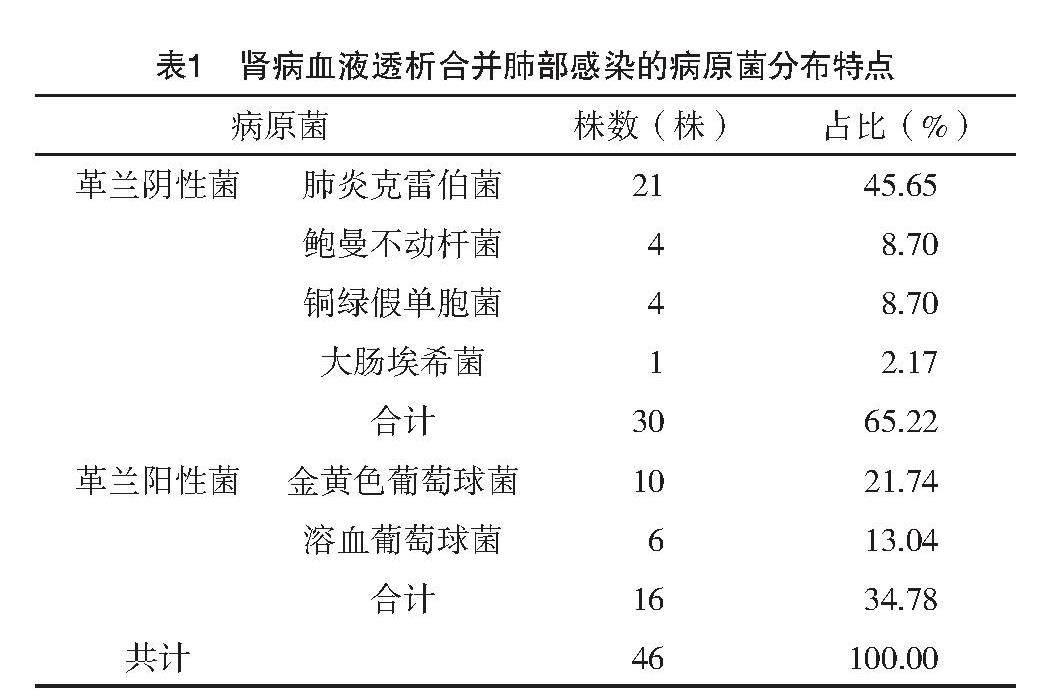
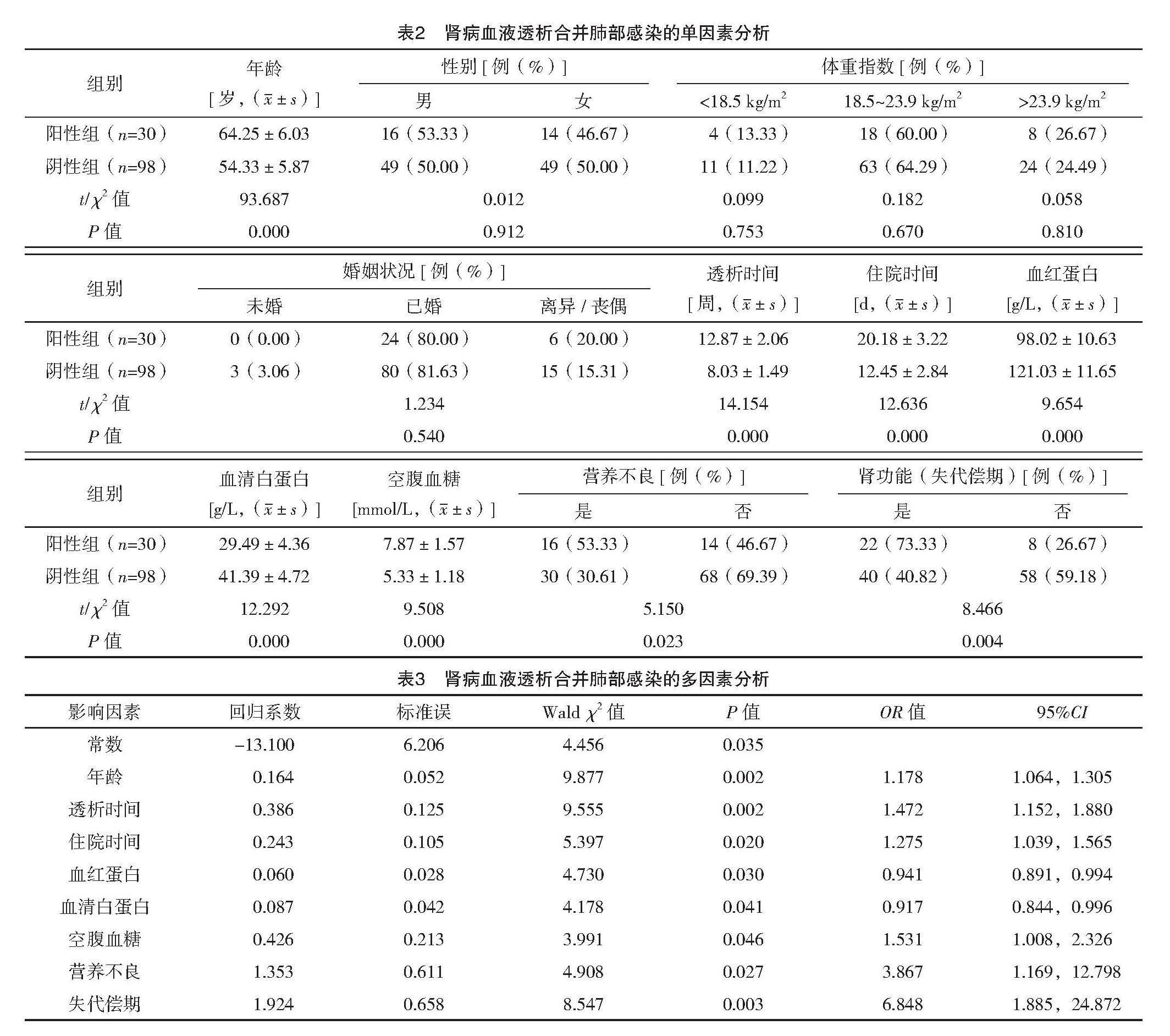
【摘要】 目的:探讨肾病血液透析合并肺部感染的影响因素,并分析病原菌分布特点。方法:选取2022年1月—2023年9月宜春市人民医院收治的128例肾病血液透析患者作为研究对象,根据是否发生肺部感染将患者分为阳性组(肺部感染)和阴性组(无肺部感染),所有患者均行血液透析治疗,统计患者肺部感染率,分析病原菌分布特点,收集患者的一般临床资料进行单因素分析,并进一步分析肺部感染的影响因素。结果:128例患者中,30例患者发生肺部感染,发生率为23.44%。共分离出46株病原菌,革兰阴性菌30株(65.22%),其中肺炎克雷伯菌占比最高(45.65%);革兰阳性菌16株(34.78%),其中金黄色葡萄球菌占比最高(21.74%)。阳性组年龄大于阴性组,透析时间、住院时间均长于阴性组,血红蛋白、血清白蛋白水平均低于阴性组,空腹血糖、营养不良占比、肾功能(失代偿期)占比均高于阴性组(P<0.05);多因素logistic回归分析显示,年龄、透析时间、住院时间、血红蛋白、血清白蛋白、空腹血糖、营养不良、肾功能均为肾病血液透析合并肺部感染的影响因素(P<0.05)。结论:年龄、透析时间、住院时长、血红蛋白、血清白蛋白、空腹血糖、营养状况、肾功能是肾病血液透析患者并发肺部感染的影响因素,其感染的病原菌主要为肺炎克雷伯菌与金黄色葡萄球菌。
【关键词】 肾病 血液透析 肺部感染 影响因素 病原菌特点
Analysis of Influencing Factors and Characteristics of Pathogenic Bacteria of Nephrosis with Hemodialysis Complicated with Pulmonary Infection/LEI Meng, WU Wen, WU Junyong, XU Shizhang. //Medical Innovation of China, 2024, 21(15): -174
[Abstract] Objective: To explore the influencing factors of nephrosis with hemodialysis complicated with pulmonary infection, and to analyze the distribution characteristics of pathogenic bacteria. Method: A total of 128 nephrosis with hemodialysis patients admitted to Yichun People's Hospital from January 2022 to September 2023 were selected as the study objects, and the patients were divided into a positive group (pulmonary infection) and a negative group (no pulmonary infection) according to whether pulmonary infection occurred or not. All patients were treated with hemodialysis, the pulmonary infection rate of patients was counted, and the distribution characteristics of pathogenic bacteria were analyzed. The general clinical data of the patients were collected for single factor analysis, and the influencing factors of pulmonary infection were further analyzed. Result: Among 128 patients, 30 patients developed pulmonary infection, with an incidence rate of 23.44%. A total of 46 strains of pathogenic bacteria were isolated, of which 30 were Gram negative bacterium (65.22%), and Klebsiella pneumoniae (45.65%) accounted for the highest proportion. There were 16 Gram positive bacteria (34.78%), among which Staphylococcus aureus (21.74%) accounted for the highest proportion. The age of positive group was older than that of negative group, the dialysis time and hospital stay were longer than those of negative group, the levels of hemoglobin and serum albumin were lower than those of negative group, and fasting blood glucose, the proportion of malnutrition and renal function (decompensation stage) were higher than those of negative group (P<0.05). Multivariate logistic regression analysis showed that age, dialysis time, hospital stay, hemoglobin, serum albumin, fasting blood glucose, malnutrition and renal function were all influencing factors of nephrosis with hemodialysis complicated with pulmonary infection (P<0.05). Conclusion: Age, dialysis time, hospital stay, hemoglobin, serum albumin, fasting blood glucose, malnutrition and renal function are the factors affecting pulmonary infection in patients with nephrosis with hemodialysis. The main pathogens of infection are Klebsiella pneumoniae and Staphylococcus aureus.
[Key words] Nephrosis Hemodialysis Pulmonary infection Influencing factors Characteristics of pathogenic bacteria
First-author's address: Department of Laboratory Medicine, Yichun People's Hospital, Yichun 336000, China
doi:10.3969/j.issn.1674-4985.2024.15.040
随着生活方式的变迁及社会经济发展,慢性疾病如糖尿病和高血压的发病率逐年上升,导致肾病的发病率也相应增加[1]。肾脏作为人体的主要排毒器官,当其功能出现障碍时,血液透析成为替代其功能的主要方法。然而,血液透析治疗本身带有一定的并发症风险,其中,肺部感染是相对常见的一种[2]。肾病本身及血液透析过程均可能影响患者的免疫功能,使其更容易受到感染。加之透析过程中可能接触的透析液、导管及其他医疗器械,都为患者提供了潜在的细菌感染途径[3-5]。……