不同环境因素对苘麻种子萌发及出苗的影响
2022-06-07耿志同韩玉军张永倩陶波马红
耿志同 韩玉军 张永倩 陶波 马红
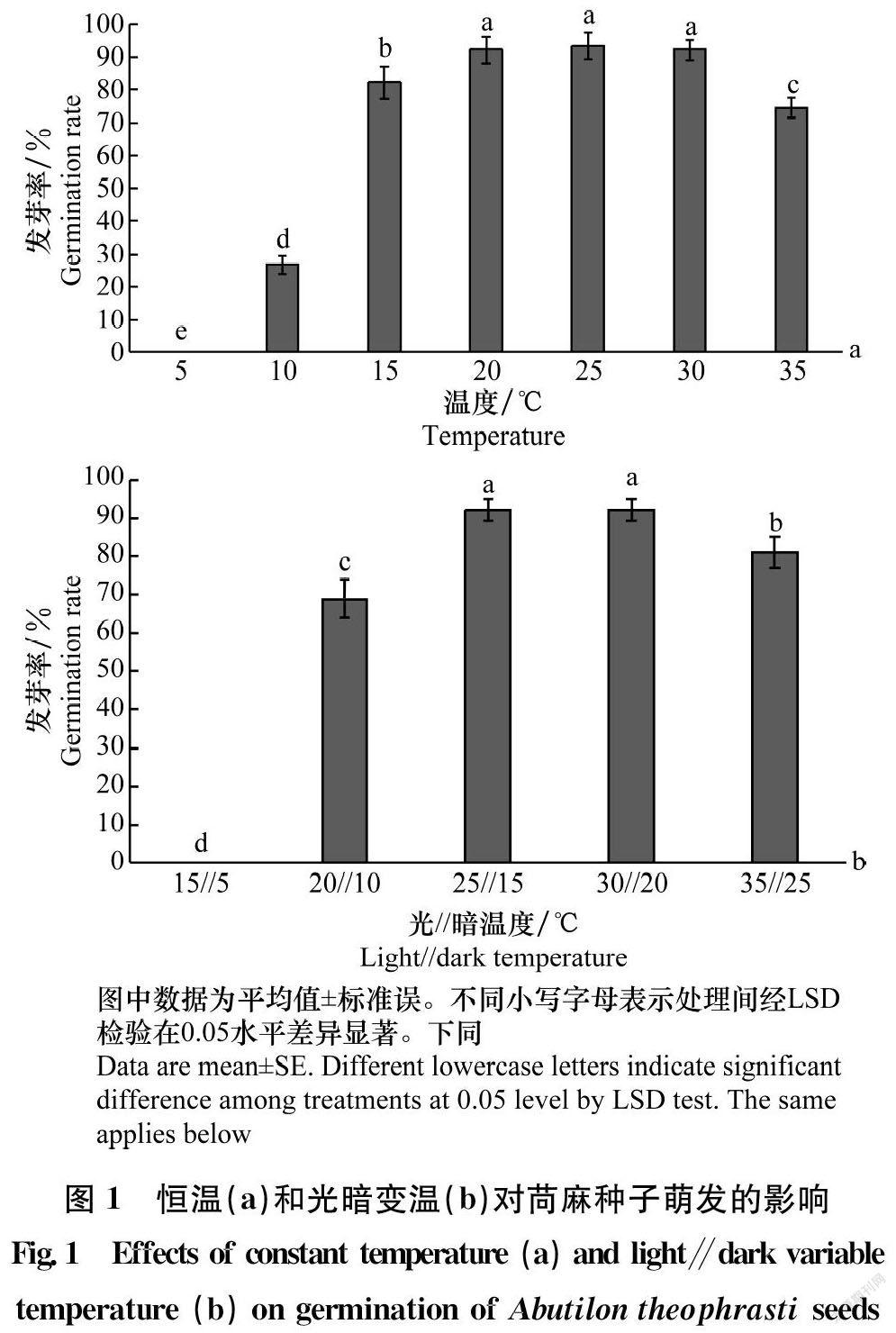

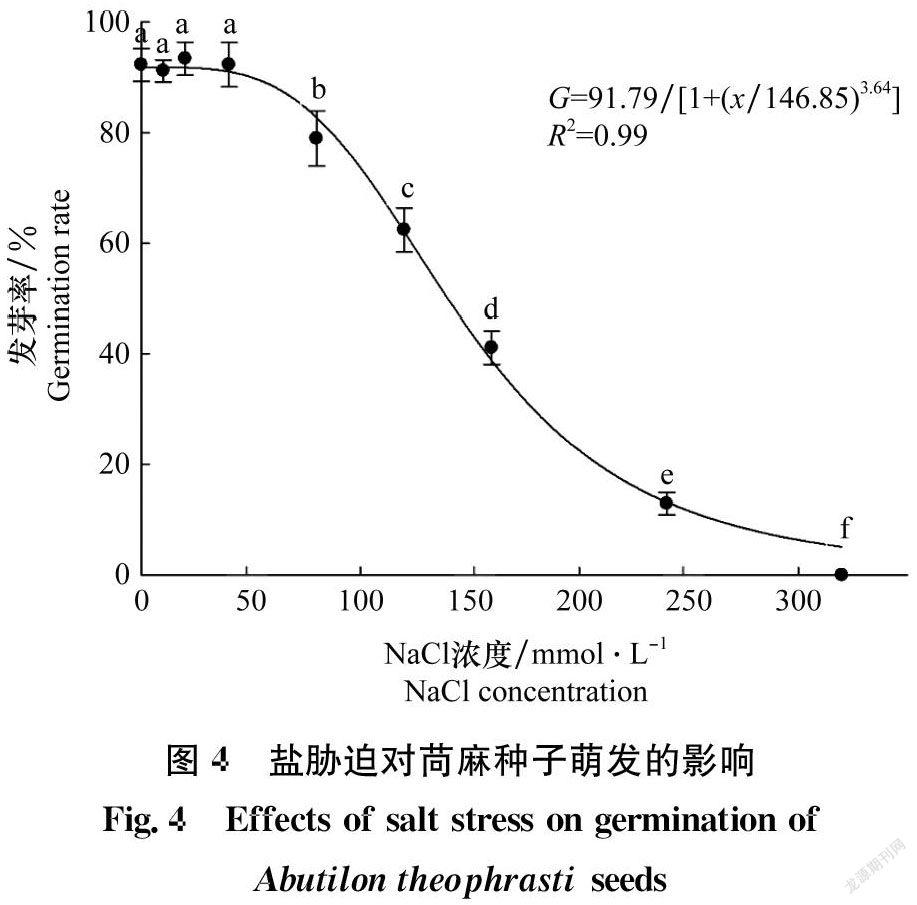
摘要 苘麻Abutilon theophrasti Medikus具有生长旺盛、结籽量大和适应性强等特点,已成为多种农田中的恶性杂草,研究环境条件对苘麻萌发的影响对进一步探究其生物学特性与综合防治技术具有重要意义。通过室内试验研究温度、光照、酸碱度、水分胁迫、盐胁迫与苘麻种子萌发及埋土深度与其出苗的关系。结果表明,在10~35℃下苘麻种子均可萌发,20~30℃为其最适萌发温度范围;种子萌发对光照不敏感;适应pH范围广,在pH 4~9条件下种子发芽率均在70%以上;水势在-0.2~0 MPa范围内种子发芽率最高,当水势小于-0.7 MPa时,种子萌发受到完全抑制;有较强的耐盐性,NaCl浓度为160 mmol/L时发芽率超过40%;种子对播种深度适应性较强,覆盖不超过8 cm的土层均可出苗。
关键词 苘麻;萌发;出苗;环境条件
中图分类号: S451
文献标识码: A
DOI: 10.16688/j.zwbh.2021208
Abstract Abutilon theophrasti Medikus has become a malignant weed in many fields because of its strong growth, large seed bearing capacity and strong adaptability. It is of great significance to study the effects of environmental factors on the germination of A.theophrasti for further research on its biological characteristics and comprehensive control technology. The relationship between temperature, light, pH value, water, salt stress and seed germination, burial depth and seedling emergence of A.theophrasti was studied by laboratory experiments. The results showed that the seeds of A.theophrasti could germinate at the temperature of 10-35℃, and the optimum temperature range was 20-30℃. Seed germination was not sensitive to light. It was suitable for a wide range of pH, and the germination rate of seeds was above 70% at pH4-9. The germination rate of seeds was the highest when the water potential was in range of -0.2 to 0 MPa, and the germination was completely inhibited when the water potential was less than -0.7 MPa. It had a strong salt tolerance, and the germination rate was over 40% when the NaCl concentration was 160 mmol/L. The seeds had strong adaptability to burial depth, and seedlings could emerge from the soil layer of a depth of no more than 8 cm.
Key words Abutilon theophrasti;germination;emergence;environmental factors
苘麻Abutilon theophrasti Medikus又名青麻、麻果,隸属于锦葵科苘麻属的一年生草本植物,是我国多种农作物田间的主要恶性杂草之一[1]。苘麻生长旺盛,枝叶繁茂,在与作物共生时会截获大部分光照,从而抑制作物对水分和养料的转化,造成显著的产量损失[2]。有研究报道,苘麻在与大豆和棉花的竞争中占有显著的优势,密度超过2株/m2(或2株/m 行长)的苘麻会严重影响大豆和棉花的产量及品质[3-4],高密度的苘麻(12株/m2以上)会使玉米严重减产甚至接近绝产[5]。除此之外,苘麻具有结实量大,种子活力高的特点,这使其易形成难以彻底清除的土壤种子库从而产生持续性的危害[6]。
杂草种子是杂草防除的重要靶标,系统地了解杂草种子的萌发特性可对杂草进一步发生和传播的方向进行科学合理的预测,为杂草的综合防除提供理论指导[7]。……