茶叶斑病病原菌高粱附球菌Epicoccumsorghinum的鉴定及生物学特性
2021-12-23黄鈜琳尹桥秀江仕龙包兴涛武娴王德炉陈卓
黄鈜琳 尹桥秀 江仕龙 包兴涛 武娴 王德炉 陈卓
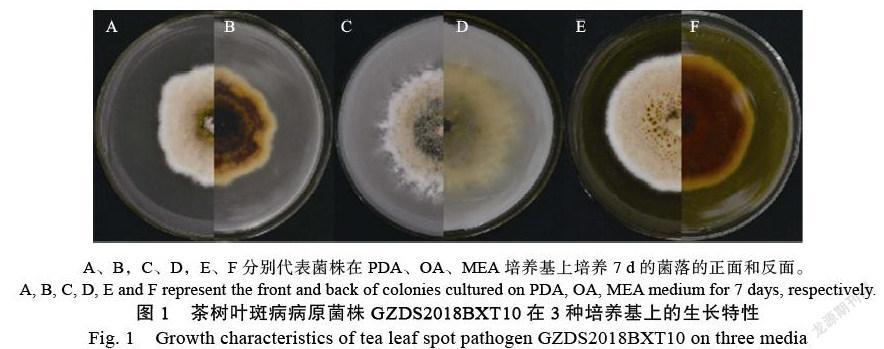
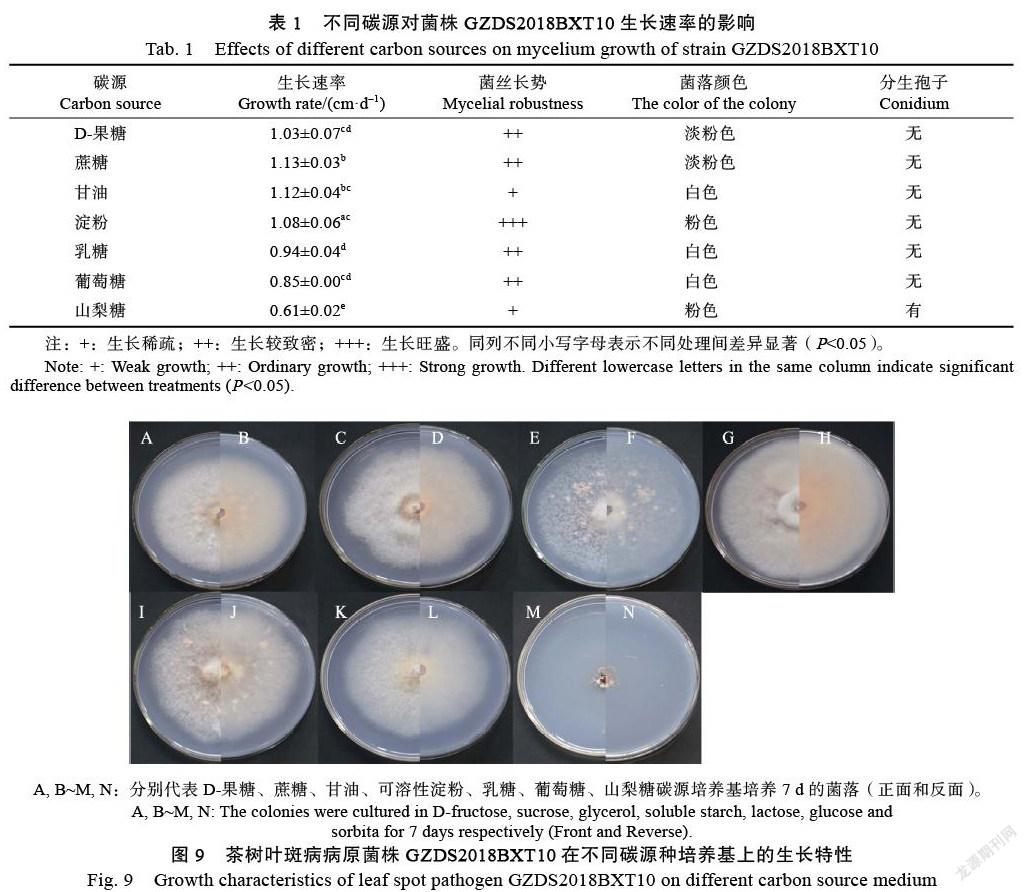

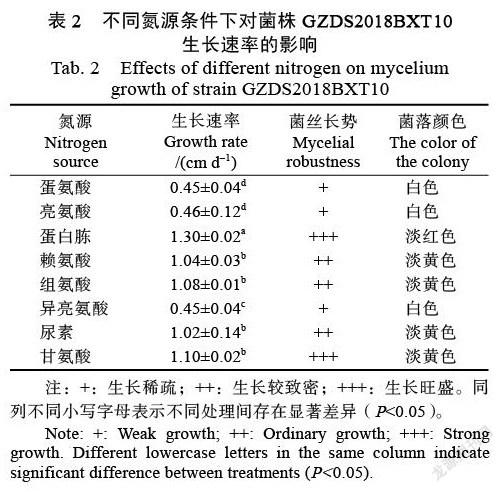
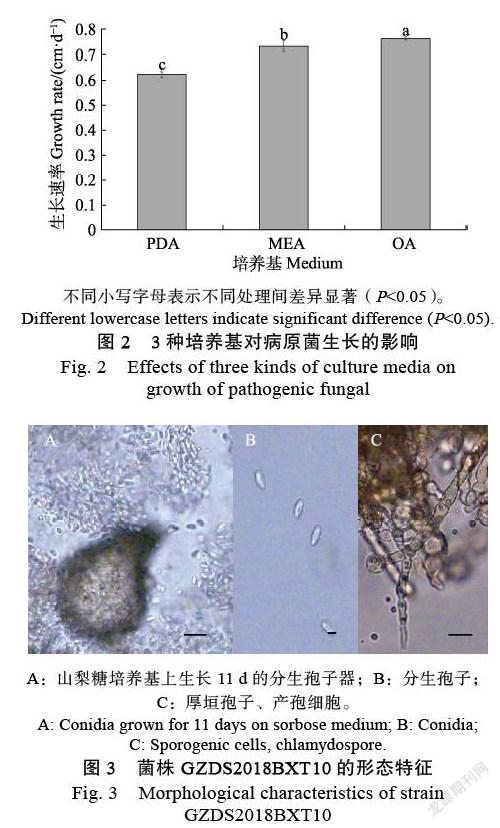
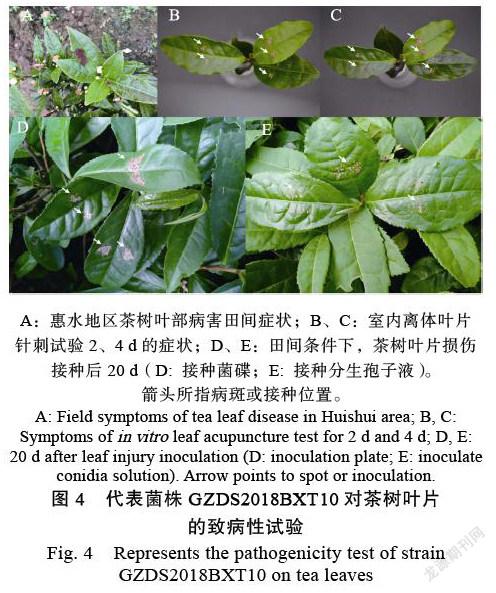
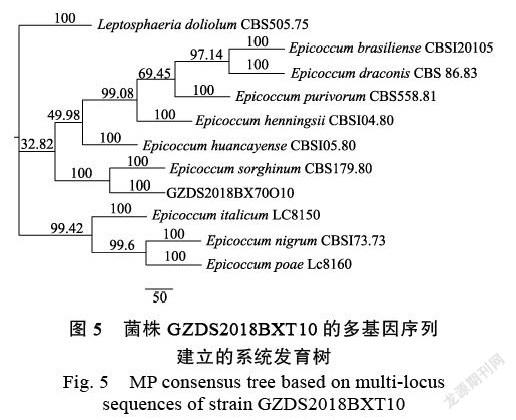
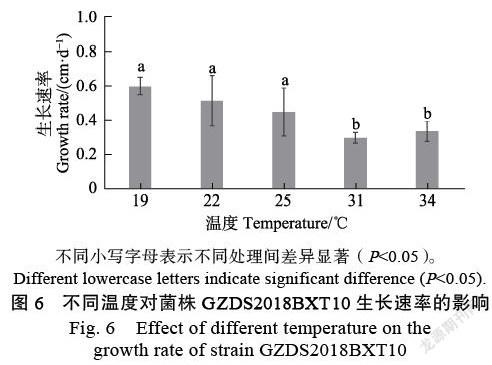
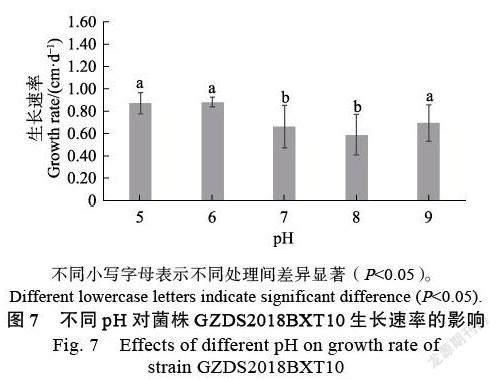
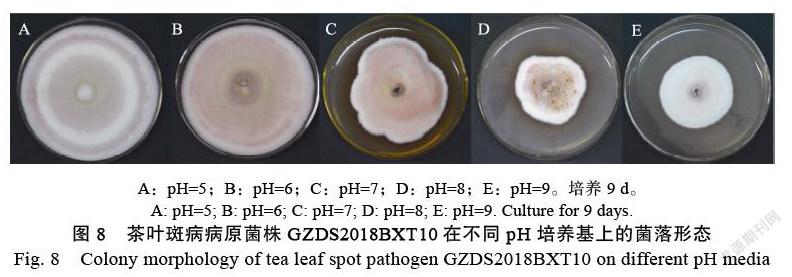
摘 要:为有效控制贵州省独山县茶叶斑病的发生与危害,本文研究了该区域茶叶斑病的病原和生物学特性。结果表明,从该地区茶叶斑病组织中分离的代表性菌株GZDS2018BXT10的菌落形态、分生孢子器、分生孢子和厚垣孢子等形态与高粱附球菌(Epicoccum sorghinum)一致。对ITS、RBP2、TUB、rDNA-LSU核酸或基因进行测序,采用PAUP软件及最大简约法构建多基因系统发育树,结果表明,GZDS2018BXT10菌株与高粱附球菌模式菌株CBS179.80在系统发育树上聚为一支,自举支持率为100%。致病性试验表明,在室内和自然条件下,GZDS2018BXT10菌株可通过损伤方式导致茶树叶部产生病斑,符合柯赫氏法则。因此,确认该区域叶斑病病原为高粱附球菌(E. sorghinum)。菌株可在PDA、OA和MEA培养基上生长,GZDS2018BXT10菌株在OA培养基上生长速率最快,为(0.76±0.01) cm/d,显著高于MEA和PDA培养基(P<0.05),在PDA上最适生长温度为22 ℃,最适pH为6.0。碳素营养和氮素营养均可影响菌丝的生长。
关键词:茶树;高粱附球菌;鉴定;致病性;生物学特性
中图分类号:S435.711 文献标识码:A
Abstract: In order to effectively control the occurrence and damage of tea leaf spot in Dushan County, Guizhou Prov-ince, this paper studied the pathogen and biological characteristics of tea leaf spot in the region. The results showed that the colonies, pycnidia, conidia and chlamydospores of the representative strain GZDS2018BXT10 were identical with the strain Epicoccum sorghinum. The gene or nucleic acid of ITS, RPB2, TUB and LSU were sequenced, then the phy-logenetic analysis was conducted by PAUP software with the method of Maximum parsimony based on multi-locus sequences. The strain GZDS2018BXT10 and E. sorghinum model strain CBS179.80 were grouped together in the phylogenetic tree, and the clade was supported by 100%. The pathogenicity test showed that the strain GZDS2018BXT10 could induce the lesion on tea leaves using wound mode under the conditions of laboratory and field, in accordance with Koch’s rule. Therefore, the pathogen of tea leaf spot was identified as E. sorghinum. The strain GZDS2018BXT10 could grow on PDA, OA and MEA medium. The strain GZDS2018BXT10 grew quickly on OA medium, and the growth rate was (0.76±0.01) cm/d, which was significantly higher than that on MEA and PDA medium (P<0.05). The optimum growth temperature and pH value on PDA medium were 22 ℃ and 6.0. Both carbon and nitrogen nutrition can affect the growth of mycelia.
Keywords: Camellia sinensis; Epicoccum sorghinum; identification; pathogenicity; biological characteristics
DOI: 10.3969/j.issn.1000-2561.2021.11.028
近年來,贵州大力发展茶产业,茶树的种植面积达3.5万hm2,位居我国第一[1-4]。由于贵州茶区海拔落差大、气候多样、早春气温偏低、倒春寒天气频发、茶树品种多样,导致茶树病害发生频次较高,对茶叶安全生产有一定影响[4]。目前关于贵州茶树病害的研究主要集中在茶轮斑病、茶炭疽病等病害[5-6]。本课题组近年来先后对贵州惠水茶轮斑病的病原菌Pseudopestalotiopsis camelliae-sinensis[7]和茶叶斑病的病原菌可可毛色二孢菌(Lasiodiplodia theobromae)[1, 8]、贵州石阡叶斑病的病原菌Phoma segeticola var. camelliae[9]、余庆茶叶斑……