基于薄层色谱的枳实与其混伪品鉴别研究
2021-11-21袁汉文李琳吕梦颖罗江溢刘杨彭彩云王炜
袁汉文 李琳 吕梦颖 罗江溢 刘杨 彭彩云 王炜

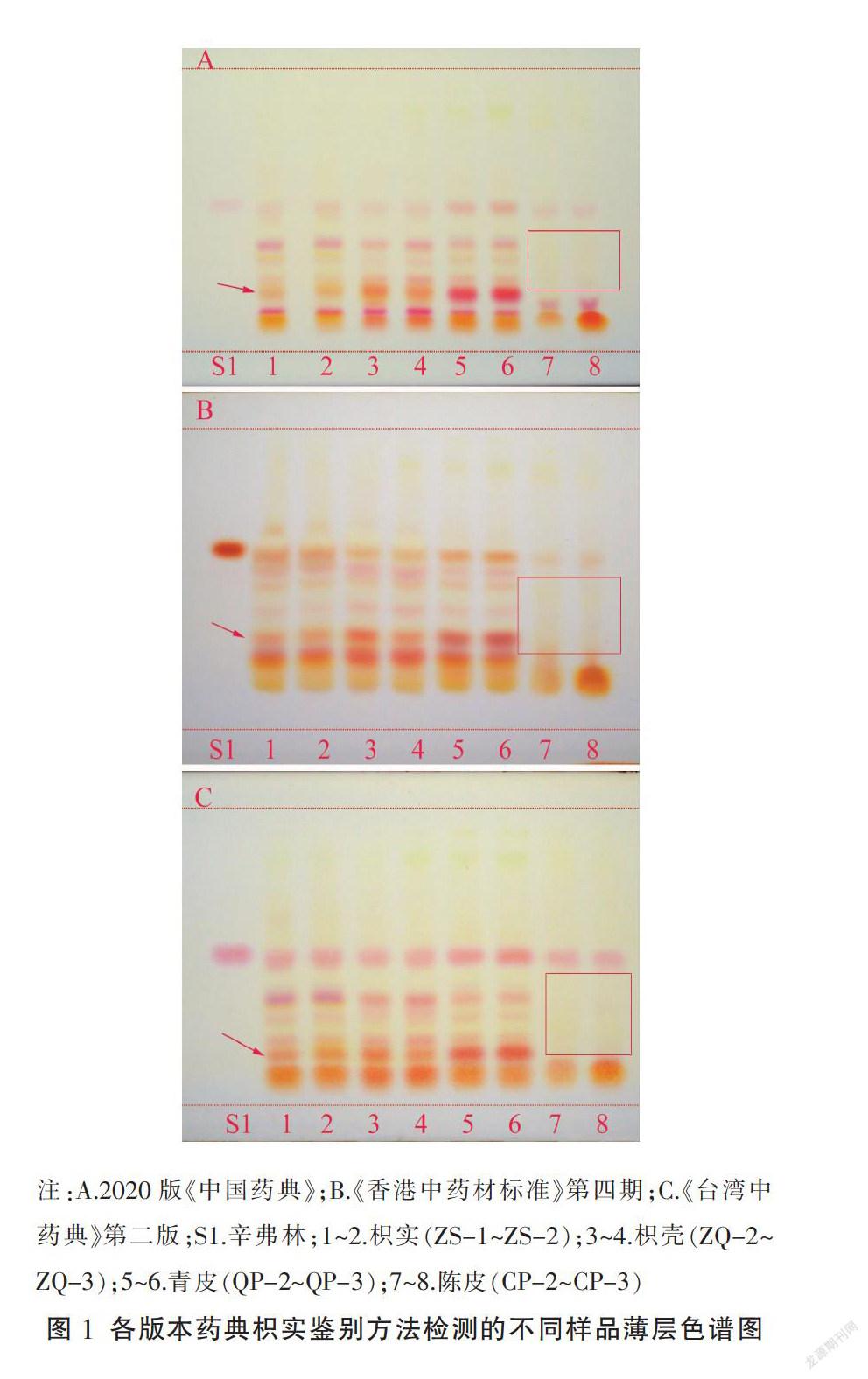
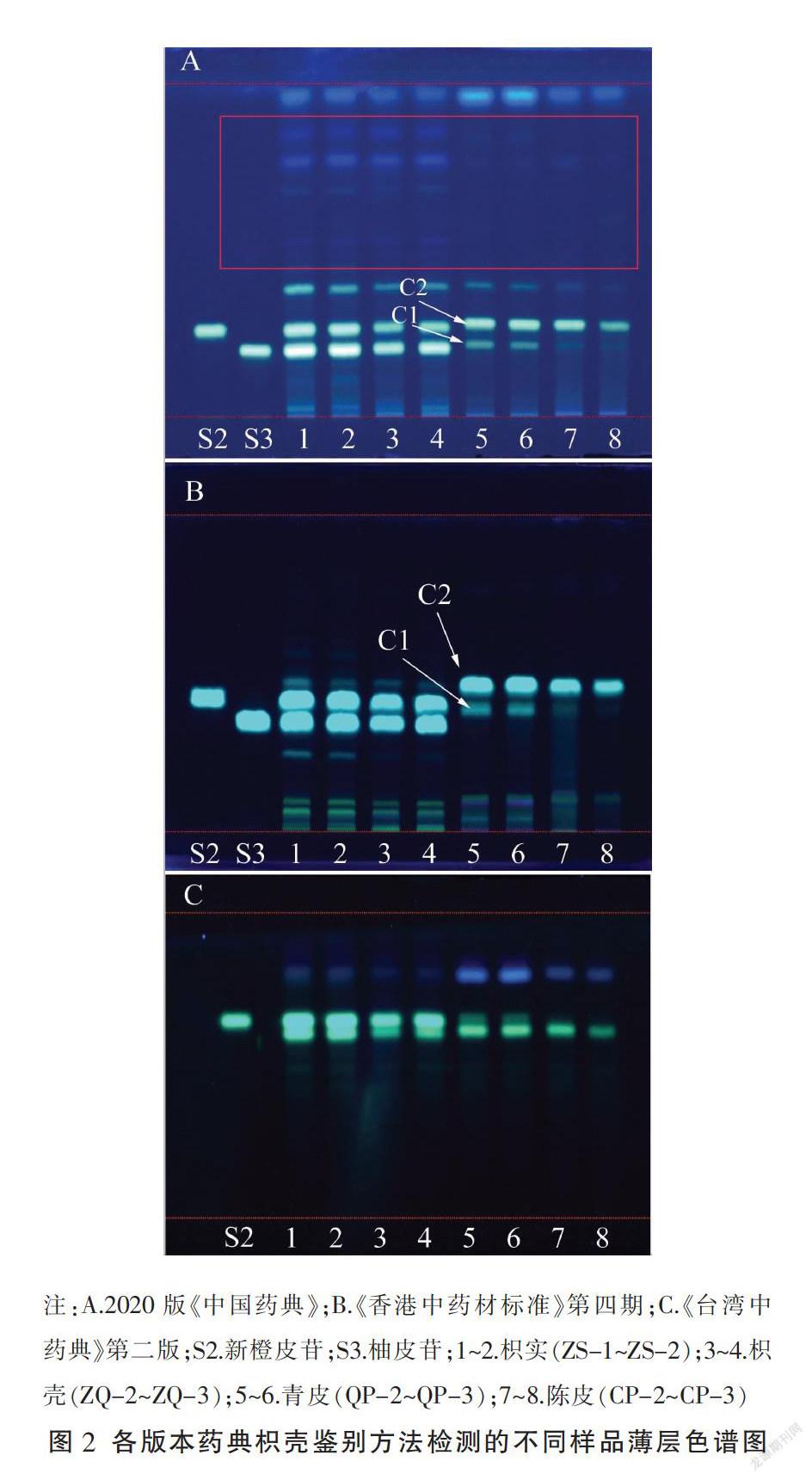
〔摘要〕 目的 對比枳实与其易混淆品枳壳、青皮、陈皮的薄层色谱鉴别方法,以期筛选更科学合理的鉴别方法,将其纳入《美国药典》和《欧洲药典》标准。方法 采用《中华人民共和国药典》《台湾中药典》《香港中药材标准》以及《中药色谱指纹图谱精细分析图集》所记载的枳实、枳壳、陈皮、青皮4味中药材的薄层色谱鉴别方法,对4味药材化学成分差异性进行系统分析研究。结果 对通过13种薄层色谱方法得到的色谱图进行对比分析,发现2020版《中华人民共和国药典》中枳壳的方法对枳实和其易混淆品种青皮和陈皮的鉴别效果较好。结论 4味药材化学成分具有较高的相似性,各版本药典中4味药材的薄层色谱鉴别方法均能对四者化学成分进行分析,但绝大部分方法没有特异性,无法区分四者。
〔关键词〕 枳实;枳壳;青皮;陈皮;薄层色谱;鉴别
〔中图分类号〕R282.5 〔文献标志码〕A 〔文章编号〕doi:10.3969/j.issn.1674-070X.2021.10.011
Research on Discrimination of Zhishi (Aurantii Fructus Immaturus) From Its Commonly
Known Adulterants Based on Thin Layer Chromatography
YUAN Hanwen1, LI Lin1, LV Mengying1, LUO Jiangyi1, LIU Yang1,2, PENG Caiyun1, WANG Wei1*
(1. TCM and Ethnomedicine Innovation & Development International Laboratory, Hunan University of Chinese Medicine, Changsha, Hunan 410208, China; 2. Hunan Institute for Food and Drug Control, Changsha, Hunan 410001, China)
〔Abstract〕 Objective To compare the thin layer chromatography method for the identification of Zhiqiao (Aurantii Fructus), Qingpi (Citri Reticulatae Pericarpium Viride) and Chenpi (Citri Reticulatae Pericarpium), screen out the best one, and help to develop reasonable and scientific standards of American Pharmacopoeia and European Pharmacopoeia. Methods The differences of chemical components of four kinds of Chinese herbal medicines, namely, Zhishi (Aurantii Fructus Immaturus), Zhiqiao (Aurantii Fructus), Qingpi (Citri Reticulatae Pericarpium Viride) and Chenpi (Citri Reticulatae Pericarpium), were systematically analyzed and studied by thin layer chromatography method recorded in Chinese Pharmacopoeia, Taiwan Traditional Chinese Medicine Dictionary, Hong Kong Standard of Chinese Herbal Medicines and Atlas of Fine Analysis of Chromatographic Fingerprint of Chinese Herbal Medicines. Results The results found the method in Chinese Pharmacopoeia (2020 edition) showed the method of Zhiqiao (Aurantii Fructus) had better discrimination effect on Zhishi (Aurantii Fructus Immaturus) and its commonly known adulterants, after comparison of 13 methods in the pharmacopeia. Conclusion The four herbal medicines showed high similarity in chemical constituents. All the methods can be used for the analysis of the herbs, but most of them have the shortcomings of poor specificity and can not be used to distinguish the four herbs.
〔Keywords〕 Zhishi (Aurantii Fructus Immaturus); Zhiqiao (Aurantii Fructus); Qingpi (Citri Reticulatae Pericarpium Viride); Chenpi (Citri Reticulatae Pericarpium); thin layer chromatography; discrimination
枳实为芸香科植物酸橙Citrus aurantium L.及其栽培变种或甜橙Citrus sinensis Osbeck的干燥幼果,5~6月收集自落的果实,除去杂质,自中部横切为两半,晒干或低温干燥,较小者直接晒干或低温干燥[1-3]。枳实作为常用的理气药,最早记载于《神农本草经》,其性微寒,味苦,辛、酸,归脾、胃經,具有良好的破气消积、化痰散痞等功效[4],临床主要用于积滞内停、痞满胀痛、泻痢后重、大便不通、痰滞气阻胸痹、结胸、脏器下垂等疾病的治疗[5-7]。
市售枳实存在基源混乱的现象[8-10]。其中,枳壳、陈皮、青皮3种中药材与枳实同属于芸香科柑橘属,基源相同或相近,在化学成分和功效方面皆存在相似之处,导致4种药材极易混淆,特别是枳实与个青皮,炮制后的饮片大小、形状相似,色泽相同,横切面特征相近[11]。……
