基于多特征融合的动力电池 RUL 预测
2021-09-13梁丹阳程相郗建国李宗召高建平
梁丹阳 程相 郗建国 李宗召 高建平
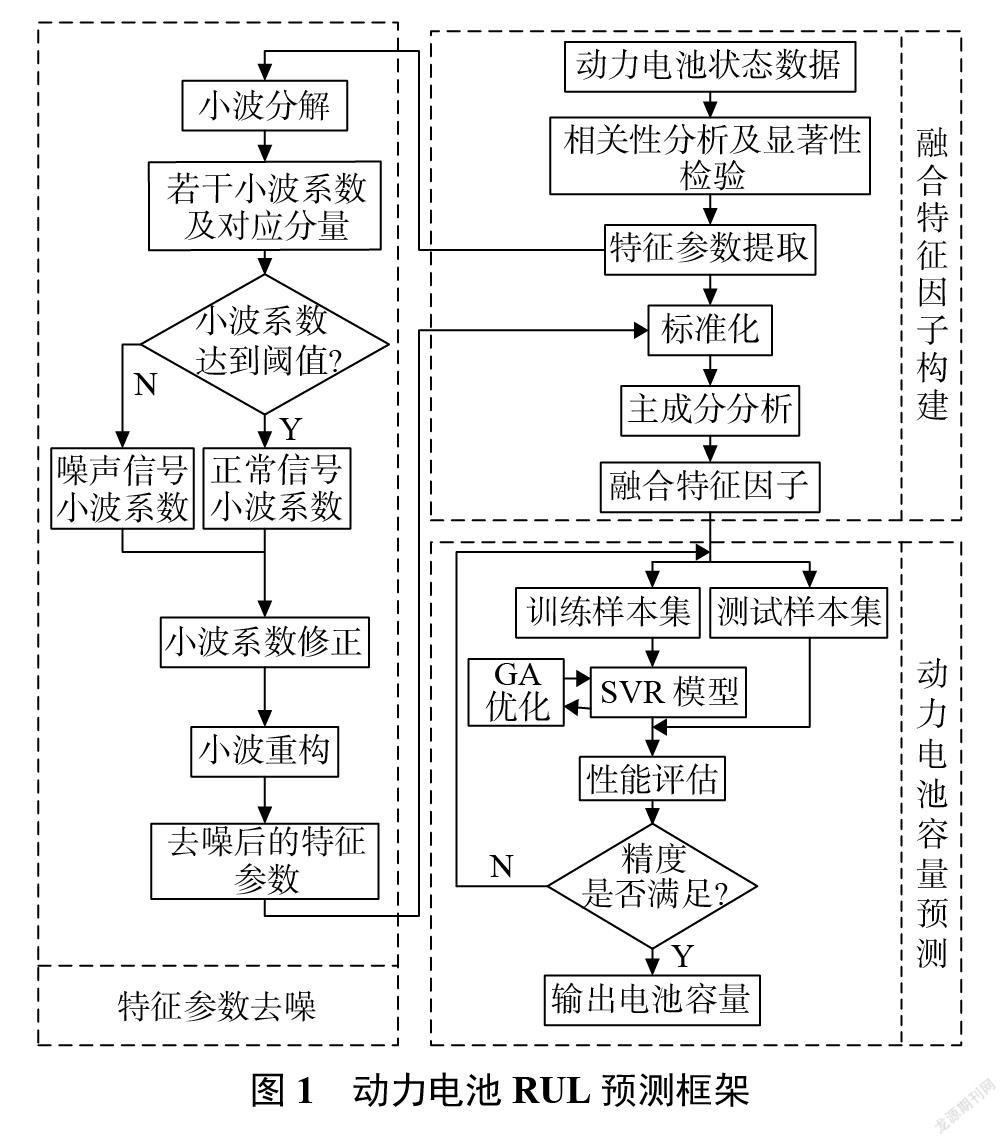
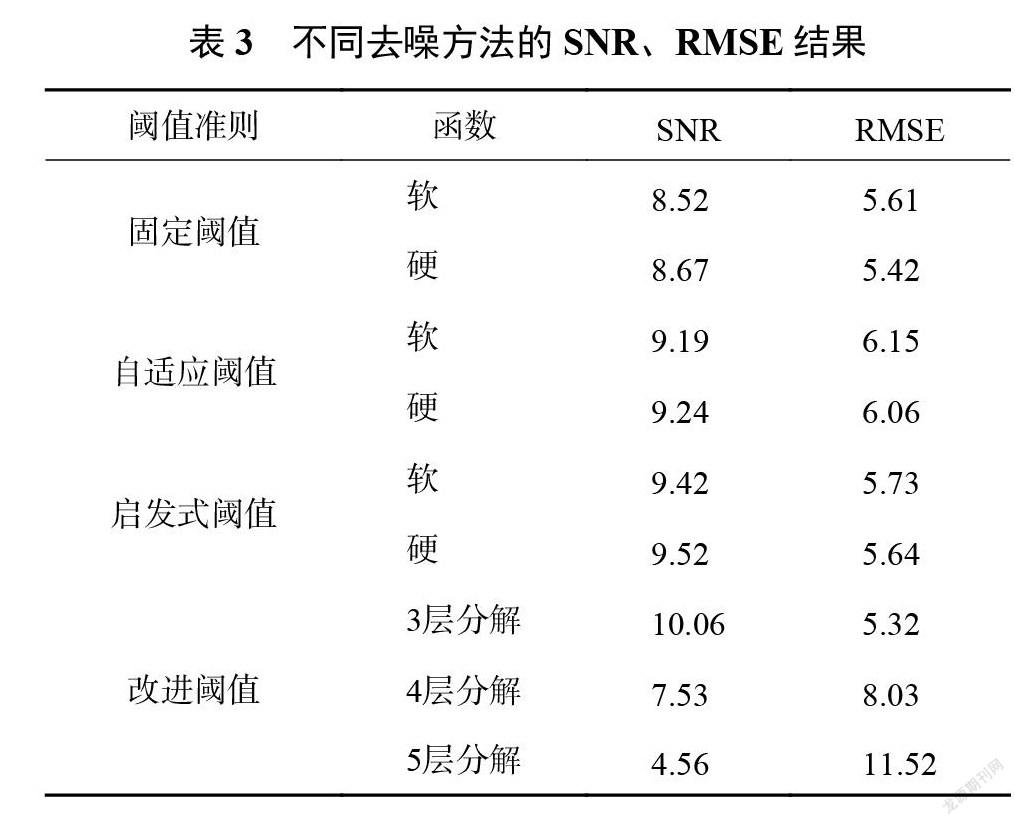
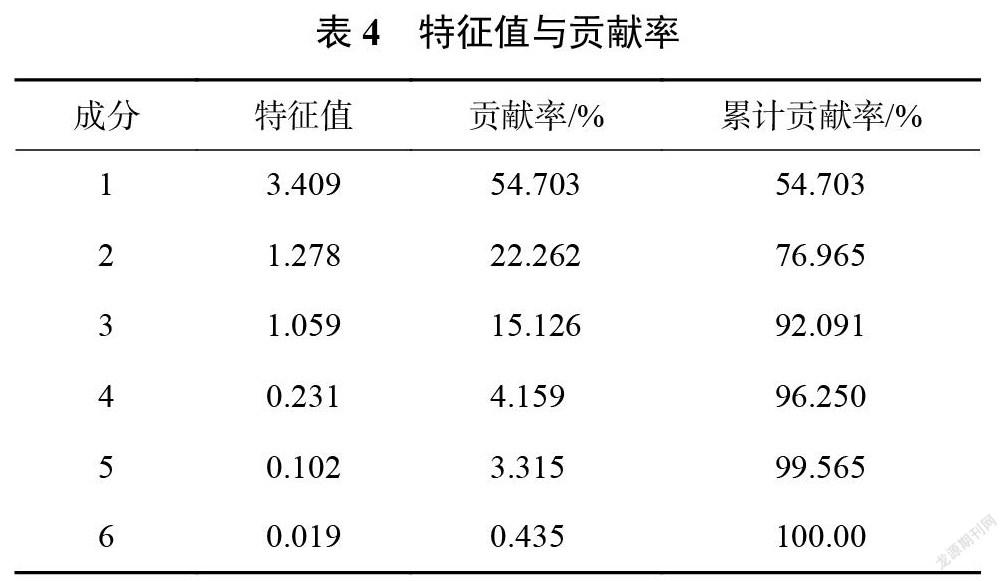
摘要:针对车载动力电池容量测试成本高及剩余使用寿命(remaining useful life,RUL)预测精度低的问题,提出一种基于多特征融合的动力电池 RUL 预测方法。首先对某款纯电动客车的动力电池历史运行数据分析,挖掘出能够代表动力电池性能衰减的特征参数;然后利用小波变换(wavelet transform,WT)去除采集过程中的干扰信号,并通过主成分分析法(principal component analysis,PCA)得到降维并去除冗余后的融合特征因子,利用融合特征因子构建基于遗传算法优化的支持向量回归(supportvector regression,SVR )预测模型;最后通过在哈尔滨、合肥及郑州3个城市的历史运行数据进行验证。结果表明:该方法能够准确地预测出3个动力电池的容量,且去噪后的预测误差平均降低60%。
关键词:剩余使用寿命;融合特征因子;支持向量回归;小波变换;主成分分析
中图分类号: U469.72;U472;TM912文献标志码: A文章编号:1674–5124(2021)12–0149–08
RUL prediction of power battery based on multi-feature fusion
LIANG Danyang1,CHENG Xiang2,XI Jianguo1,LI Zongzhao1,GAO Jianping1
(1. School of Vehicle and Traffic Engineering, Henan University of Science and Technology, Luoyang 471003, China;2. Yutong Bus Co., Ltd., Zhengzhou 450016, China)
Abstract: Aiming at the high cost of vehicle power battery capacity test and the low accuracy of remaining useful life prediction, a prediction method of RUL of power battery based on multi feature fusion is proposed. Firstly,thehistoricaloperationdatasofthepowerbatteriesofaelectricbuswasanalyzed,andthe characteristic parameters which can represent the performance degradation of the power battery were mined. Then, the interference signal in the acquisition process was removed by wavelet transform, and the fusion featurefactorafterdimensionreductionandredundancyremovalwasobtainedbyprincipalcomponent analysis,and thesupport vector regression prediction model basedongeneticalgorithmoptimization was constructed by using fusion feature factors. Finally, through the historical operation data of Harbin, Hefei and Zhengzhou, the resultsshow that the proposed method can accurately predict the capacity of three power batteries, and the prediction accuracy after denoising is improved by more than 60%.
Keywords: remaining useful life; fusion feature factors; support vector regression; wavelet transform; principal component analysis
0引言
动力电池作为电动汽车的动力来源,其性能优劣影响电动汽车行驶过程中的动力性、经济性及安全可靠性[1]。
动力电池 RUL 预测目前主要有基于模型和基于数据驱动预测[2]。电池模型包括电化学模型和等效电路模型。电化学模型存在内部参数获取难度大,计算复杂的问题[3-5];等效电路模型利用等效电路元件模拟电池的外部工作特性,存在通用性差及参数辨识误差大的问题[6-7]。基于数据驱动的动力电池 RUL 预测,无需对其内部电化学反应及其失效机理过程进行深入研究学习,成为当前电池 RUL 预测的研究热点[8]。
目前多数基于數据驱动的电池 RUL 预测研究,通过电池实验,选取合适的健康因子进行电池的 RUL 研究,且大多研究利用电池的容量或阻抗作为健康因子进行电池的 RUL 研究[9-10]。……
