乳酸锂兼做锂源和碳源制备高性能Li3V2(PO4)3/C复合正极材料
2021-09-10汪燕鸣刘晓玉王飞
汪燕鸣 刘晓玉 王飞
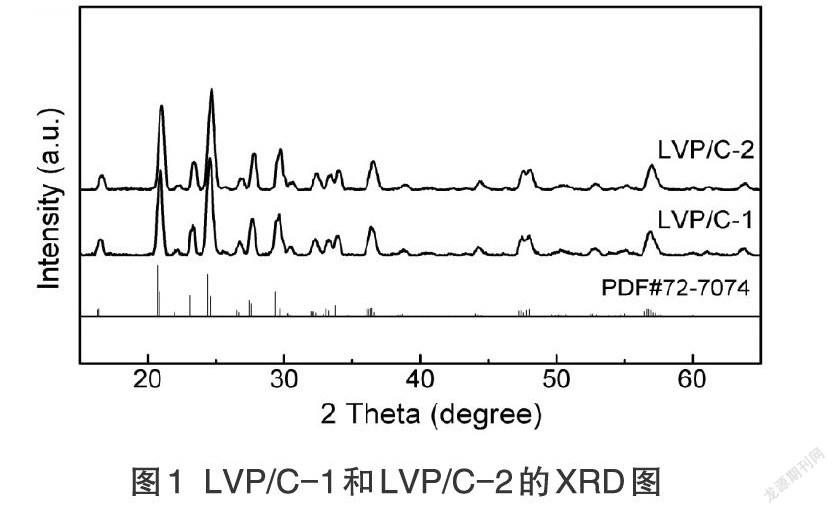


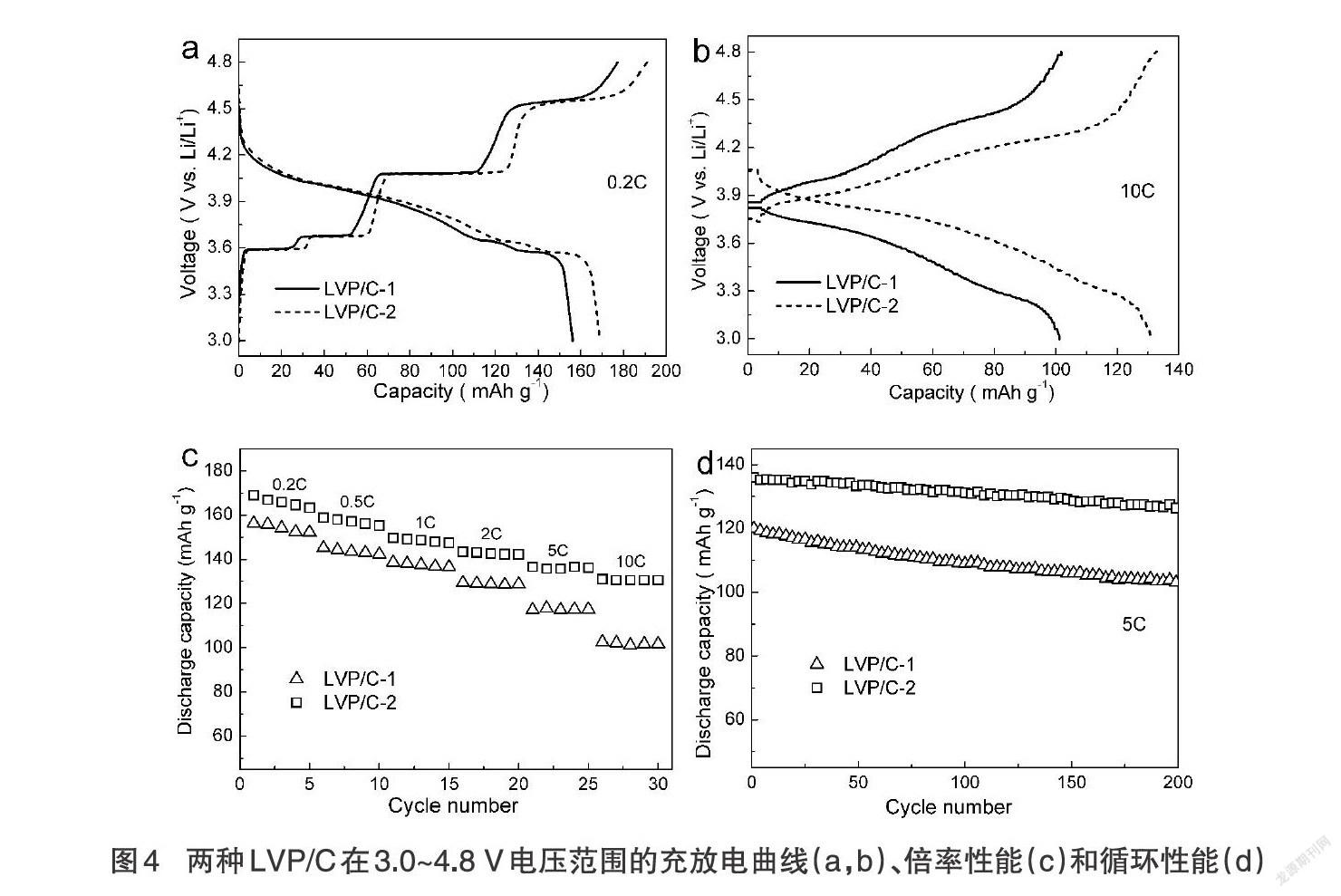

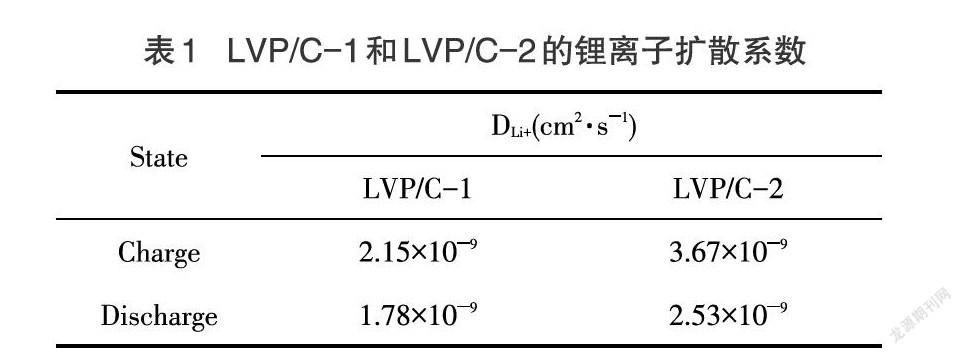
【摘 要】 以乳酸锂兼做锂源和碳源,通过高温固相反应制备锂离子电池Li3V2(PO4)3/C复合正极材料。研究一次球磨混合原料和原料预分解后的二次球磨处理对复合材料晶体结构、颗粒尺寸、颗粒分散性和电化学性能的影响。结果表明,相比一次球磨,经过二次球磨处理制备的Li3V2(PO4)3/C复合材料具有更小的颗粒尺寸和更高的颗粒分散性,并表现出更优异的电化学性能。在3.0~4.3 V电压范围,10 C倍率下的放电比容量为115 mAh·g−1,在1 C倍率下循环200次容量保持率达到97%;在3.0~4.8 V电压范围,5 C倍率下循环200次容量保持率为93%;表现出优异的倍率性能和循环稳定性。
【关键词】 锂离子电池;Li3V2(PO4)3;乳酸锂;正极材料
High-performance of Li3V2(PO4)3/C Cathode Composite Prepared by Using Lithium Lactate as Lithium and Carbon Sources
Wang Yanming, Liu Xiaoyu, Wang Fei*
(Huaibei Normal University, Huaibei 235000, China)
[Abstract] Li3V2(PO4)3/C cathode materials were prepared by a solid-phase reaction using lithium lactate as the lithium and carbon sources. The raw materials were mixed by primary ball milling and further ball milling after precalcining, respectively. The effect of ball milling method on the crystal structure, particle size, particle dispersity, and electrochemical performance of the composite was investigated. The results indicate that the Li3V2(PO4)3/C composite prepared via secondary ball milling has smaller particle size, higher dispersity, and superior electrochemical performance than that prepared by primary ball milling. The composite presents a specific discharge capacity of 115 mAh·g−1 at 10 C and a capacity retention of 97% at 1 C after 200 cycles in the voltage range of 3.0~4.3 V. Moreover, the capacity retention of 93% at 5 C after 200 cycles can also be achieved in the voltage range of 3.0~4.8 V, illustrating outstanding rate capability and cycling stability.
[Key words] lithium ion batteries; Li3V2(PO4)3; lithium lactate; cathode materials
〔中图分类号〕 TQ152 〔文献标识码〕 A 〔文章编号〕 1674 - 3229(2021)01- 0000 - 00
0 引言
锂离子电池在小型移动电源、电动汽车和大型储能装置等领域发挥着重要作用。然而,市场的不断发展需求更高性能的新一代锂离子电池,这就要求继续提升电极材料的电化学性能,降低成本,提高安全性[1]。过渡金属磷酸盐由于相对高的理论容量和工作电压、丰富的原料来源以及稳定的晶体结构被认为是一类非常具有应用前景的锂离子电池正极材料[2]。其中,磷酸钒锂(Li3V2(PO4)3) 快离子导体具有三维锂离子扩散通道,从而使锂离子扩散系数可达到10−9~10−10 cm2·s−1[3]。然而,其晶体结构中分开的VO6八面体排列导致电子电导率低(~10−7 S·cm−1),严重影响了其电化学活性的发挥[4]。为了提高Li3V2(PO4)3的电化学性能,研究者采用颗粒表面碳包覆、减小材料颗粒尺寸、体相异种离子掺杂以及制备多孔结构材料等方法,取得了显著的效果[5-7]。……