血清胆红素与尿酸在冠心病患者临床检验中的效果分析
2021-09-10黎晓绮郭翼华
黎晓绮 郭翼华
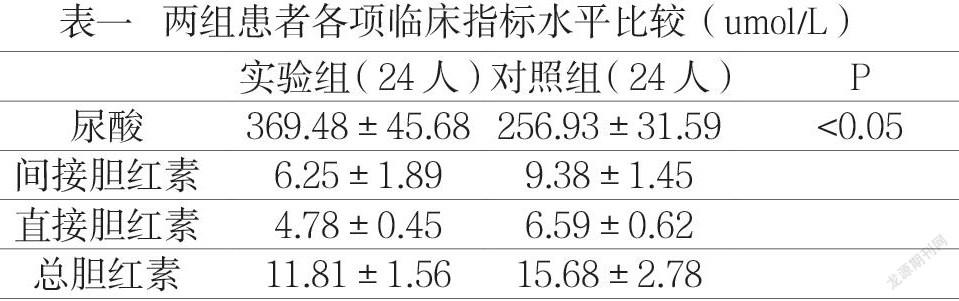
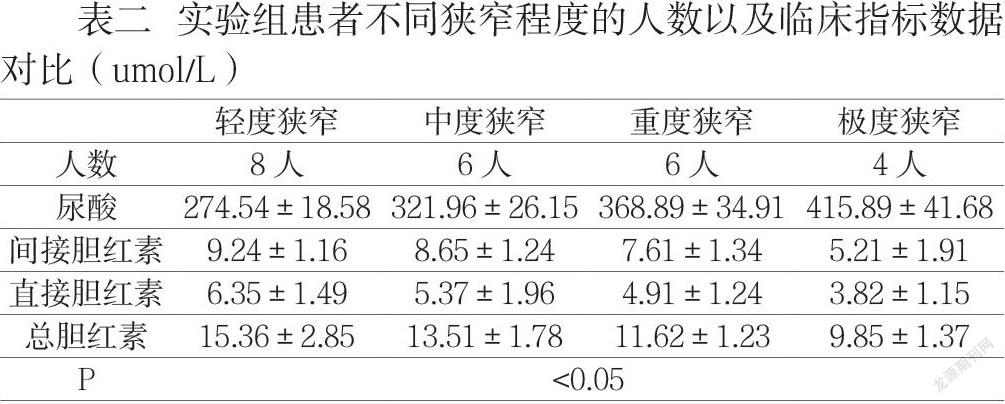
【摘要】目的:临床上对于冠心病进行检查时发现,不同的冠状动脉狭窄患者胆红素以及尿酸的含量不一样,本实验就此进行探究。方法:以冠心病患者为实验组,以正常人群作为对照组,比较患者的胆红素和尿酸水平,以及不同狭窄处的尿酸和胆红素水平。结果:实验组患者尿酸含量高于正常水平,胆红素含量低于正常水平,P<0.05;患者的尿酸随着狭窄的增加而增加,胆红素随着狭窄的增加而减小,不同狭窄出的尿酸含量和胆红素含量分析结果是P<0.05。结论:尿酸和胆红素检测结果可以为验证是否患有冠心病提供部分数据参考,以及为判断患者冠状动脉狭窄的程度提供参考。
【关键词】血清胆红素;尿酸;冠心病;冠状动脉狭窄
[Abstract] Objective: in clinical examination of coronary heart disease, it is found that the contents of bilirubin and uric acid are different in different patients with coronary artery stenosis. Methods: Patients with coronary heart disease as the experimental group, normal people as the control group, compared the patients with bilirubin and uric acid levels, as well as different stenosis of uric acid and bilirubin levels. Results: the uric acid content in the experimental group was higher than the normal level, and the bilirubin content was lower than the normal level, P < 0.05; the uric acid increased with the increase of stenosis, and the bilirubin decreased with the increase of stenosis, and the analysis results of uric acid content and bilirubin content in different stenosis were p < 0.05. Conclusion: the detection results of uric acid and bilirubin can provide some data reference for verifying whether patients have coronary heart disease and for judging the degree of coronary artery stenosis.
冠狀动脉发生粥样硬化后的疾病症状称之为冠心病,而且患者的冠状动脉会因为硬化的程度而形成不同程度的狭窄,严重的情况下可能会直接阻塞,体内的血液循环受阻,无法通过冠状动脉向下流动,使患者的心肌得不到足够的血液濡养,没有足够的动力支持,心跳减慢[1]。
1资料与方法
1.1资料
选取我院2020年收治的冠心病患者24人作为本次实验的主要实验对象,另选取同样人数的正常人群作为本次实验的参数对照。实验组患者男女比例为13:11,平均年龄在61.78±6.89岁,平均病程在4.37±1.69年,对照组患者男女比例为11:13,平均年龄在62.34±6.52岁,平均病程在4.19±1.87年.两组患者的基线资料对比结果是P<0.05,实验结果可以进行比较分析。
1.2方法
对于……
