棉田恶性杂草香附子的研究概况
2021-08-06徐小燕张卓亚李冬梅吴靖涛张钟炎郭世俭
徐小燕 张卓亚 李冬梅 吴靖涛 张钟炎 郭世俭
摘要:香附子是世界性的恶性杂草,严重影响全球多个地区的农业生态系统,也是我国十大难防恶性杂草之一,严重影响棉花、玉米、甘蔗和许多蔬菜作物生产。作为棉田难防杂草之一,它具有生长旺盛、繁殖力强、适应性广等特性,与多种作物竞争,可造成作物产量的巨大损失。本文从香附子的起源与分布、生境和氣候要求、生活史等方面概述其生态学特性,从形态特征、繁殖特征、生长特性、休眠特性、传播方式等方面概述其生物学特性。简要阐述了香附子的危害,并结合现有的防除技术,提出香附子在棉田的防除对策及今后的研究展望,即坚持预防为主、综合防治的方针,建立以农业防治为基础,以化学除草为核心,以物理、生物等多项措施相互配合、补充的综合防除体系。
关键词:棉花;杂草;香附子;特性;危害;防除策略
中图分类号:S451 文献标志码:A 文章编号:1003-935X(2021)01-0001-11
Abstract:Cyperus rotundus is a worldwide noxious weed that seriously affects the agricultural ecosystems in many regions. It is also one of the ten most difficult-to-prevent malignant weeds in our country and seriously affects the production of cotton,corn,sugarcane and many vegetable crops. As one of the hard-to-control weeds in cotton fields,the interference of C. rotunduscan cause significant economic losses due to its vigorous aggressive growth,prolific seed production,and strong adaptability. This article summarizes the ecological characteristics of C. rotundus from its origin and distribution,habitat and climate requirements,and life history. It also outlines C. rotundus biological traits including morphological,reproductive,growth and dormancy characteristics,propagation methods,and briefly explains its agricultural hazards. In addition,combined with existing technologies,some control strategies in cotton fields and future research prospects of C. rotundus are discussed. We must adhere to the principle of prevention first and establish a comprehensive prevention and control system with chemical weeding as the core but aiming to an integrated management system in which multiple tactics such as physical and biological are combined and complement each other.
Key words:cotton;weed;Cyperus rotundus;properties;interference;control strategy
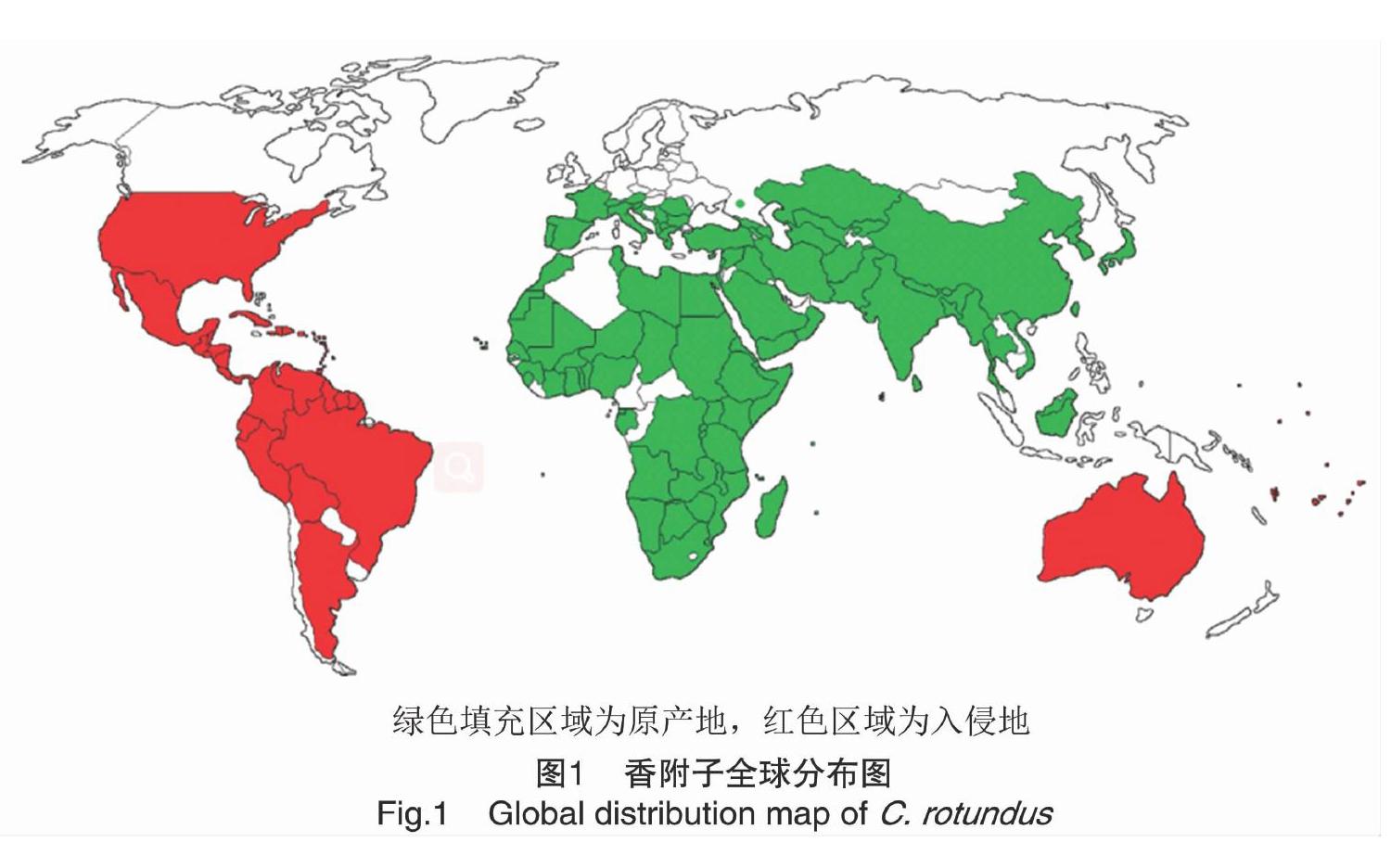
香附子(Cyperus rotundus L.)为莎草科莎草属多年生草本植物,国内不同地区又俗称三棱草、回头青、雷公头、草头香、梭草、胡子草、胡子青、香胡子、地贡子、野韭菜[1];原产于印度次生大陆,现除北纬35 ℃以北的低寒区不适于生存外,已广泛分布于92个热带及亚热带国家,造成50多种作物减产23%~89%[2]。香附子位居世界十大恶性杂草之首,严重影响全球多个地区的农业生态系统,也是我国十大难防恶性杂草之一,在我国大部分地区有分布,主要危害棉花、花生、蔬菜、甘薯、玉米、大豆、果树、小麦、水稻等作物[1]。……