热休克转录因子1和血管内皮生长因子在肝癌组织中的表达及其对血管生成的影响
2021-08-06肖亿侯晴晴张智施显茂龙中荣孙兴阮婕
肖亿 侯晴晴 张智 施显茂 龙中荣 孙兴 阮婕

【摘要】 目的 探討热休克转录因子1(heat shock transcription factor 1,HSF1)、血管内皮生长因子(vascular endothelial growth factor,VEGF)在肝癌组织中的表达以及对肝癌血管生成的影响。
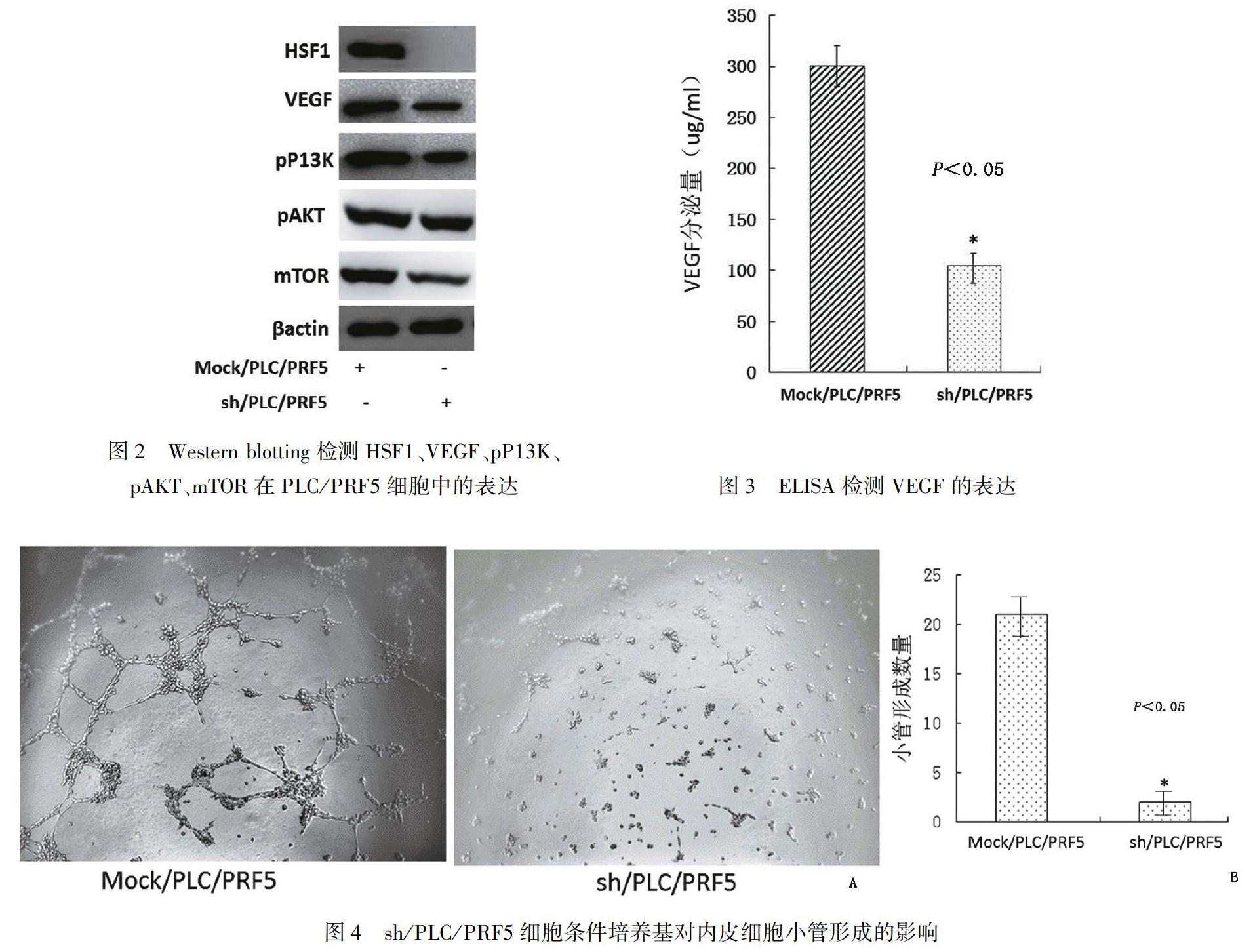
方法 通过免疫组化法检测HSF1、VEGF在68例肝癌组织中的表达水平,分析其临床病理特征。通过siRNA沉默PLC/PRF5肝癌细胞HSF1基因表达。利用小管形成实验观察小管形成,ELISA实验检测细胞VEGF分泌情况,最后通过WB实验检测HSF1、pP13K、pAKT、mTOR蛋白的表达。
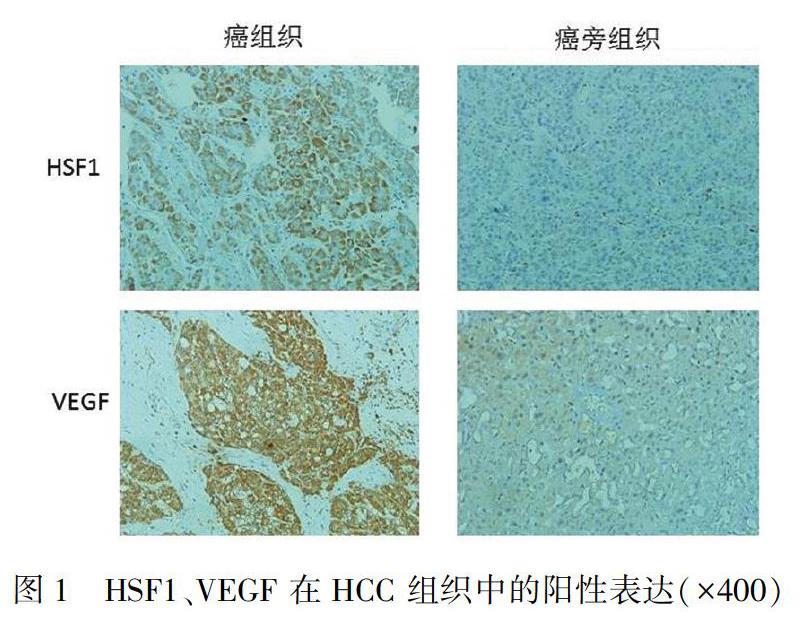
结果 免疫组化实验提示:HCC组织HSF1、VEGF在肝癌组织中的阳性表达率分别为67.65% (46/68)和66.18% (45/68),均高于癌旁组织的14.71% (10/68)和 19.12% (13/68) ,差异有统计学意义(P<0.001)。HSF1表达与HBsAg、肝内PVTT/HVTT形成、微血管侵犯、病理分期相关(P<0.05或0.01),与肿瘤大小等无关(P>0.05)。VEGF的表达与微血管侵犯、肝内PVTT/HVTT形成、病理分期相关(P<0.05或0.01),与 HBsAg、肿瘤分化程度等无关(P>0.05)。HSF1表达和VEGF表达呈正相关(r=0.287,P=0.018)。和Mock/PLC/PRF5组相比,sh/PLC/PRF5组明显抑制小管形成、VEGF分泌,下调HSF1、VEGF、pP13K、pAKT、mTOR蛋白的表达。
结论 肝癌组织中HSF1和VEGF的表达可促进肝癌肿瘤血管生成,其作用机制可能和P13K/AKT/mTOR通路有关。
【关键词】 肝癌;VEGF;HSF1;临床病理特征;信号通路
中图分类号:R737.7 文献标志码:A DOI:10.3969/j.issn.1003-1383.2021.05.004
【Abstract】 Objective To investigate the expressions of heat shock transcription factor 1 (HSF1) and vascular endothelial growth factor (VEGF) in hepatic carcinoma tissues and their effects on angiogenesis.
Methods The expression levels of HSF1 and VEGF in hepatocellular carcinoma tissues in 68 cases were detected by immunohistochemical experiment to analyze their clinicopathological characteristics. HSF1 gene expression of PLC/PRF5 cell was silenced by siRNA. Tubule formation was observed by tubule formation assay, the secretion of VEGF was detected by ELISA, and the expressions of HSF1, pP13k, pAkT and mTOR were detected by WB assay.
Results Immunohistochemical experiment showed that the positive expression rates of HCC tissue HSF1 and VEGF in liver cancer tissues were 67.65% (46/68) and 66.18% (45/68) respectively, which were higher than those in adjacent tissues (14.71% [10/68]and 19.12% [13/68]), and difference was statistically significant (P < 0.001). HSF1 expression was correlated with HBsAg, intrahepatic PVTT/HVTT formation, microvascular invasion and pathological staging (P < 0.05 or 0.01), but it was not correlated with tumor size (P > 0.05). The expression of VEGF was correlated with microvascular invasion, intrahepatic PVTT/HVTT formation and pathological staging (P < 0.05 or 0.01), but it was not correlated with HBsAg and tumor differentiation (P > 0.05). The expression of HSF1 was positively correlated with the expression of VEGF (r = 0.287, P = 0.018). Compared with Mock/PLC/PRF5 group, sh/PLC/PRF5 group could significantly inhibit tubule formation and VEGF secretion and down regulate the expressions of HSF1, VEGF, pP13K, pAKT and mTOR.
Conclusion The expressions of HSF1 and VEGF in liver cancer tissues can promote the angiogenesis of liver cancer tumor, and the mechanism of which may be related to PI3K/AKT/mTOR pathway.
【Key words】 liver cancer; VEGF; HSF1; clinicopathological characteristic; signal pathway
肝细胞癌(hepatocellular cancer,HCC)是全球常见恶性肿瘤之一,相关研究显示我国HCC发病率、病死率约占世界范围50%,且近年來呈逐渐上升趋势。HCC发生发展涉及多个病理阶段、多种分子改变,发展较快,预后较差[1]。热休克转录因子1(heat shock transcription factor 1,HSF1)通过编码蛋白质调控细胞内基因的稳态促进蛋白质合成、细胞增殖和糖代谢,参与HCC发生发展[2]。HCC新生血管的形成在促进肿瘤增殖、侵袭转移的过程中发挥重要的介导作用。血管内皮生长因子(vascular endothelial growth factor,VEGF)在HCC中高表达和不良预后呈正相关,这提示抑制HCC血管生成对患者预后有着重要意义[3]。但HSF1和VEGF表达在HCC中的相关性研究未见文献报道。……