宫腔粘连患者术后再粘连的影响因素
2021-08-06余晓玲宫喜双赵振王荣
余晓玲 宫喜双 赵振 王荣
【摘要】 目的 分析宫腔粘连(IUA)患者术后再粘连的影响因素,指导未来IUA患者术后再粘连的风险评估与干预。
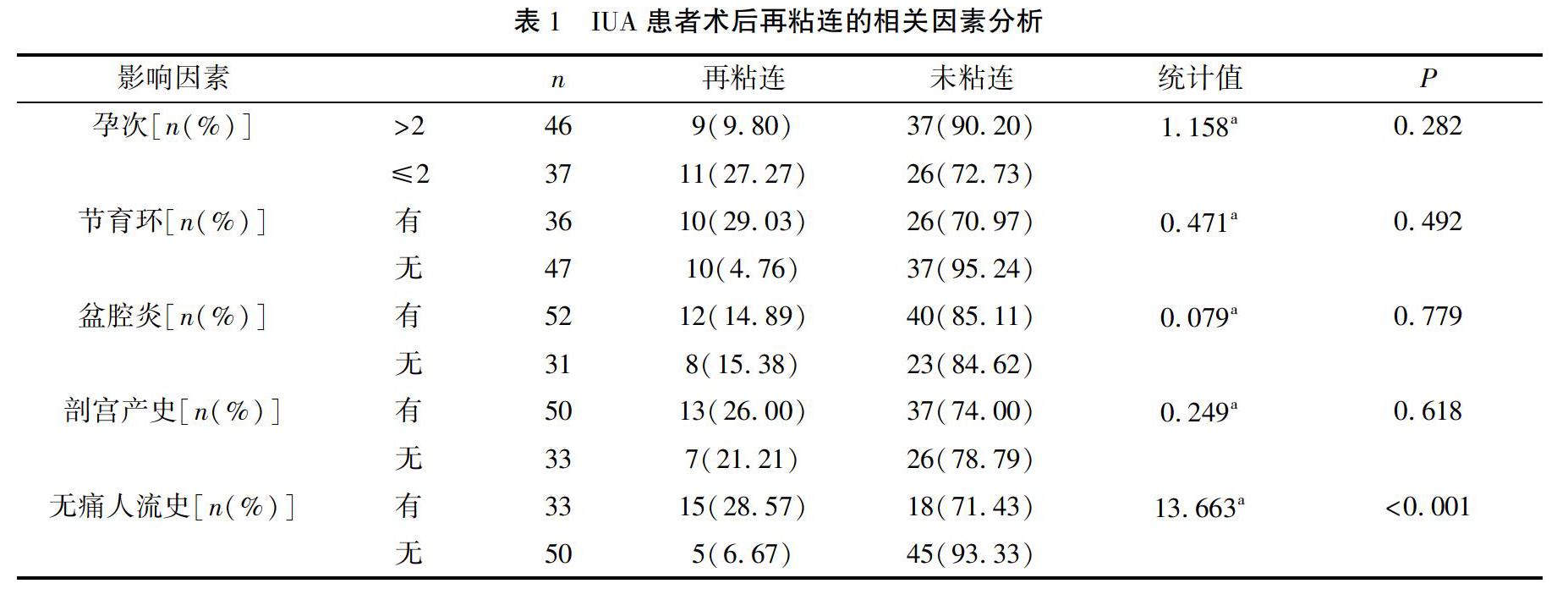
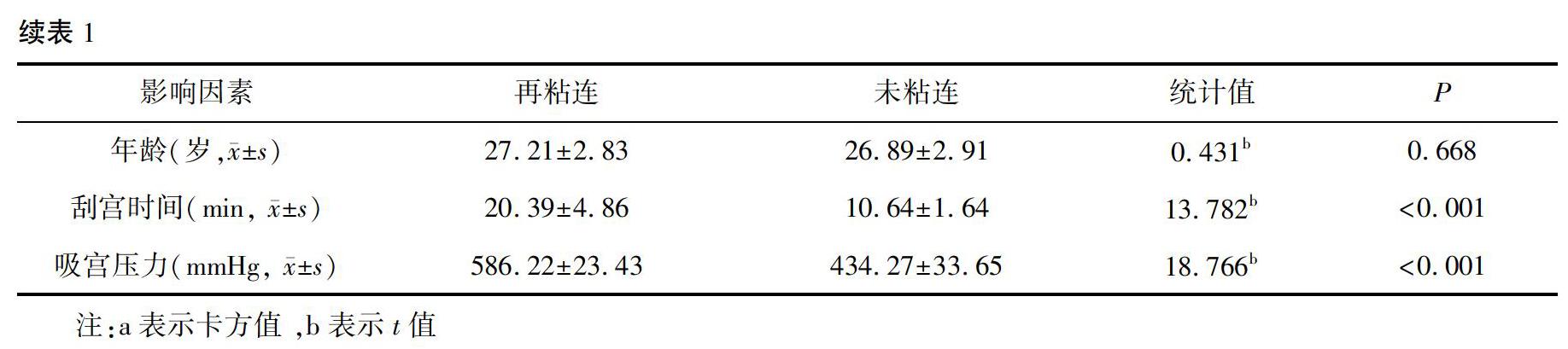
方法 回顾性分析2017年5月至2019年6月行宫腔镜下手术治疗的83例IUA患者临床资料,并于术后48 h行宫腔镜检查,统计患者宫腔再粘连情况,收集患者基线资料,包括年龄、孕次、有无节育环、盆腔炎、剖宫产史、无痛人流史、刮宫时间、吸宫压力,分析宫腔粘连患者术后发生再粘连的影响因素。
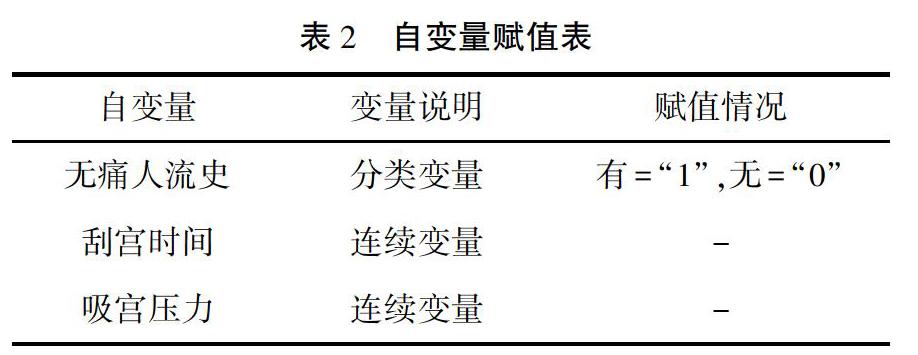
结果 83例患者术后再粘连20例,发生率为24.10%;经单因素及多因素logistic分析,有无痛人流史、刮宫时间过长、吸宫压力过大均为造成宫腔粘连患者术后发生再粘连的影响因素(OR>1,P<0.05)。
结论 宫腔镜下手术治疗后宫腔粘连患者存在一定的宫腔再粘连率,且有无痛人流史、刮宫时间过长、吸宫压力过大均为IUA患者术后发生再粘连的影响因素。
【关键词】 宫腔粘连;宫腔镜下手术;再粘连;无痛人流
中图分类号:R711.74 文獻标志码:A DOI:10.3969/j.issn.1003-1383.2021.05.010
【Abstract】 Objective To analyze the influencing factors of postoperative re-adhesion in patients with intrauterine adhesion (IUA), so as to guide the risk assessment and intervention of IUA patients with re-adhesion after surgery in the future.
Methods Clinical data of 83 patients with IUA who underwent hysteroscopic surgery in hospital from May 2017 to June 2019 were retrospectively analyzed, hysteroscopy was carried out 48 h after operation, and patient's uterine cavity re-adhesion was counted. And then, baseline data of patients were collected, including age, pregnancy times, contraceptive ring, pelvic inflammatory disease, cesarean section history, painless abortion history, curettage time and suction pressure, and the influencing factors of postoperative re-adhesion in patients with IUA were analyzed.
Results Among 83 patients, postoperative adhesions were found in 20 cases after operation, and the incidence rate was 24.10%; univariate and multivariate logistic analysis showed that history of painless abortion, prolonged curettage time and excessive suction pressure were the influencing factors of postoperative re-adhesion in patients with IUA (OR > 1, P < 0.05).
Conclusion There is a certain rate of re-adhesion in the uterine cavity after hysteroscopic surgery. In addition, history of painless abortion, long curettage time, and excessive suction pressure are all influencing factors for postoperative re-adhesion in IUA patients.
【Key words】 IUA; hysteroscopic surgery; re-adhesion; painless abortion
宫腔粘连(IUA)是由于子宫内膜受损而引起的宫腔闭塞的一系列综合征,其发病机制较为复杂,与妊娠手术、感染、遗传等因素密切相关,临床可表现为月经量少、痛经、停经甚至不孕等症状[1~2]。目前,临床主要根据患者的不同症状采取药物、手术、物理等方法治疗,而宫腔镜下手术为治疗IUA的一线方案[3]。但相关数据显示,IUA患者术后常出现再粘连情况,加重患者的精神压力与经济负担[4]。因此,及时明确IUA患者术后再粘连的相关因素并予以针对性的干预措施尤为重要。鉴于……