基于NLRP3炎症小体探讨葛根素对缺氧致肺动脉平滑肌细胞焦亡的影响
2021-07-20张晓丹李文娣张茹盛洁静张佳男刘慧宇李松林
张晓丹 李文娣 张茹 盛洁静 张佳男 刘慧宇 李松林
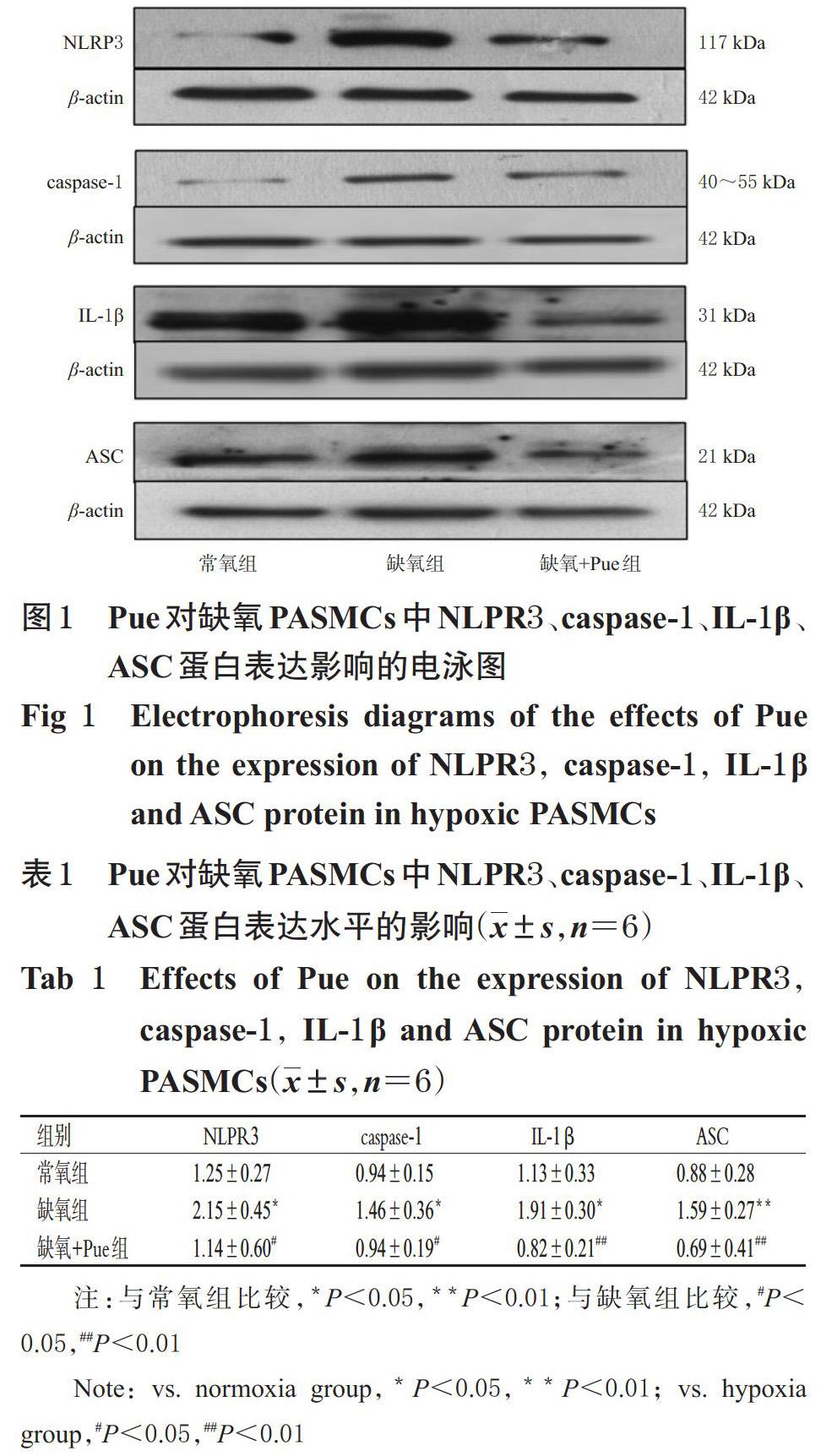
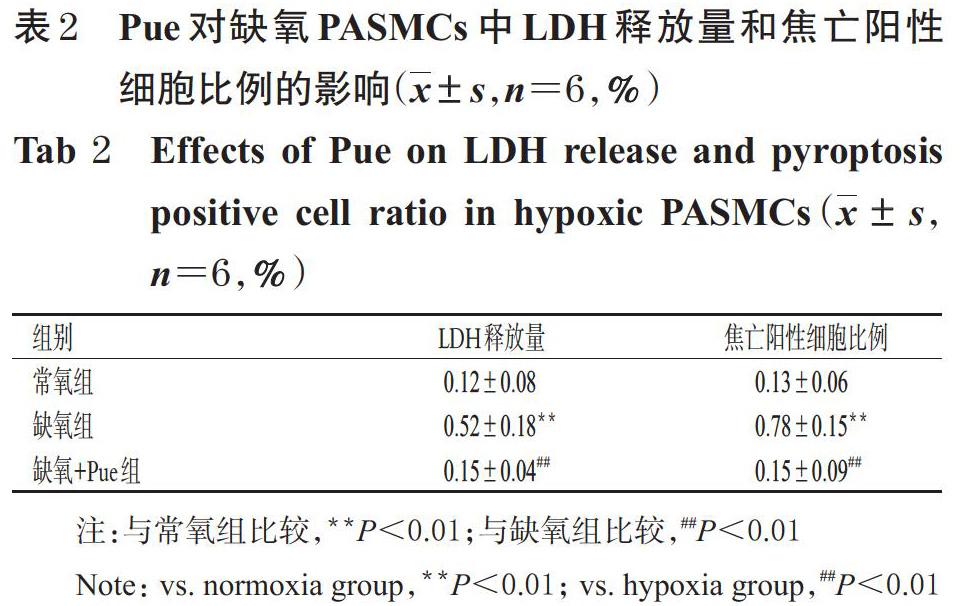
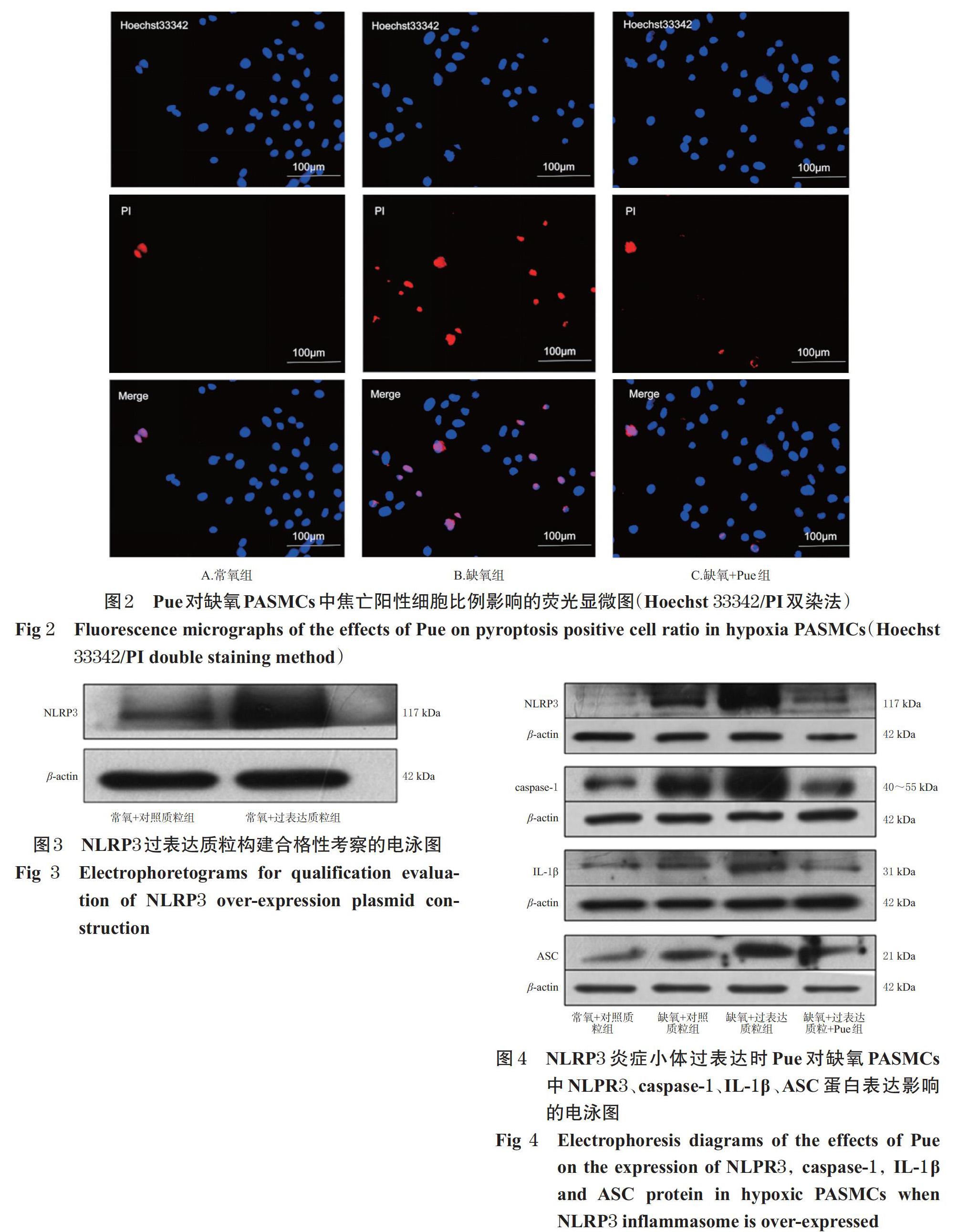
摘 要 目的:探討葛根素(Pue)对缺氧诱导的肺动脉平滑肌细胞(PASMCs)焦亡的影响及其调控机制。方法:以大鼠PASMCs为对象,将其随机分为常氧组、缺氧组和缺氧+Pue组(0.2 mmol/L),除常氧组外,其余各组均于37 ℃、5%CO2、3%O2条件下培养24 h以建立缺氧模型。采用Western blot法检测细胞中焦亡相关蛋白[NOD样受体蛋白3(NLRP3)、胱天蛋白酶1、白细胞介素1β、凋亡相关斑点样蛋白]的表达水平;采用乳酸脱氢酶(LDH)释放实验检测细胞中LDH的释放量;采用Hoechst 33342/PI双染色法检测焦亡阳性细胞比例。另将PASMCs随机分为常氧+对照质粒组、缺氧+对照质粒组、缺氧+过表达质粒组和缺氧+过表达质粒+Pue组,除常氧+对照质粒组外,其余各组均同法建立缺氧模型;在分别转染对照质粒或NLRP3过表达质粒后,采用Western blot法、LDH释放实验和Hoechst 33342/PI双染色法检测Pue是否通过干扰NLRP3炎症小体来发挥对缺氧致PASMCs焦亡的影响。结果:与常氧组比较,缺氧组细胞中焦亡相关蛋白的表达水平、LDH释放量和焦亡阳性细胞比例均显著升高(P<0.05或P<0.01);而Pue可逆转上述指标(P<0.05或P<0.01)。当NLRP3炎症小体过表达时,细胞中焦亡相关蛋白的表达水平、LDH释放量和焦亡阳性细胞比例均显著升高(P<0.05或P<0.01);且Pue可通过调控NLRP3炎症小体而抑制上述现象(P<0.05或P<0.01)。结论:Pue可通过下调焦亡相关蛋白的表达、减少LDH的释放、降低焦亡阳性细胞比例,从而发挥对缺氧致PASMCs焦亡的抑制作用,其机制可能与抑制NLRP3炎症小体的活性有关。
关键词 葛根素;肺动脉平滑肌细胞;焦亡;NOD样受体蛋白3炎症小体
ABSTRACT OBJECTIVE: To investigate the effects and mechanism of puerarin (Pue) on hypoxia-induced pyroptosis of pulmonary artery smooth muscle cells (PASMCs). METHODS: PASMCs of rats as research objects were randomly divided into normoxia group, hypoxia group and hypoxia+Pue group (0.2 mmol/L). Except for normoxia group, other groups were cultured with 5% CO2 and 3% O2 at 37 ℃ for 24 hours to establish hypoxia model. Western blot assay was used to detect the expression of pyroptosis related proteins [NOD-like receptor protein-3 (NLPR3), caspase-1, interleukin-1β (IL-1β), apoptosis-associated speck-like protein (ASC)]. Lactate dehydrogenase (LDH) release assay was used to detect the release of LDH in cells; Hoechst 33342/PI double staining test was adopted to detect the proportion of pyroptosis positive cells. PASMCs was randomly divided into normoxia group+control plasmid group, hypoxia+control plasmid group, hypoxia+over-expression plasmid group and hypoxia+over-expression plasmid+Pue group. Except for the normoxia+control plasmid group, the other groups were established hypoxia model by the same method. After transfection of control plasmid or NLRP3 over-expression plasmid, Western blot, LDH release test and Hoechst 33342/PI double staining test were used to investigate whether Pue could inhibit hypoxia-induced PASMCs pyroptosis by interfering with the activity of NLRP3 inflammasomes. RESULTS: Compared with normoxia group, the expression of pyroptosis related proteins, the release of LDH and the proportion of pyroptosis positive cells were increased significantly in hypoxia group (P<0.05 or P<0.01). Pue had the effect of reversing the above indexes (P<0.05 or P<0.01). When the NLRP3 inflammasome was over-expressed, the expression of pyroptosis related proteins, the release of LDH and the proportion of pyroptosis positive cells were increased significantly (P<0.05 or P<0.01). Pue could inhibit the above phenomenon through regulating NLRP3 inflammasome (P<0.05 or P<0.01). CONCLUSIONS: Pue can significantly inhibit the hypoxia-induced pyroptosis of PASMCs by down-regulating the expression of pyroptosis related proteins, reducing the release of LDH and proportion of pyroptosis positive cells. The mechanism is related to the activity inhibition of NLRP3 inflammasome.
KEYWORDS Puerarin; Pulmonary artery smooth muscle cells; Pyroptosis; NLRP3 inflammasome
肺动脉高压(PAH)是一种以肺血管壁增厚为主要特征的心肺疾病[1-2]。自从Tuder等[3]学者首次在PAH患者的肺血管周围发现炎性细胞浸润后,越来越多的学者证实了炎症与PAH密切相关[4-6]。目前,炎症已经作为一项新的指标用来评价患者PAH的严重程度,因此抑制炎症反应是缓解PAH症状、减少肺血管重构的有效途径[7-8]。在细胞焦亡中发挥关键作用的NOD样受体蛋白3(NLPR3)炎症小体,是由NLRP3、凋亡相关斑点样蛋白(ASC)和胱天蛋白酶1前体(pro-caspase-1)组成[9]。……