基于反应扩散方程的水平集结构拓扑优化方法与实现
2021-07-20赖松王坤
赖松 王坤
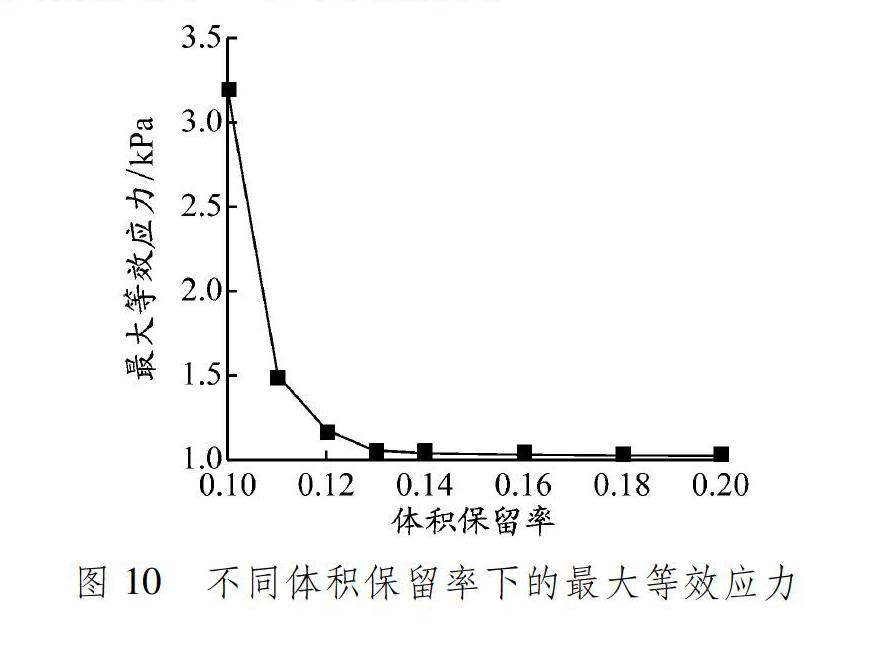
摘要:为实现更加先进的拓扑优化算法,研究采用反应扩散方程的水平集结构拓扑优化方法,通过理论推导给出算法中的参数选择建议。该方法允许在拓扑优化过程中生成新的孔洞,初始结构无须包含孔洞,不需要重新初始化步骤,从而可提高算法的收敛性。针对传统拓扑优化中主要采用体积约束、以柔度最小为目标和体积保留率设定存在一定主观性的问题,探究不同体积保留率下的结构应力水平的变化规律,结果显示可以依据结构最大应力水平与体积保留率的变化规律确定最优体积保留率。
关键词:
反应扩散方程; 水平集; 拓扑优化; 体积保留率; 收敛
中图分类号:TB115.2
文献标志码:B
Topology optimization method and its implement of
level set structure using reaction diffusion equation
LAI Song, WANG Kun
(School of Energy and Power Engineering, Huazhong University of Science and Technology, Wuhan 430064, China)
Abstract:
To realize a more advanced topology optimization algorithm, the level set structure topology optimization method using reaction diffusion equation is studied. The parameter selections in the algorithm are suggested by theoretical deduction. In this method, the generation of new holes in the process of topology optimization is allowed, and the initial structure does not need to set holes, and the initialization step need not restart, and then the convergence of the algorithm can be improved. In traditional topology optimization, the constraint is volume, and the objective is minimum flexibility, and the setting of volume retention rate is subjective. As to this issue, the variation law of structural stress level under different volume retention rate is explored. The results show that the optimal volume retention rate can be determined according to the variation law of the maximum stress level and volume retention rate of the structure.
Key words:
reaction diffusion equation; level set; topology optimization; volume retention rate; convergence
0 引 言
拓扑优化方法是在给定设计域中确定材料的分布、形状和连通性以达到某一最优目标的方法。[1]与尺寸优化和形状优化相比,拓撲优化有更大的设计自由度,因此可用于在概念设计阶段产生最佳的拓扑结构,进而得到可观的经济收益。在最近几十年里,结构拓扑优化取得长足发展,以变密度法为代表的拓扑优化方法广泛应用于结构、传热、流动和多物理场等领域。拓扑优化模块已经嵌入到某些商业有限元软件中,并应用于实际工程中。[2]在众多的拓扑优化方法中,最常见的是变密度法和水平集法。变密度法引入一个在0~1范围内连续变化的虚拟密度,并以此作为设计变量,表示材料的有无。由于虚拟密度是连续的,可以视作普通的场变量,所以变密度法与现有成熟的有限元法耦合良好。……
