柱根加劲肋高度对可恢复摇摆柱抗震性能的影响
2021-07-11黄泽伟刘阳许一鹏郭子雄刘小娟
黄泽伟 刘阳 许一鹏 郭子雄 刘小娟
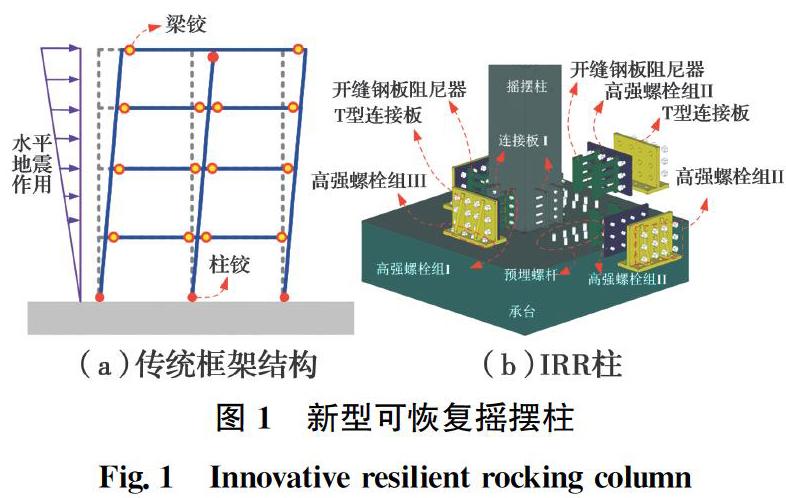
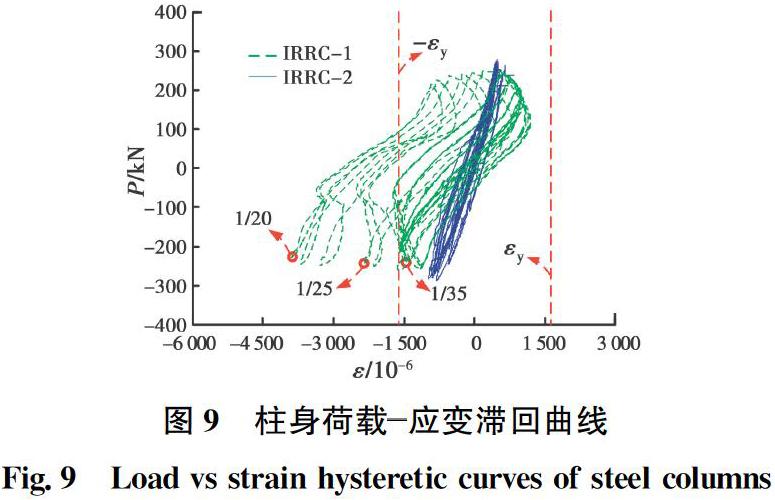
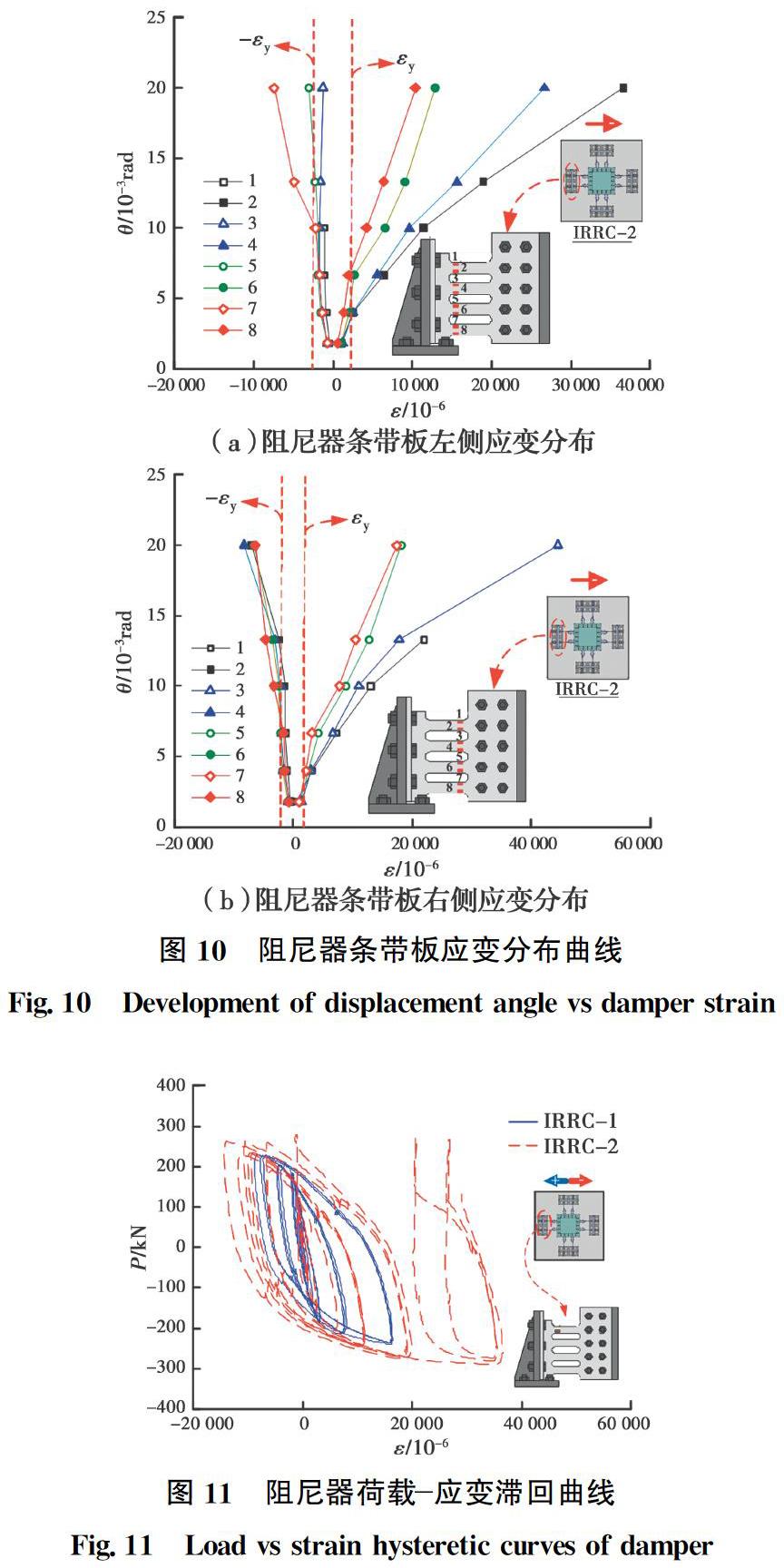
摘 要:为实现框架结构的震后性能快速恢复,提出一种新型性能可恢复摇摆柱(简称IRR柱)。为研究柱根加劲肋高度对IRR柱抗震性能的影响,制作并完成了2个足尺试件的往复加载试验。试验结果表明:两个试件均表现出良好的滞回性能,滞回曲线饱满,有较好的变形能力。水平荷载作用下,柱根内部加劲肋高度不足会导致钢柱侧面板发生平面外屈曲,进一步导致与之相连的钢板阻尼器塑性变形发展滞后。当柱根内部加劲肋高度足够时,柱身始终处于弹性状态,钢板阻尼器塑性变形发展充分,最终撕裂拉断,实现了“强柱弱阻尼”的设计目标。加劲肋高度由100 mm提高至420 mm,IRR柱的最大承载力和初始刚度分别提高了11.5%和25.1%,极限变形降低了39.3%。
关键词:可恢复结构;摇摆柱;钢板阻尼器;加劲肋;试验研究
中图分类号:TU398.2 文献标志码:A 文章编号:2096-6717(2021)03-0101-08
Abstract: An innovative resilient rocking (IRR) column was developed to achieve the rapid recovery of the performance of the frame structure after earthquakes. Quasi-static cyclic tests on two full-scaled IRR columns were carried out to further investigate the influence of stiffener height at the column end on the seismic performance of IRR columns. The test results show that the hysteresis curves of the two specimens are full, which shows good hysteresis performance and deformation ability. When the height of the internal stiffener of the IRR column root is insufficient, the horizontal load will cause out-of-plane buckling of the side panel of the steel column, which will further cause the plastic deformation of the steel plate damper lags behind. When the height of the internal stiffener is sufficient, the column body is always in an elastic state. And the steel dampers finally ruptured after full development of plastic deformation, achieving the design philosophy of “strong column and weak damper”. As the stiffener height increased from 100 mm to 420 mm, the maximum loading capacity and the initial stiffness of IRR columns increased by 11.5% and 25.1% respectively, while the ultimate deformation dropped by 39.3%. The findings can be referenced for application of earthquake resilience structures.
Keywords: resilient structures; rocking column; steel slit dampers; stiffener; experimental study
随着社会经济的不断发展和结构工程领域研究的不断深入,结构在遭遇罕遇地震后的“性能可恢复能力”已经得到全世界结构工程专家的重视。工程结构抗震理念从抗倒塌逐渐转向结构功能或性能的可恢复已经成为一个重要趋势[1-2]。
目前的研究主要通过两种途径实现结构的性能可恢复,一种是通过放松基础与上部結构或者梁柱节点间的部分自由度约束,使结构在地震作用下发生摇摆耗散地震能量,同时,使用预应力筋提供复位能力,从而实现震后变形的可恢复。自1963年Housner[3]提出摇摆结构的概念以后,Priestley等[4]和Eatherton等[5]都对摇摆框架进行了研究。……