麻黄细辛附子汤对肾阳虚外感证模型小鼠TLRs应答及Cyt-CO介导的凋亡调控的影响
2021-04-27邢淑雁范珊珊于钦辉马青云孙启慧杨勇容蓉
邢淑雁 范珊珊 于钦辉 马青云 孙启慧 杨勇 容蓉
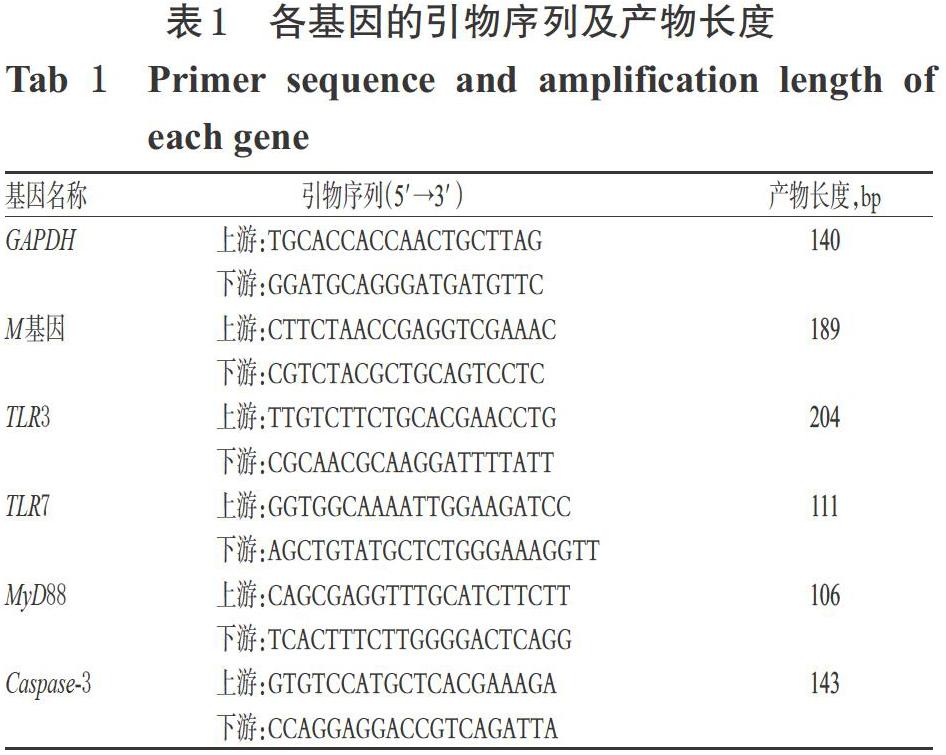
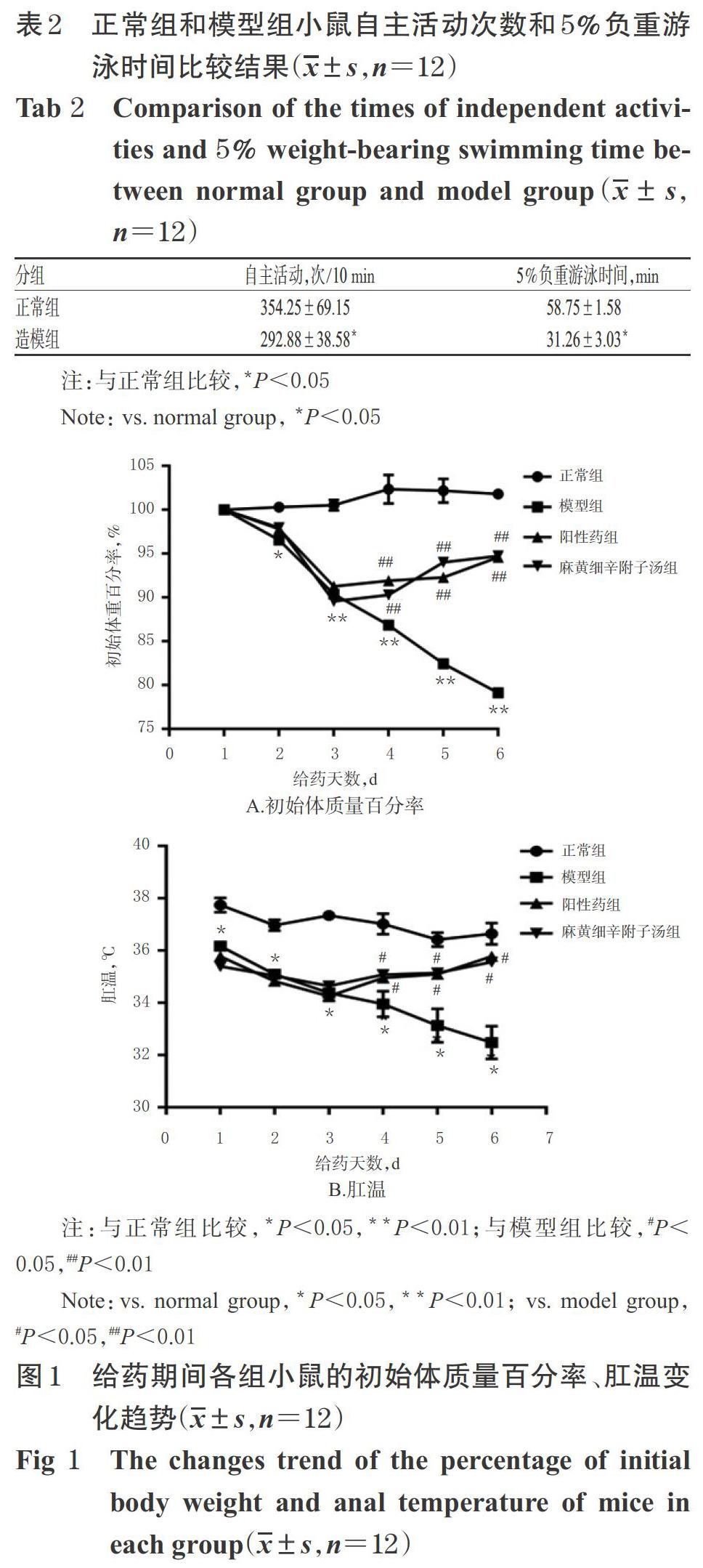
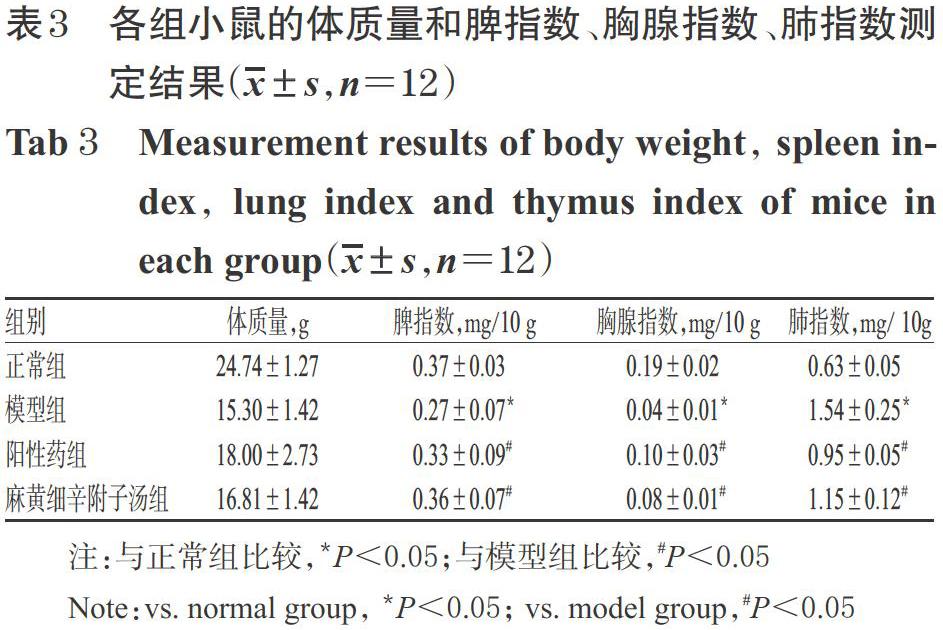
摘 要 目的:研究麻黃细辛附子汤对肾阳虚外感证模型小鼠Toll样受体(TLRs)应答及细胞色素C氧化酶(Cyt-CO)介导的凋亡调控的影响。方法:将48只雄性Balb/c小鼠随机分为正常组(n=12)和造模组(n=36)。造模组小鼠采用腹腔注射苯甲酸雌二醇溶液(8 mg/kg)+滴鼻接种甲型H1N1流感病毒(20 μL/只)的方法建立肾阳虚外感复合模型。然后将造模成功的小鼠随机分为模型组、阳性药组(磷酸奥司他韦胶囊,0.195 g/kg)和麻黄细辛附子汤组(1.802 g/kg,以生药总量计),每组12只。各给药组小鼠灌胃相应药液,正常组和模型组小鼠灌胃等体积生理盐水;灌胃体积均为20 mL/kg,每天1次,连续给药6天。给药期间,每天测量小鼠体质量、肛温,并计算其初始体质量百分率;末次给药后,计算其脏器(脾、胸腺、肺)指数,观察其肺组织病理学变化,检测其肺组织中甲型H1N1流感病毒的病毒载量(以M基因mRNA表达水平反映)以及心脏组织中TLR3、TLR7、髓样分化因子(MyD88)、胱天蛋白酶3(Caspase-3) mRNA表达水平和Cyt-CO活性、细胞色素C(Cyt-C)含量。结果:与正常组比较,模型组小鼠的初始体质量百分率、肛温持续降低(P<0.05);脾指数、胸腺指数均显著降低(P<0.05),肺指数显著升高(P<0.05);肺组织病变严重;肺组织中病毒载量和心脏组织中TLR3、TLR7、MyD88、Caspase-3 mRNA表达水平及Cyt-C含量均显著升高(P<0.05或P<0.01),心脏组织中Cyt-CO活性显著降低(P<0.01)。与模型组比较,麻黄细辛附子汤组小鼠的初始体质量百分率、肛温自给药第4天起呈上升趋势(P<0.05或P<0.01);脾指数、胸腺指数均显著升高(P<0.05),肺指数均显著降低(P<0.05);肺组织病理损伤明显改善;肺组织中病毒载量和心脏组织中TLR3、Caspase-3 mRNA表达水平和Cyt-C含量均显著降低(P<0.05或P<0.01),心脏组织中Cyt-CO活性显著升高(P<0.01)。结论:麻黄细辛附子汤对肾阳虚外感病证模型小鼠具有改善作用,这可能与其可抑制TLRs应答和Cyt-CO介导的凋亡调控途径有关。
关键词 麻黄细辛附子汤;肾阳虚外感证;细胞色素C氧化酶;细胞色素C;凋亡;Toll样受体;小鼠
中图分类号 R285 文献标志码 A 文章编号 1001-0408(2021)06-0669-07
ABSTRACT OBJECTIVE:To study the effects of Mahuang xixin fuzi decoction on Toll-like receptors (TLRs) response and cytochrome C oxidase (Cyt-CO)-mediated apoptosis regulation in mice with influenza disease of kidney-yang deficiency. METHODS: Totally 48 male Balb/c mice were randomly divided into normal group (n=12) and modeling group (n=36). The modeling group was intraperitoneally injected with estradiol benzoate solution (8 mg/kg) and intranasally injected with influenza virus H1N1 (20 μL/mice) to establish the influenza disease compound model of kidney-yang deficiency. After modeling, the mice were randomly divided into model group, positive drug group (Oseltamivir phosphate capsules, 0.195 g/kg), Mahuang xixin fuzi decoction group (1.802 g/kg, by crude drug), with 12 mice in each group. Each group was given relevant medicine intragastrically, normal group and model group were given corresponding volume of normal saline intragastrically 20 mL/kg, once a day, for consecutive 6 days. During admi- nistration, body weight and anal temperature of mice were measured daily; the percentage of initial body weight was calculated. After last medication, the organ (spleen, thymus and lung) indexes were calculated; the pathological changes of lung tissue were observed. The viral load of influenza A virus H1N1 in lung tissue was detected (reflected by M gene mRNA expression); mRNA expressions of TLR3, TLR7, myeloid differentiation factor (MyD88) and Caspase-3 in cardiac tissue as well as the activity of Cyt-CO and the content of cytochrome C (Cyt-C) were also determined. RESULTS: Compared with normal group, initial body weight percentage and anal temperature of the model group continued to decrease (P<0.05);the spleen and thymus indexes were decreased significantly (P<0.05), while lung index was increased significantly (P<0.05); the lung tissue lesions were serious. Viral load in lung tissue, mRNA expressions of TLR3, TLR7, MyD88 and Caspase-3 in cardiac tissue as well as the content of Cyt-C were increased significantly (P<0.05 or P<0.01), while the activity of Cyt-CO in cardiac tissue was significantly decreased (P<0.01). Compared with model group, initial body weight percentage and anal temperature of mice in Mahuang xixin fuzi decoction group showed an increasing trend from the fourth day of administration (P<0.05 or P<0.01). The spleen and thymus indexes were increased significantly (P<0.05), while the lung index was significantly decreased (P<0.05);the pathological injury of lung tissue was significantly improved; viral load in lung tissue, mRNA expressions of TLR3 and Caspase-3 as well as the content of Cyt-C in cardiac tissue were decreased significantly (P<0.05 or P<0.01), while the activity of Cyt-CO was increased significantly in cardiac tissue (P<0.01). CONCLUSIONS: Mahuang xixin fuzi decoction can improve influenza disease of kidney-yang deficiency in mice, the effect may related to inhibit TLRs response and apoptosis regulation pathway mediated by Cyt-CO.
KEYWORDS Mahuang xixin fuzi decoction; Influenza disease of kidney-yang deficiency; Cytochrome C oxidase; Cytochrome C; Apoptosis; Toll-like receptors; Mice
麻黄细辛附子汤始载于《伤寒论》,是治疗阳虚兼外感的经方,具有助阳解表、温经散寒的功效,用于治疗素体阳虚、复感寒邪、恶寒发热等症,疗效显著[1]。该方由麻黄、细辛、制附子等3味中药材组成。其中,麻黄辛、温,入太阳散表寒,为君药;附子辛热、温,补少阴之阳,为臣药;细辛辛温,入太阳、少阴,在表可助麻黄发散风寒,在内可助附子扶阳温肾,为佐药[2-3]。……