不同栽培基质配方对银耳胞外酶活性的影响
2021-04-19马运龙林占熺陈超前黄暖云林兴生
马运龙 林占熺 陈超前 黄暖云 林兴生
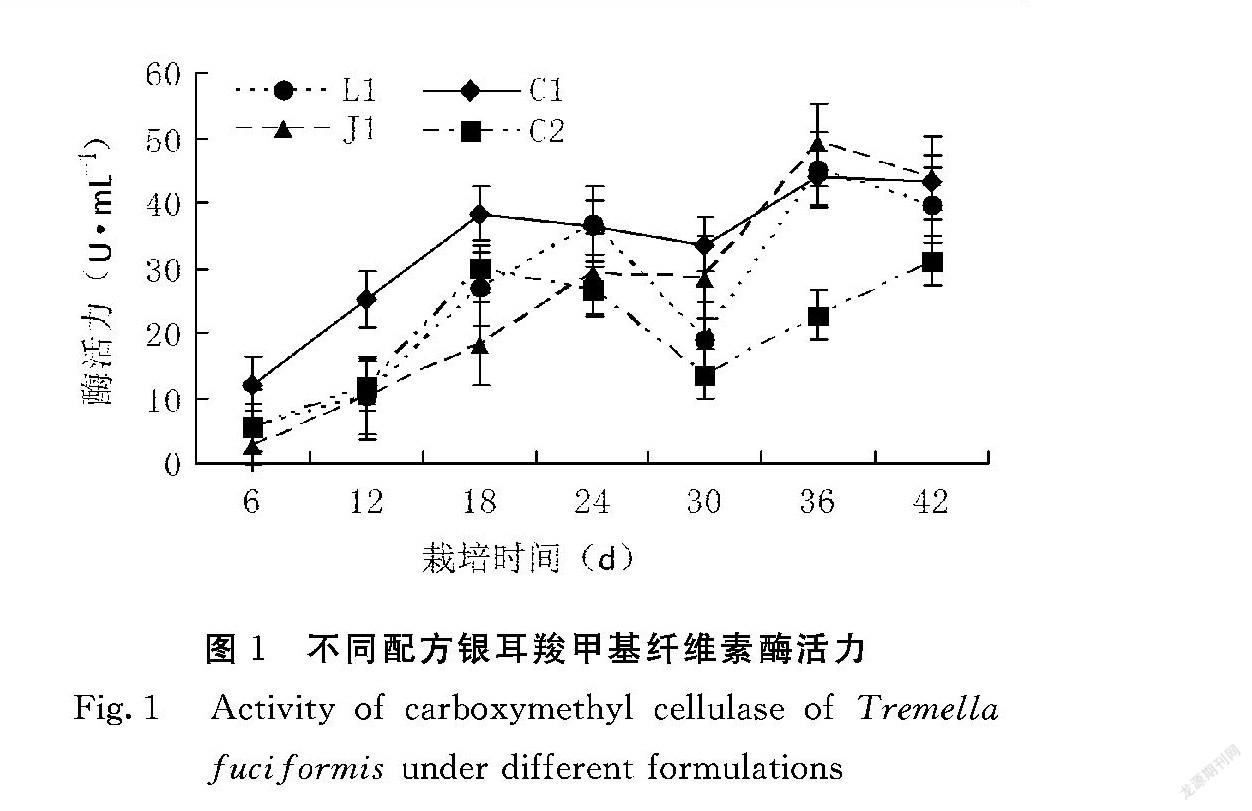
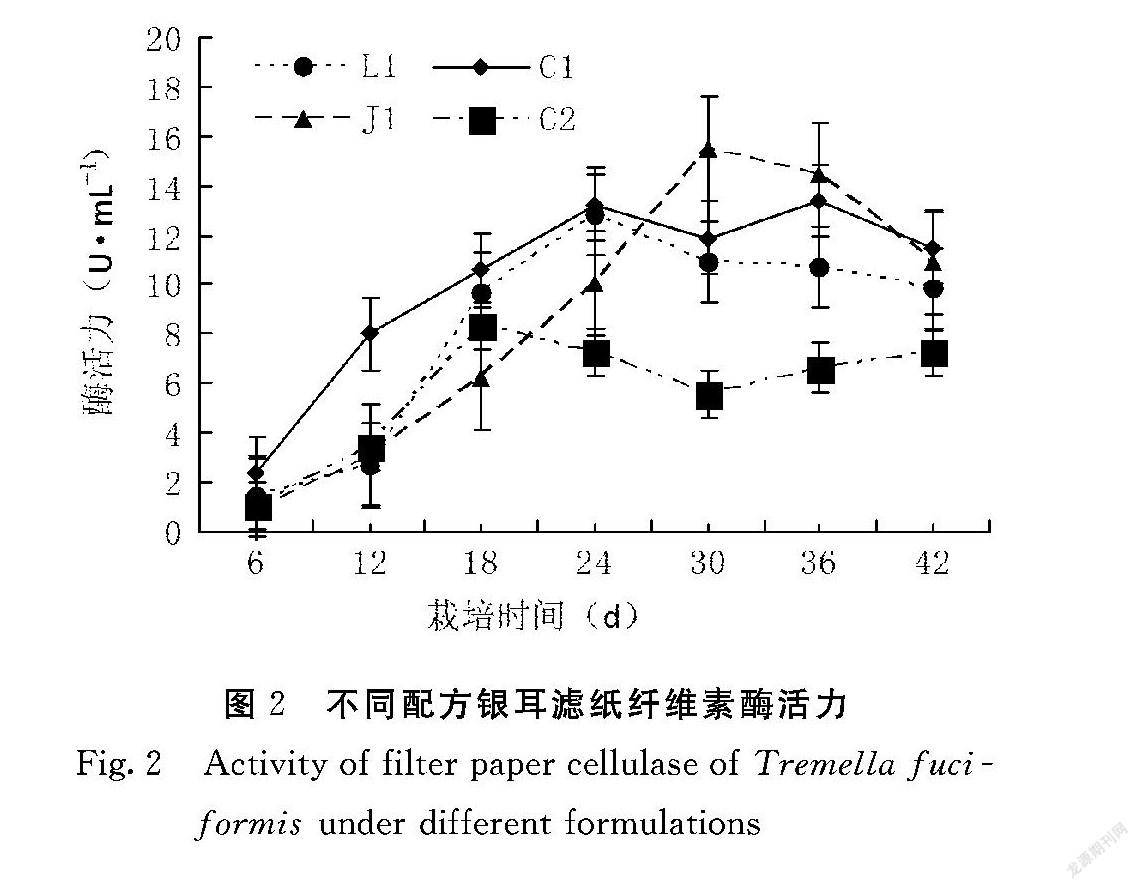

摘 要:为探明不同栽培基质配方对银耳胞外酶活性的影响,以棉籽壳和木屑原料为对照,利用鲜绿洲1号、鲜巨菌草等菌草为主要原料工厂化栽培银耳,比较不同配方银耳不同生長期胞外酶活性。结果表明:银耳在不同栽培基质下羧甲基纤维素酶、滤纸纤维素酶、淀粉酶、漆酶和木聚糖酶等胞外酶活力大小为棉籽壳(C1)>鲜绿洲1号(L1)>鲜巨菌草(J1)>木屑(C2),以鲜菌草为原料工厂化栽培银耳的营养基质利用能力强于木屑,鲜菌草可以替代木屑作为原料工厂化栽培银耳。
关键词:银耳;鲜菌草;胞外酶
中图分类号:S 646.14 文献标志码:A 文章编号:0253-2301(2021)11-0023-05
DOI: 10.13651/j.cnki.fjnykj.2021.11.004
Effects of Different Cultivation Substrate Formulations on theExtracellular Enzyme Activities of Tremella Fuciformis
MA Yun-long1, LIN Zhan-xi1, CHEN Chao-qian1, HUANG Nuan-yun2, LIN Xing-sheng1*
(1. National Engineering Research Center of JUNCAO Technology, Fujian Agriculture and
Forestry University, Fuzhou, Fujian 350002, China; 2. Fujian Xiangyun Biotechnology
Development Co., Ltd., Sanming, Fujian 365106, China)
Abstract: In order to explore the effects of different cultivation substrate formulations on the activities of extracellular enzymes of Tremella fuciformis, the cottonseed shell and sawdust were used as the control, and the fungi such as fresh Lvzhou No.1 and fresh Pennisetum giganteum were used as the main raw materials for the industrial cultivation of Tremella fuciformis, thus to compare the activities of extracellular enzymes of Tremella fuciformis in different growth stages. The results showed that the activities of extracellular enzymes such as carboxymethyl cellulase, filter paper cellulase, amylase, laccase and xylanase under different cultivation substrates of Tremella fuciformis were as follows: cottonseed shell (C1) > fresh Lvzhou No.1 (L1) > fresh Pennisetum giganteum (J1) > sawdust (C2). The utilization ability of nutrient matrix in the industrial cultivation of Tremella fuciformis by using fresh fungi as the raw material was stronger than that of sawdust, and fresh fungi could replace sawdust as raw material for the industrial cultivation of Tremella fuciformis.
Key words: Tremella fuciformis; Fresh fungi; Extracellular enzyme
银耳Tremella fuciformis Berk,是一种食药同源的大型真菌[1-2],可段木栽培和代料栽培。以棉籽壳为原料栽培银耳,虽然产量高,其质量不如段木或木屑银耳[3-5],可能产生农药残留[6]及棉酚危害[7-9]等问题,导致银耳价格较低;以木屑为原料栽培银耳,品质较好,产量比棉籽壳栽培的低,但由于林木的再生能力弱,多地限制砍伐树木用于栽培菌类,严重制约了银耳产业的可持续发展[5]。1986年福建农林大学发明了菌草技术[10],利用五节芒、芦苇、巨菌草、类芦等干菌草栽培食药用菌,并初步探索出菌草栽培银耳技术[11-13]。传统食用菌理论认为,腐生菌类所需的营养物质来自已经死亡的及无生活力的有机物,只能从枯死的木本和草本植物中吸收营养并形成子实体,活性植物细胞具有抗性,且含水量高达90%以上,菌丝无法生长,原料干燥目的是杀死植物细胞,使其生理含水量降低。本研究旨在探……
