髂筋膜间隙阻滞对全髋关节置换术后慢性疼痛的影响
2021-04-13殷延仁高巨
殷延仁 高巨
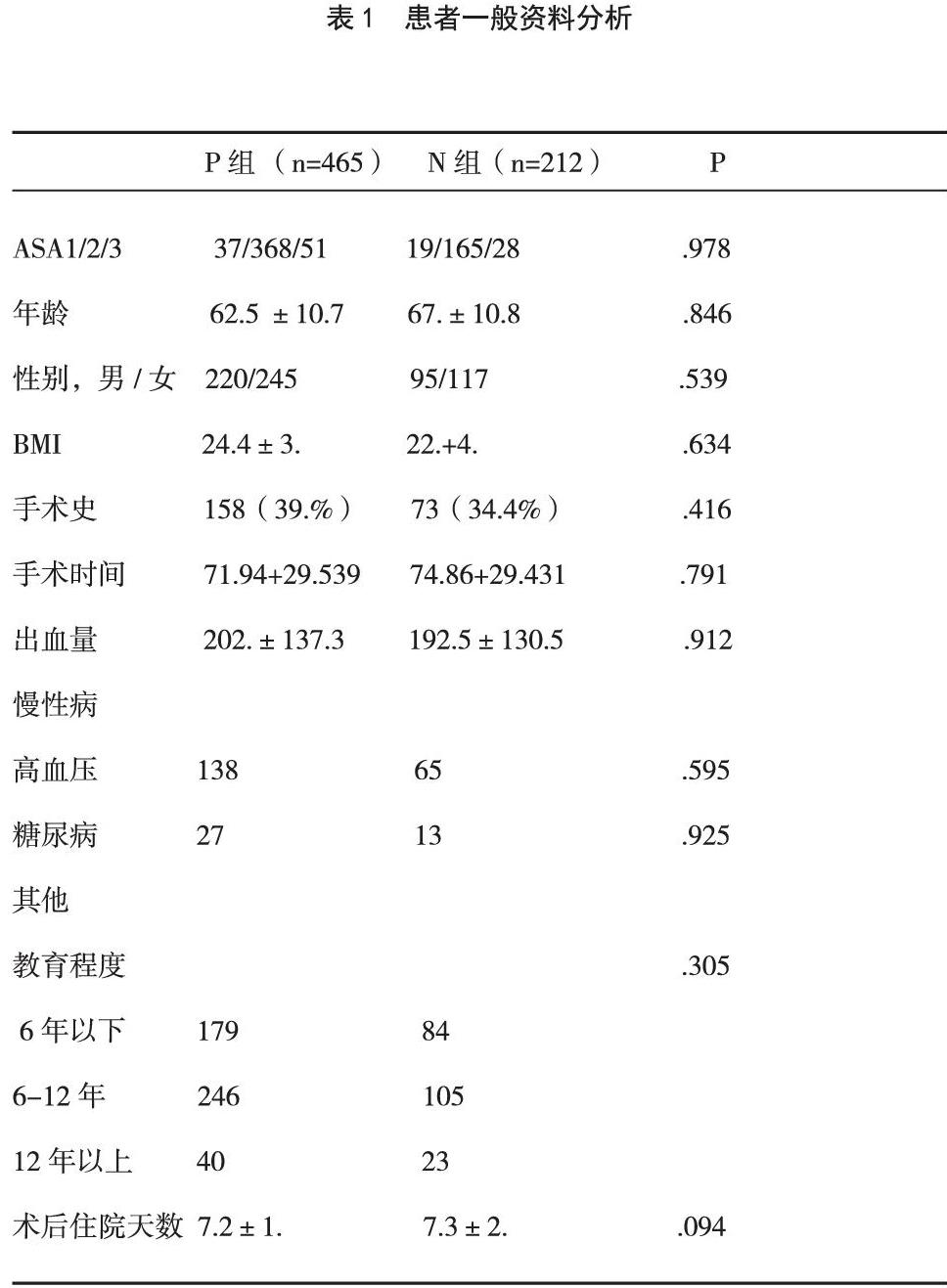
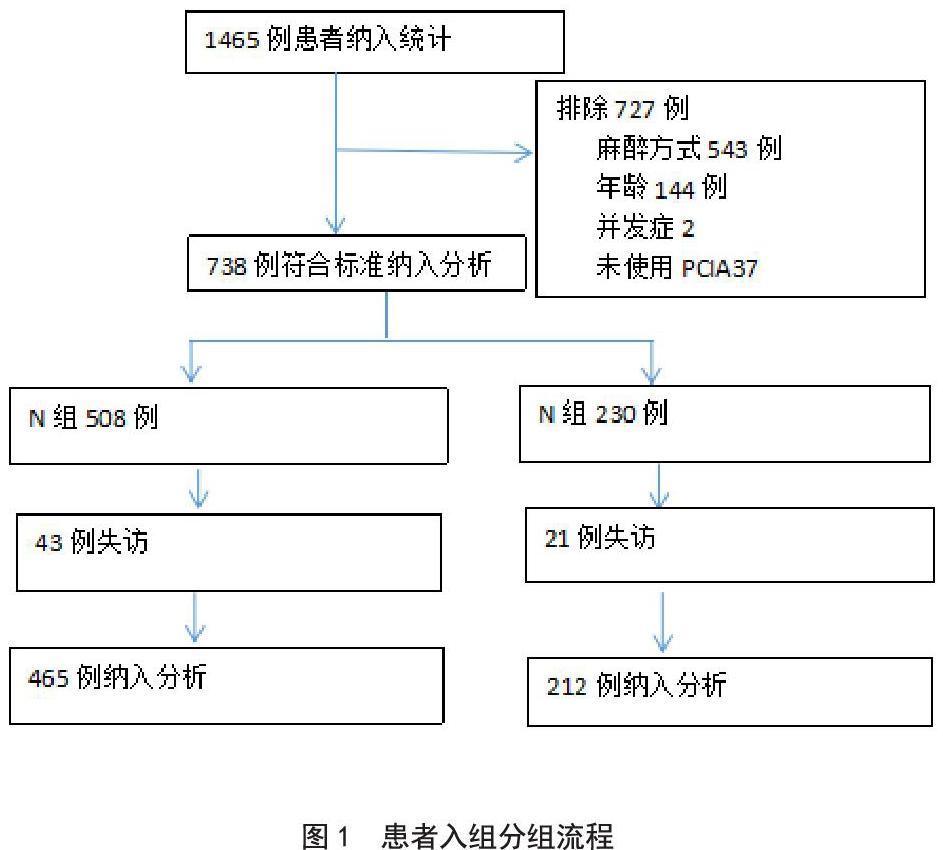
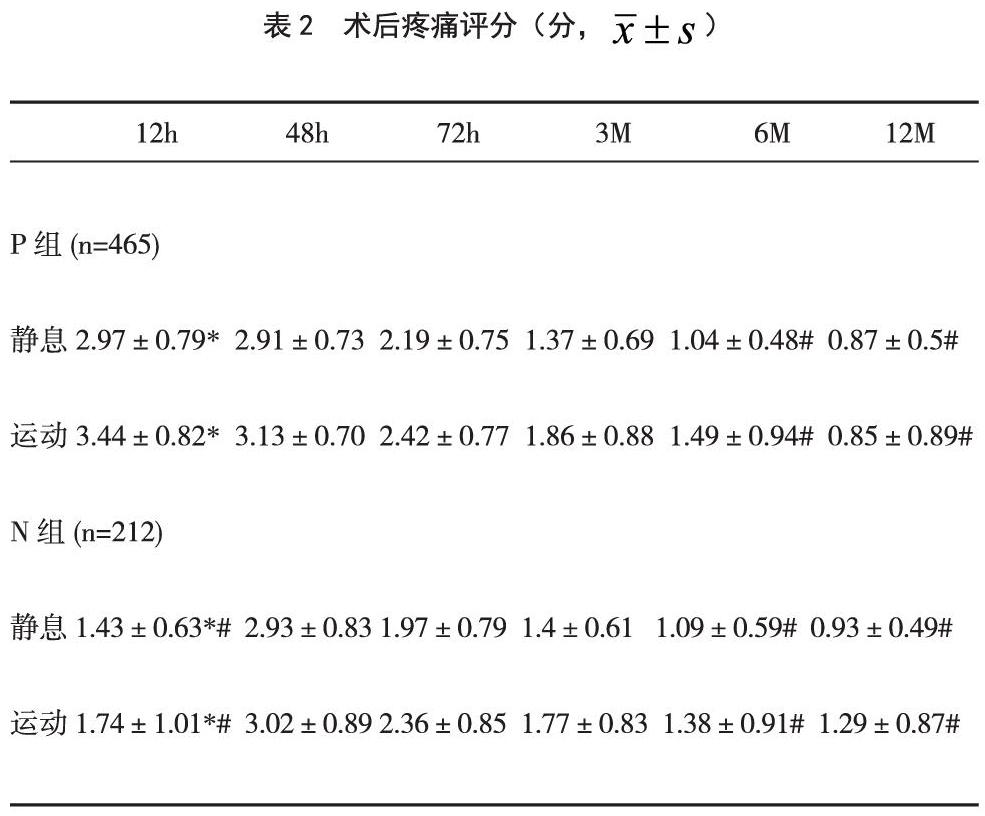
摘要: 目的:探讨髂筋膜阻滞能否影响全髋关节置换患者术后镇痛效果及3-12个月慢性疼痛发生率。方法:通过万通数据库审查2015.10-2019.10期间接受THA的患者的所有病例,选取股骨头无菌性坏死在腰麻下行单侧THA患者922例,术后镇痛PCIA患者被分到P组,术前髂筋膜阻滞结合PCIA患者被分到N组,采用VAS评分量表,从病历中提取术后12h、48h、72h,VAS评分,并电话、微信、短信等方式回访患者术后3个月、6个月、12个月的VAS评分,比较两组患者的VAS评分及慢性疼痛发生率。结果:与P组相比N组术后12小时中重度疼痛发生率显著降低(P<0.05),且PCA按压次数和补救镇痛次数显著降低(P<0.05)。术后48h、第3天、3个月、6个月、12个月VAS评分未发现差异(P>0.05)。结论:单次髂筋膜阻滞不能降低股骨头坏死THA术后慢性疼痛的发生率,但能明显缓解术后12小时的急性疼痛,并减少术后12小时PCA按压次数和抢救镇痛次数。
关键词:髂筋膜阻滞;腰麻;全髋关节置换;慢性疼痛;超声引导
Objective: to investigate whether Iliac fascia block can affect postoperative analgesia and the incidence of 3-12 months chronic pain in patients undergoing total hip replacement. Methods: from October 2015 to October 2019,922 patients with avascular necrosis of femoral head (AVN) who underwent unilateral THA under spinal anesthesia were selected, preoperative iliac fascia block combined with PCIA patients were divided into n groups. VAS Scores were obtained at 12H, 48h and 72h after operation with VAS scale, and telephone, wechat, SMS and other ways to visit the patients 3 months, 6 months, 12 months after the VAS score, compare the two groups of patients with the VAS score and the incidence of chronic pain. Results: compared with P group, the incidence of moderate and severe pain in n group was significantly lower (P & Lt; 0.05) , and The Times of PCA pressing and Analgesia were significantly lower (P & Lt; 0.05) . No significant difference was found in VAS scores at 48 H, 3 D, 3 months, 6 months and 12 months postoperatively (P & GT; 0.05) . Conclusion: single Iliac fascia block can not reduce the incidence of chronic pain after THA, but it can significantly relieve the acute pain 12 hours after THA, and reduce the Times of PCA and Analgesia 12 hours after THA. Keywords ILIAC Fascia Block; Lumbar Anesthesia; Total hip replacement; Chronic pain; Ultrasound guidance
一、背景
術后慢性疼痛(CPSP)是继发于手术后持续时间超过3个月以上并排除其他原因的疼痛[1-2]。根据最新国内外文献报道,CPSP发生率为10-50%[2-4]。不同类型手术CPSP发生率不同,全髋关节置换术后CPSP发生率12.1-31.6%[5-6]。CPSP不仅影响患者的康复和生活质量,而且还会增加社会和经济负担,因此明确慢性疼痛的机制和相关因素,有助于预防和控制CPSP。术前痛觉过敏,THA外科手术,心理社会因素等可导致慢性疼痛,研究还表明术后急性疼痛可发展为慢性疼痛[7-8]。本研究我们通过回顾近5年全髋置换术患者麻醉及术后镇痛,比较VAS评分,研究随访期为术后12个月,探讨髂筋膜阻滞术后缓解急性疼痛维持时间及能否减轻THA患者的慢性疼痛。……