长期服用阿司匹林高血压患者脑出血手术治疗后再出血的危险因素分析
2021-03-25毛云飞
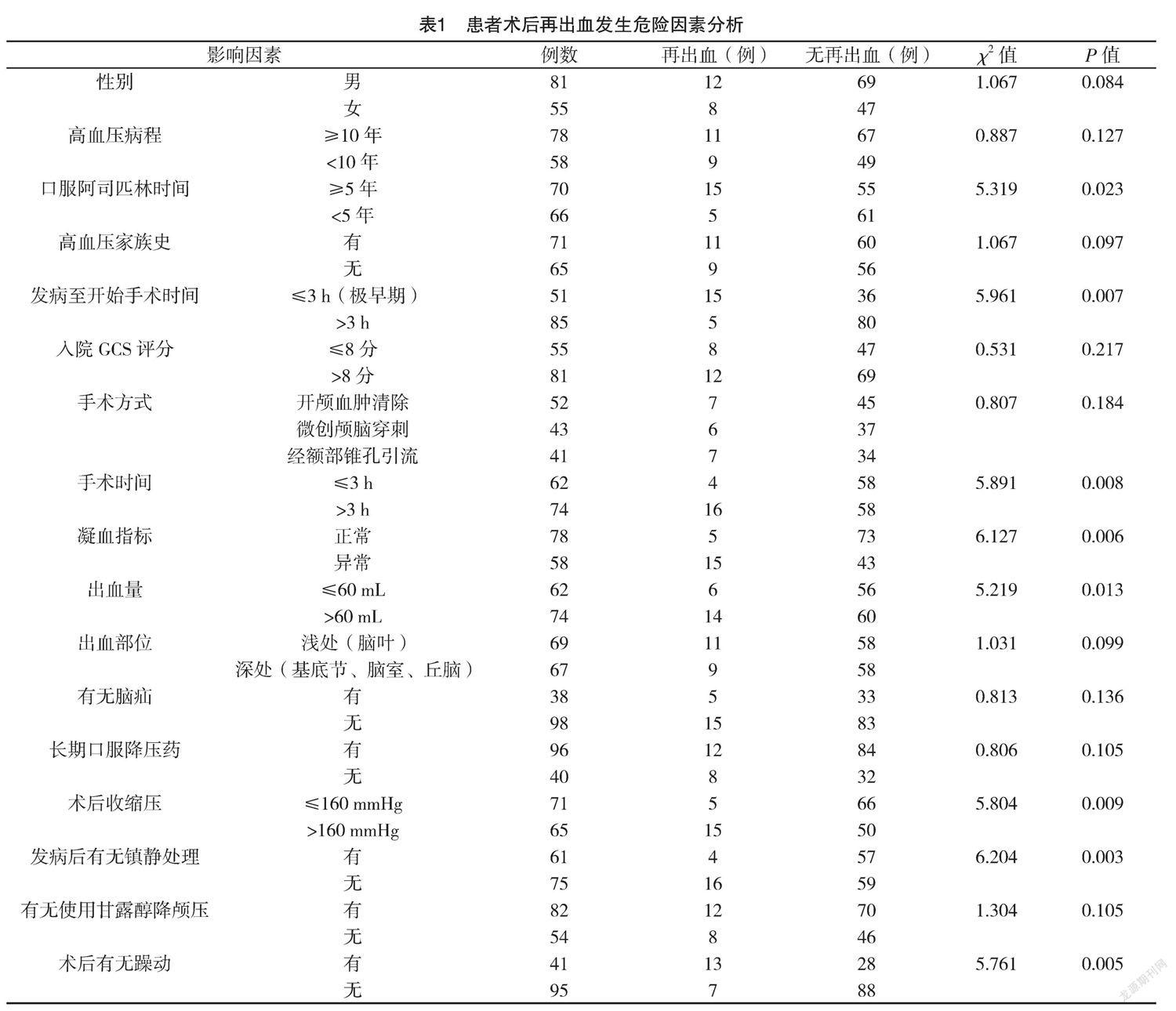
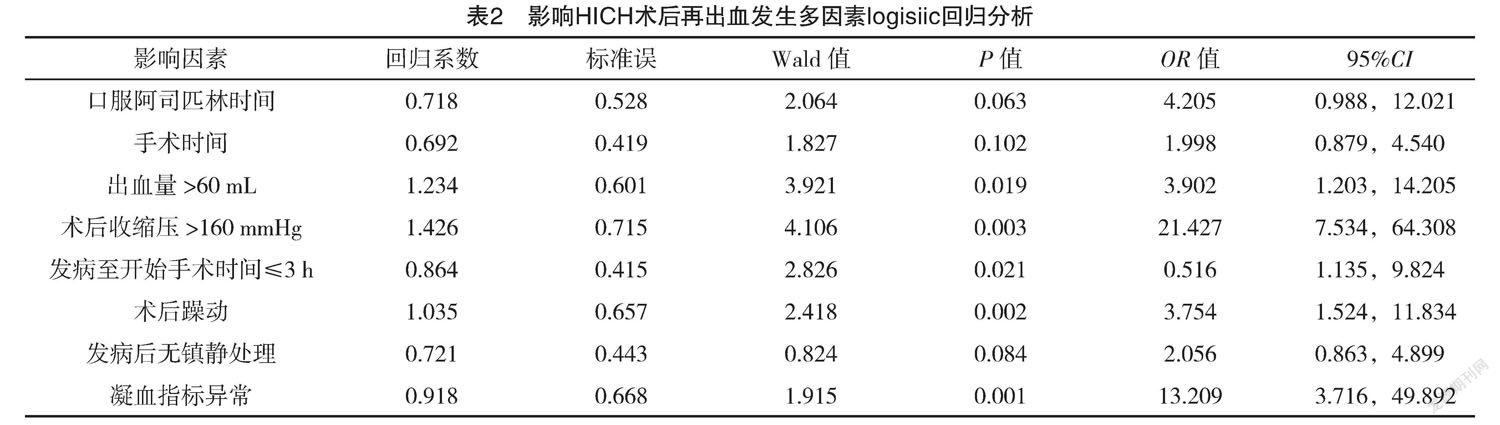
【摘要】 目的:分析長期服用阿司匹林的高血压性脑出血(HICH)患者术后出现再出血的危险因素。方法:选择本院2017年8月-2020年8月神经外科收治的136例长期服用阿司匹林的HICH患者为研究对象,所有患者入院后急诊行手术治疗,对其临床资料进行回顾性分析,探讨术后出现再出血的危险因素。结果:136例患者术后再出血发生率为14.7%(20/136),病死率占再出血患者的35.0%(7/20),占整体患者的5.1%(7/136)。口服阿司匹林时间、发病至开始手术时间、手术时间、凝血指标、出血量、术后收缩压、发病后有无镇静处理及术后有无躁动均为引起HICH术后再出血的影响因素(P<0.05)。多因素分析结果显示出血量>60 mL、术后收缩压>160 mmHg、发病至开始手术时间≤3 h、术后躁动、凝血指标异常均为长期服用阿司匹林的HICH患者术后再出血的独立危险因素(P<0.05)。结论:长期服用阿司匹林HICH患者术后再出血发生风险与阿司匹林服用时间、发病至开始手术时间、手术时间、凝血指标、出血量、术后血压水平、发病后有无镇静处理及术后有无躁动密切相关,针对上述因素予以适当的临床处理,能够降低再出血的发生率。
【关键词】 阿司匹林 高血压 脑出血 再出血
Risk Factors for Rebleeding after Surgical Treatment of Hypertensive Patients with Long-term Aspirin Use/MAO Yunfei. //Medical Innovation of China, 2021, 18(34): -138
[Abstract] Objective: To analyze the risk factors of rebleeding in hypertensive cerebral hemorrhage (HICH) patients with long-term Aspirin use. Method: A total of 136 HICH patients with long-term Aspirin use admitted to the neurosurgery department of our hospital from August 2017 to August 2020 were selected as the study subjects. All patients underwent emergency surgical treatment after admission, and their clinical data were retrospectively analyzed to explore the risk factors of postoperative rebleeding. Result: The incidence of rebleeding in 136 patients was 14.7% (20/136), and the mortality was 35.0% (7/20) of the patients with rebleeding, and 5.1% (7/136) of the overall patients. Time of oral Aspirin, time from onset to operation, operation time, coagulation index, blood loss, postoperative systolic blood pressure, sedation after onset and agitation after operation were all influential factors for rebleeding after HICH (P<0.05). Multivariate analysis showed that blood loss >60 mL, postoperative systolic blood pressure >160 mmHg, time from onset to operation ≤3 h, postoperative agitation, abnormal coagulation indicators were independent risk factors for postoperative rebleeding in HICH patients who took Aspirin for a long time (P<0.05). Conclusion: The risk of postoperative rebleeding in patients with HICH who take Aspirin for a long time is closely related to Aspirin taking time, time from onset to start of operation, operation time, coagulation index, blood loss, postoperative blood pressure level, whether there is sedation after onset, whether there is agitation after operation and other factors. Appropriate clinical treatment for the above factors can reduce the incidence of rebleeding.
[Key words] Aspirin Hypertension Cerebral hemorrhage Rebleeding
First-author’s address: Pingxiang People’s Hospital, Pingxiang 337000, China
doi:10.3969/j.issn.1674-4985.2021.34.032
近年来随着我国人口老龄化的加剧及人们生活方式的改变,高血压的患病率逐年增加,其中高血压性脑出血(HICH)是该部分患者最嚴重的一类并发症,具有起病急、病情重、致死率高等特点,对于出血多、病情重的患者目前主要采用手术治疗,以达到清除血肿、降低颅内压等目的[1-2]。然而无论采用何种手术方式,术后再出血仍难以避免,一旦发生将会给患者及家庭带来灾难性的后果,尤其对于长期口服阿司匹林的患者,报道显示其术后再出血的风险更高[3]。……