苜蓿质膜内在蛋白编码基因MsPIPs家族的密码子偏好性分析
2021-01-29张海霞,王玉道,许雪妮
张海霞,王玉道,许雪妮
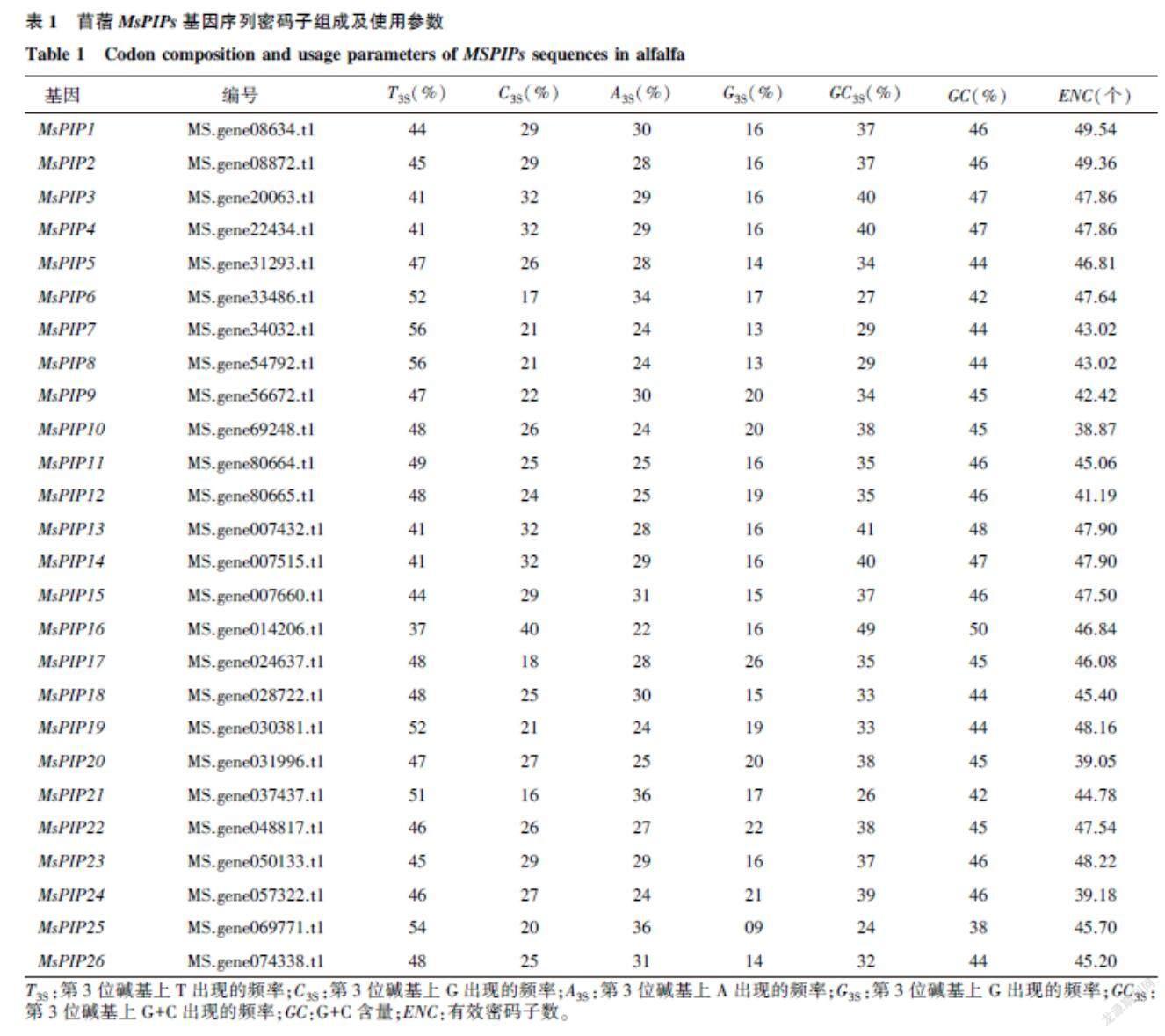
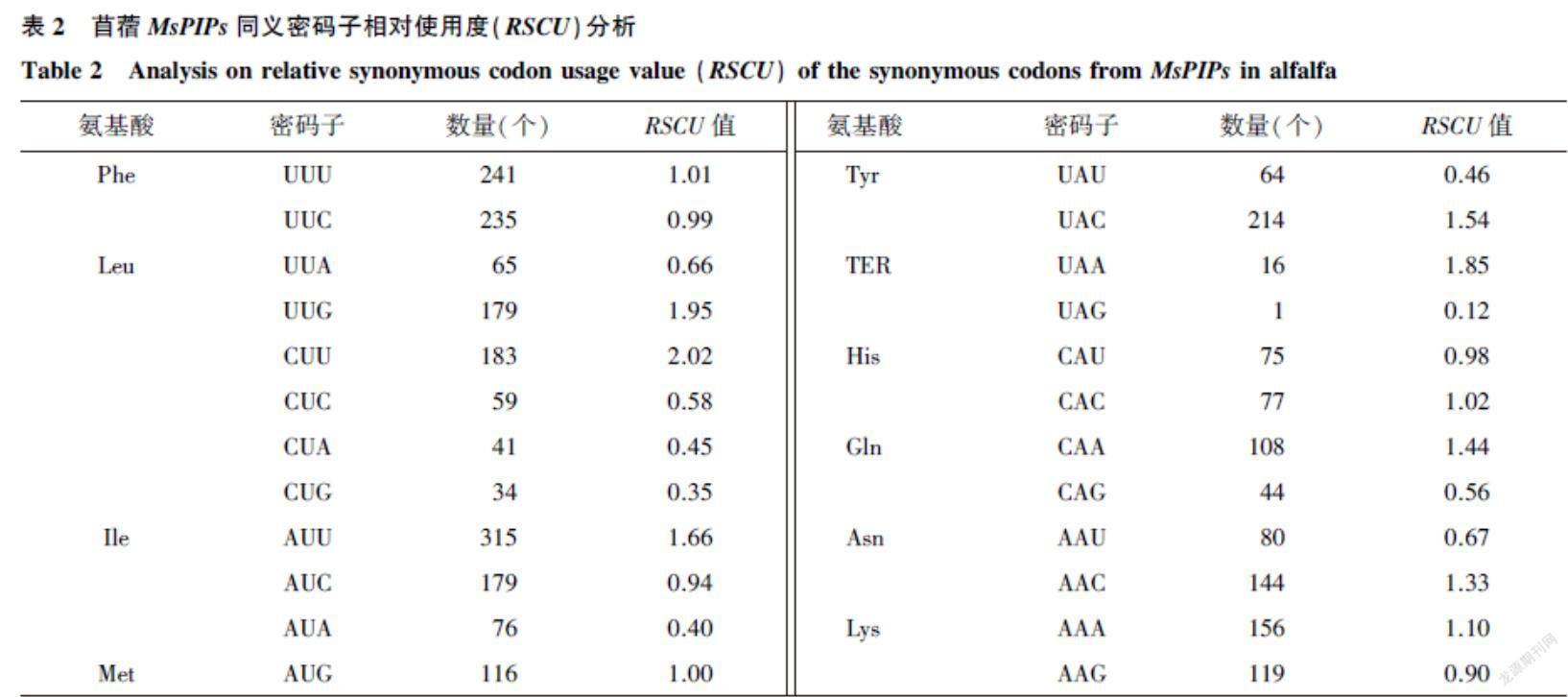
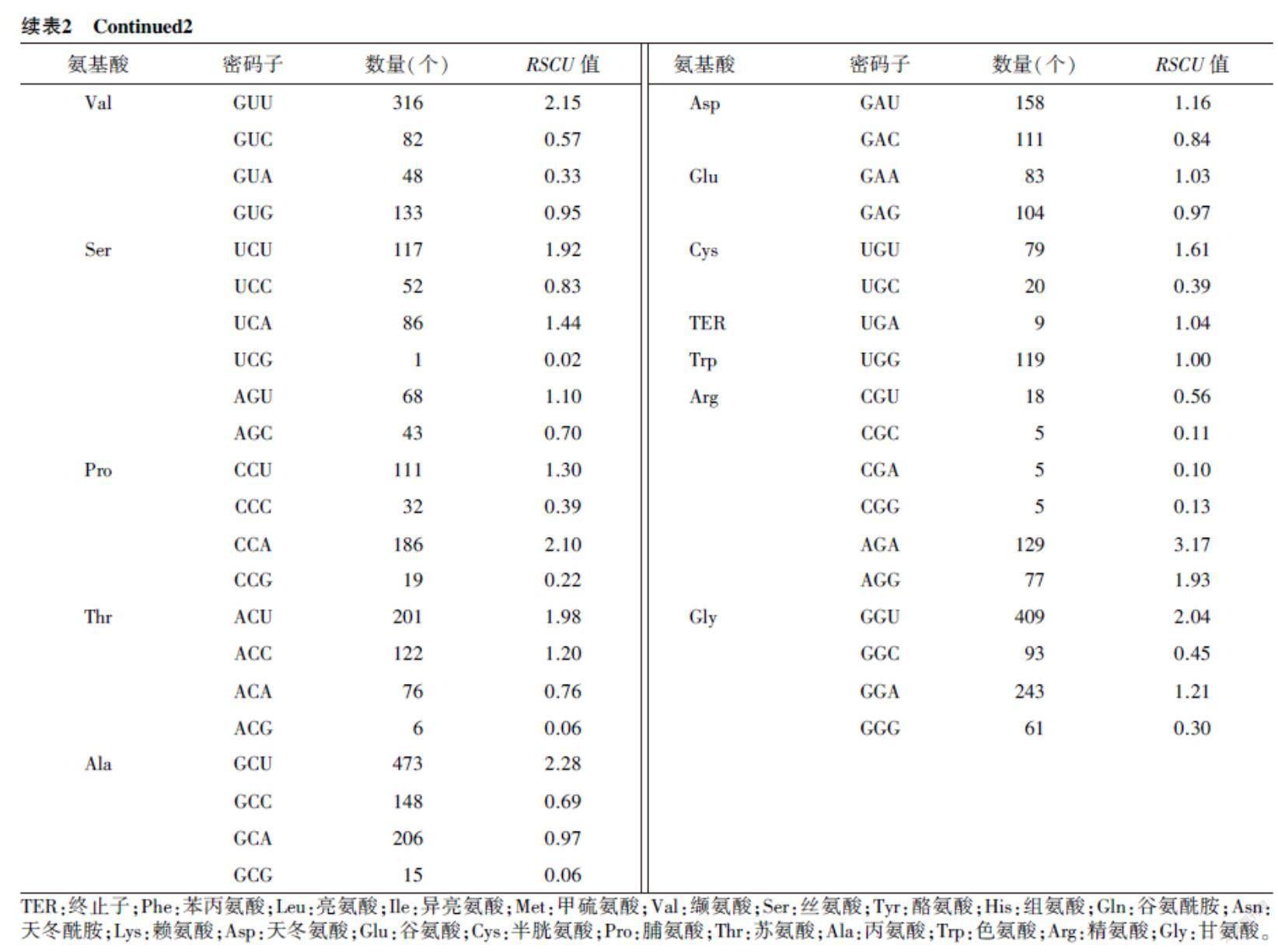
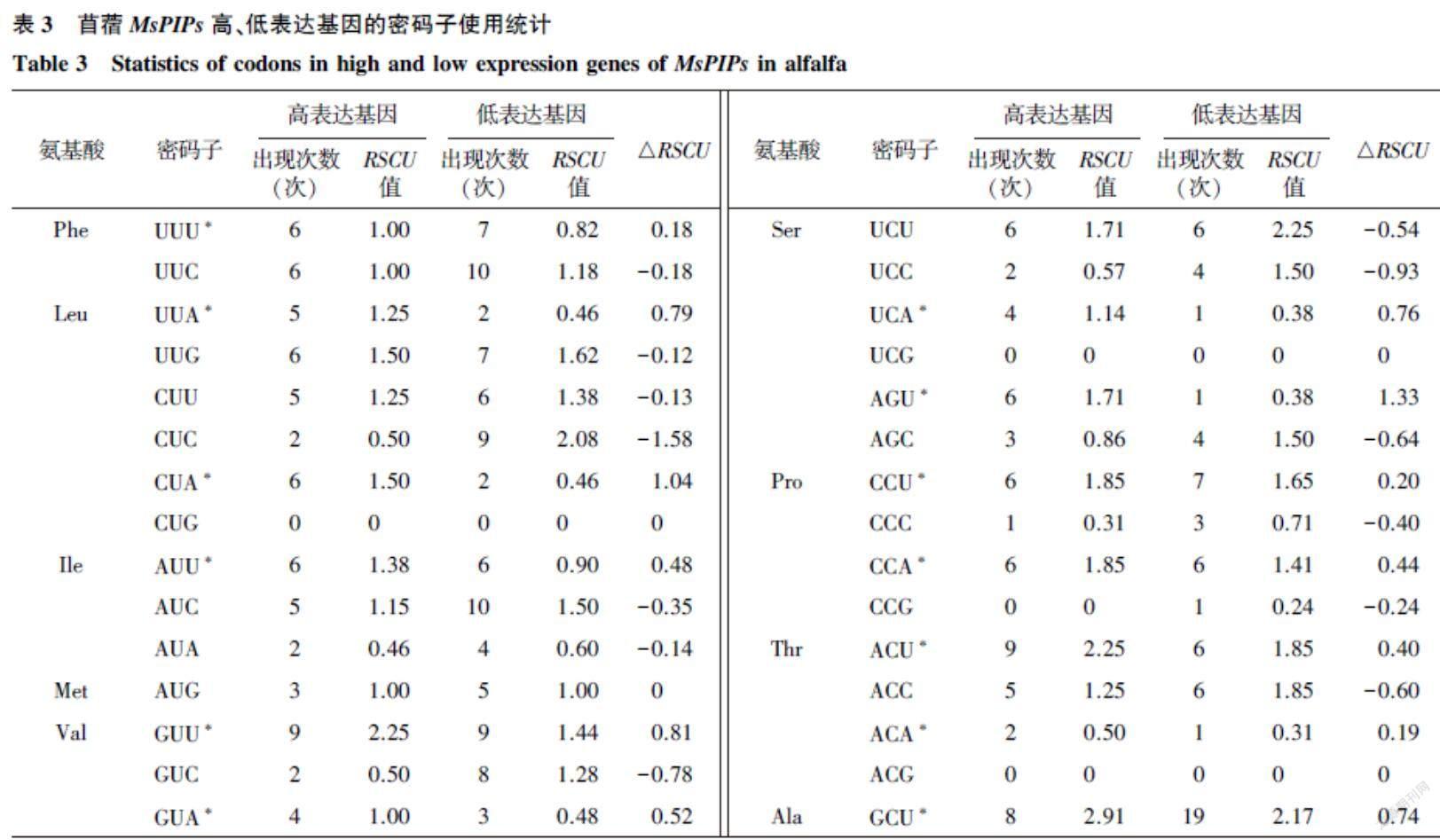
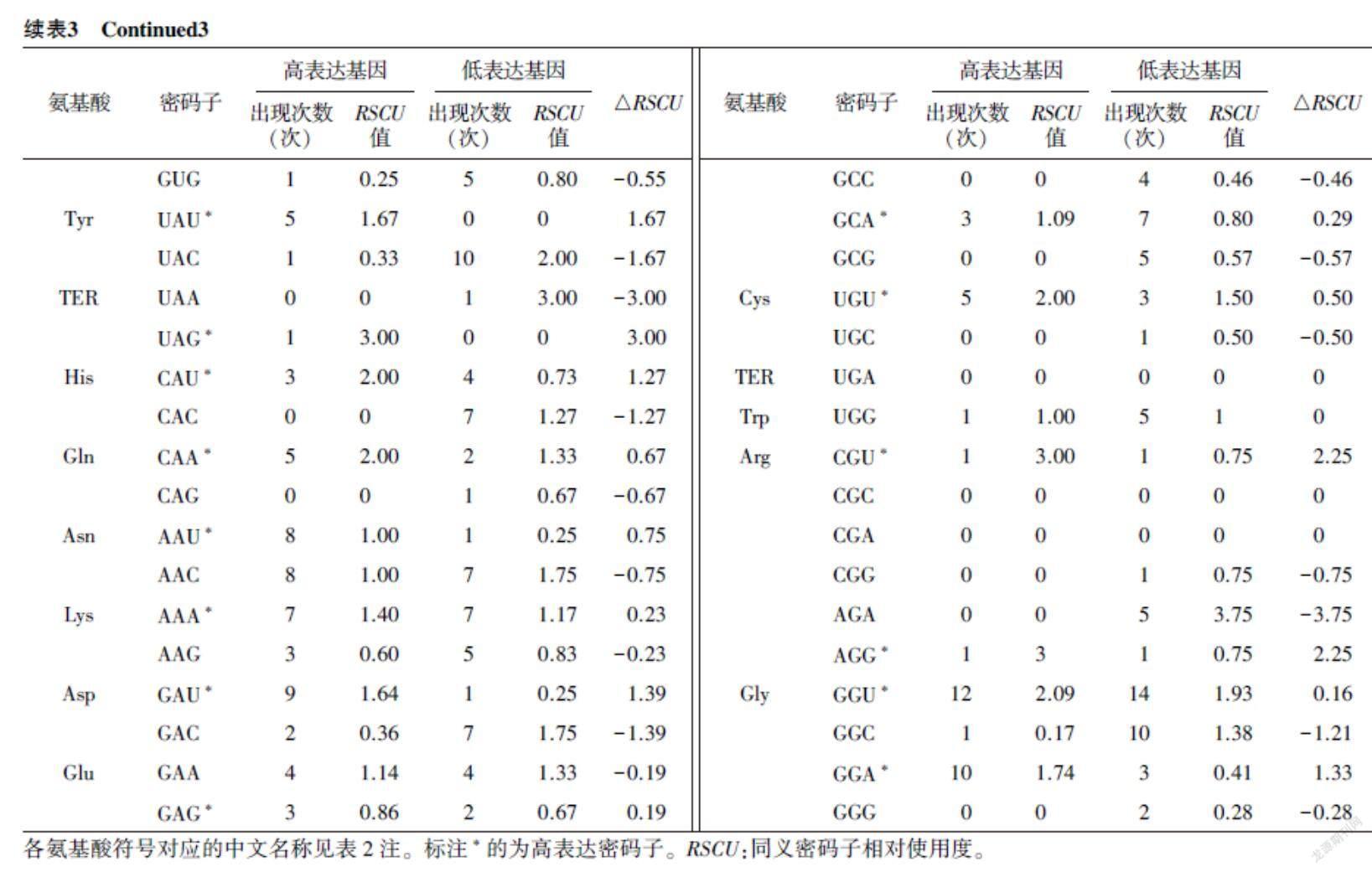
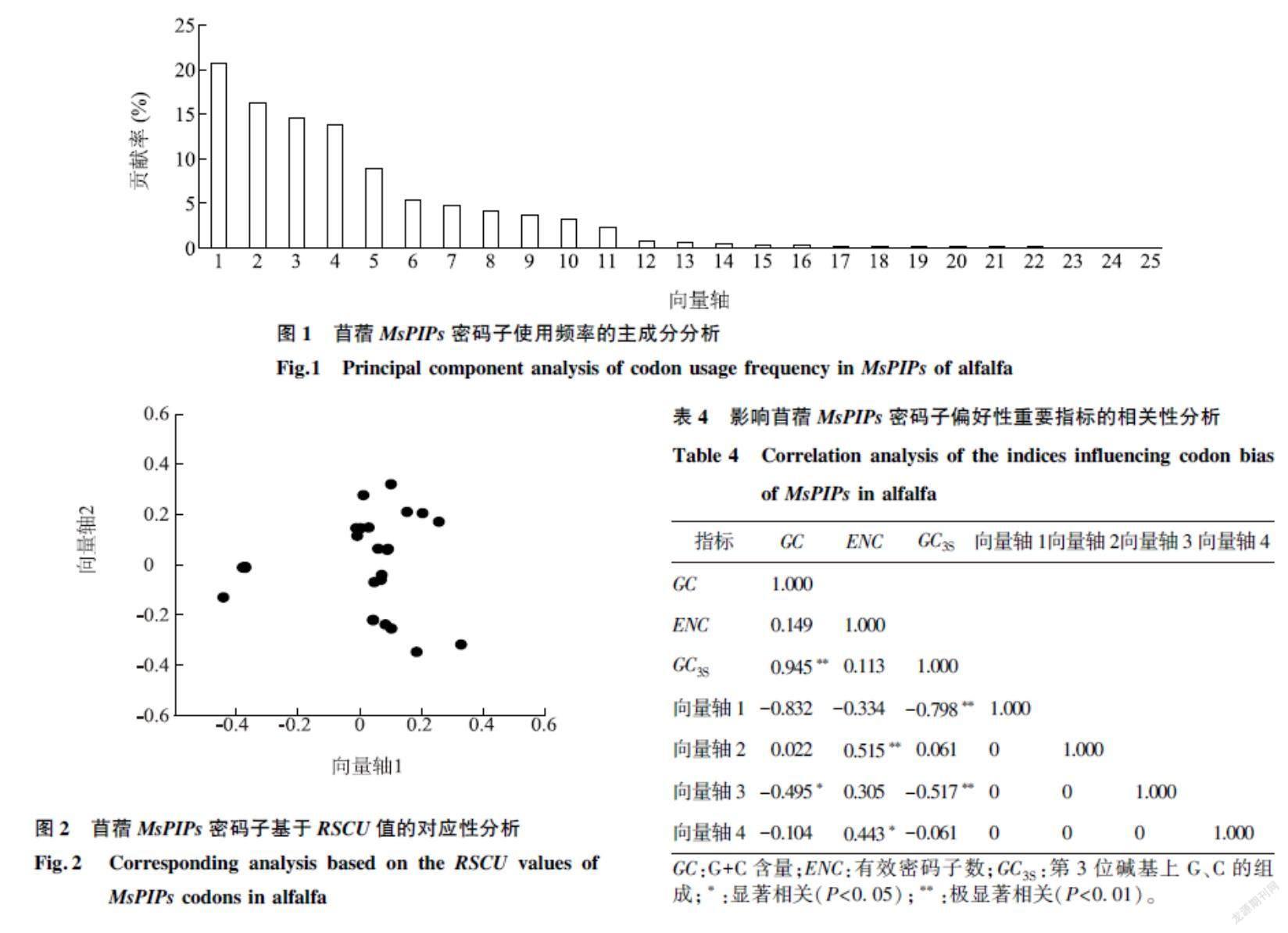
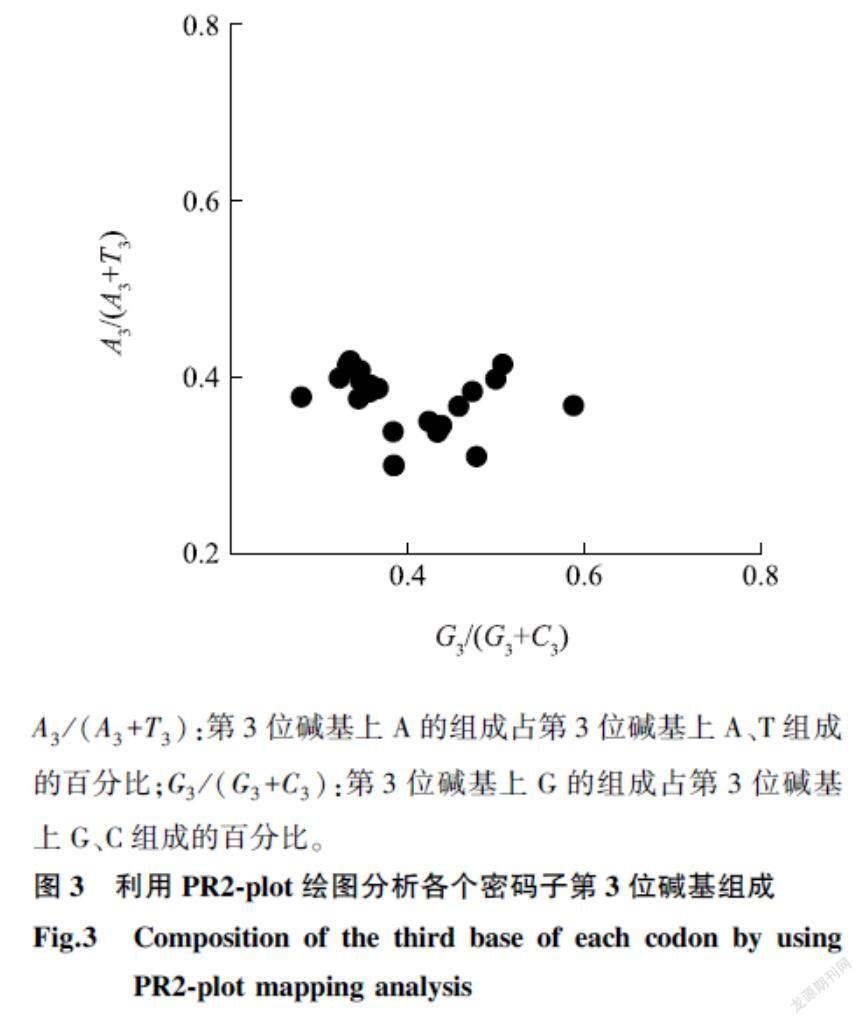
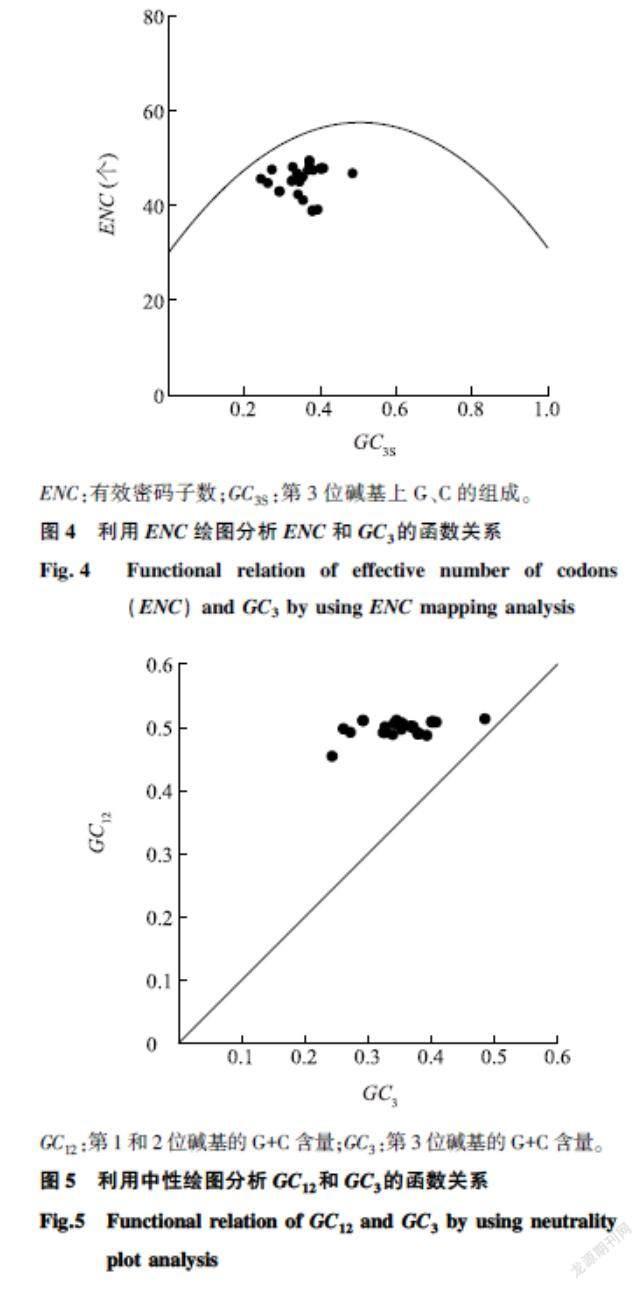
摘要:利用CodonW软件分析苜蓿质膜内在蛋白编码基因(MsPIPs)的密码子组成,发现它们的密码子在碱基使用中存在偏倚,偏好使用以T/A结尾的密码子,其中T结尾的密码子出现频率为47%。MsPIPs密码子的平均有效密码子数(ENC)为45.47个,偏好性较弱。通过主成分分析(PCA)、对应性分析(COA)、偏倚分析(PR2)、有效密码子数分析(ENC plot)和中性分析等多重分析方法对苜蓿MsPIPs密码子偏好性的成因进行分析,发现苜蓿MsPIPs的偏好性主要受自然选择的影响。
关键词:质膜内在蛋白;密码子偏好性;自然选择;突变
中图分类号:S551+.7文献标识码:A文章编号:1000-4440(2021)06-1393-07
Codon usage bias analysis of MsPIPs gene family which encode plasma membrane intrinsic proteins in alfalfa
ZHANG Hai-xia,WANG Yu-dao,XU Xue-ni
(Forestry Technology Popularization Station of Minqin County in Gansu Province, Minqin 733300, China)
Abstract:By using software CodonW to analyze the codon composition of plasma intrinsic protein encoded by MsPIPs gene in alfalfa, it was found that the codons showed bias in nucleobase use, the codons of MsPIPs preferred T/A endings, and the frequency of occurrence of T-ending codons was 47%. The average effective number of codons (ENC) of MsPIPs codons was 45.47, which had a weak codon bias. Through multivariate analytical methods combined by principal component analysis (PCA), corresponding analysis (COA), parity rule 2 plot mapping analysis (PR2), ENC plot analysis and neutrality plot analysis, the reason of the codon bias of the MsPIPs gene in alfalfa was analyzed, and it was found that the bias of MsPIPs in alfalfa might be driven by natural selection.
Key words:plasma membrane intrinsic proteins;codon usage bias;natural selection;mutation
密码子在遗传信息传递过程中起着至关重要的作用[1]。编码不同氨基酸的密码子的准确识别是保证基因信息准确表达的关键[2]。除了甲硫氨酸(Met)和色氨酸(Trp)由唯一的密码子编码外,大部分氨基酸均由2~6个同义密码子编码,同义密码子在不同植物体内的使用频率有差异,形成了密码子使用偏性[3]。密码子使用偏性受群体中突变压力、选择压力和基因漂变的影响,对研究基因功能、物种进化等具有重要科学意义[4]。
质膜内在蛋白(Plasma membrane intrinsic proteins,PIPs)定位在质膜上,是水通道蛋白(Aquaporins,AQPs)的亚家族成员,属于主要内在膜蛋白(Major intrinsic protein, MIP)家族[5]。目前,研究者们已经从拟南芥、玉米和番茄等中分别鉴定到13个、13个和18个PIPs基因[6]。在植物生长发育过程中,PIPs主要負责植物体内水分的吸收和运输,也参与植物体内营养及元素的运输及细胞生长分化过程[7]。在干旱和盐等非生物胁迫下,通过活性和表达情况的改变,PIPs在植物对非生物胁迫的应答过程中发挥着重要作用[8]。……
