基于Kano模型公共图书馆视障读者需求调查与分析
2020-11-23刘珂誌杨萍谢娟侯胜超
刘珂誌 杨萍 谢娟 侯胜超
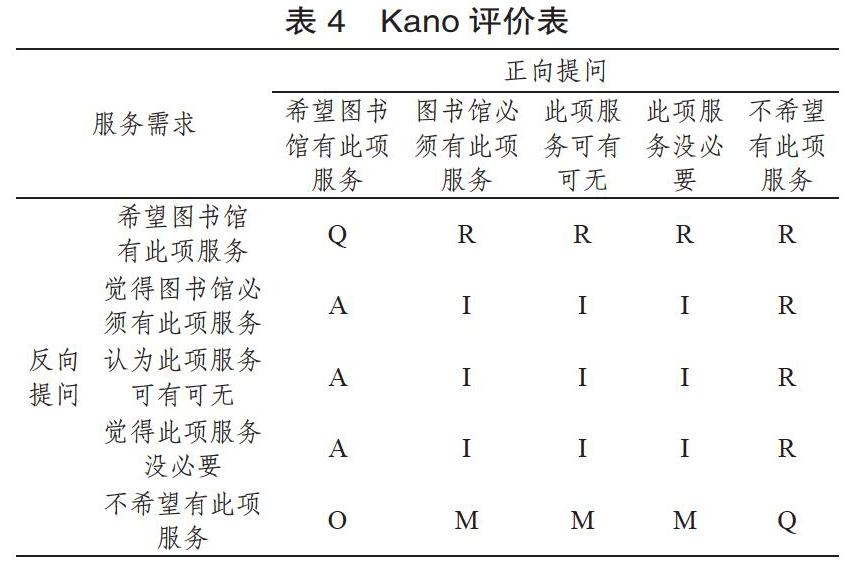
摘 要 为了解公共图书馆视障读者的需求特征,探讨提高公共图书馆视障读者服务满意度的有效措施,促进视障读者服务水平的提升。本文运用Kano模型,通过访谈和问卷调查对视障读者需求进行类型分析,显示视障读者的需求类型分为基本型需求、期望型需求、兴奋型需求和无差异性需求四类,并在此基础上构建满意度Better-Worse指数矩阵。从分析结果来看,公共图书馆首先要满足视障读者的基本型需求,其次是期望型需求,同时注重兴奋型需求和无差异性需求。据此本文提出公共图书馆应该大力发展数字图书馆,提高服务专业性,与社会公益组织合作广泛开展活动等建议。
关键词 Kano模型 公共图书馆 视障读者 无障碍阅读服务
分类号 G252
DOI 10.16810/j.cnki.1672-514X.2020.09.004
Demand Analysis of Visually Impaired Readers in Public Libraries Based on Kano Model
Liu Kezhi,Yang Ping, Xie Juan, Hou Shengchao
Abstract In order to understand the demand characteristics of the visually impaired readers in public libraries, this paper discusses the effective measures to improve the satisfaction of the service of the visually impaired readers in public libraries, so as to promotes the improvement of the service level of the visually impaired readers. Kano model was used to analyze the needs of visually impaired readers through interviews and questionnaires, and the Better-Worse index matrix of satisfaction was constructed. The results show that the needs of visually impaired readers can be divided into four types: Must-be Quality, One-dimensional Quality, Attractive Quality and Indifferent Quality. The public library should first meet the Must-be Quality of the visually impaired readers, then the One-dimensional Quality, and pay attention to the Attractive Quality and Indifferent Quality. Based on this, the paper proposes that public libraries should vigorously develop digital libraries, improve service professionalism, and cooperate with public welfare organizations to carry out activities.
Keywords Kano model. Public library. Visually impaired readers. Accessible reading services.
0 引言
據世界盲人组织(Word Blind Union)统计,全世界约有2.53亿视障人士,为促进视障人士参与文化生活的无障碍化,2013年6月51个国家联合签署了《马拉喀什条约》[1],该条约倡导公共图书馆参与保障视障人士平等的享有阅读资源的权力。我国作为世界上视障人群最多的国家,通过《中华人民共和国残疾人保障法》《图书馆服务宣言》明确要求公共图书馆应根据视障读者需要,设立盲文阅览室,为视障人群提供人性化的服务。截至目前,我国省级公共图书馆中有29所设置了视障阅览室[2],为视障人群提供无障碍阅读空间。视障图书馆的服务模式逐渐从“照顾式服务”“文化权力保障型服务”向“以视障读者为中心”转变[3],努力满足不同视障人士多层次的文化需求。……