循证护理模式对妇科腹腔镜术后并发症和焦虑抑郁情绪的影响分析
2020-09-15刘彩芳
刘彩芳
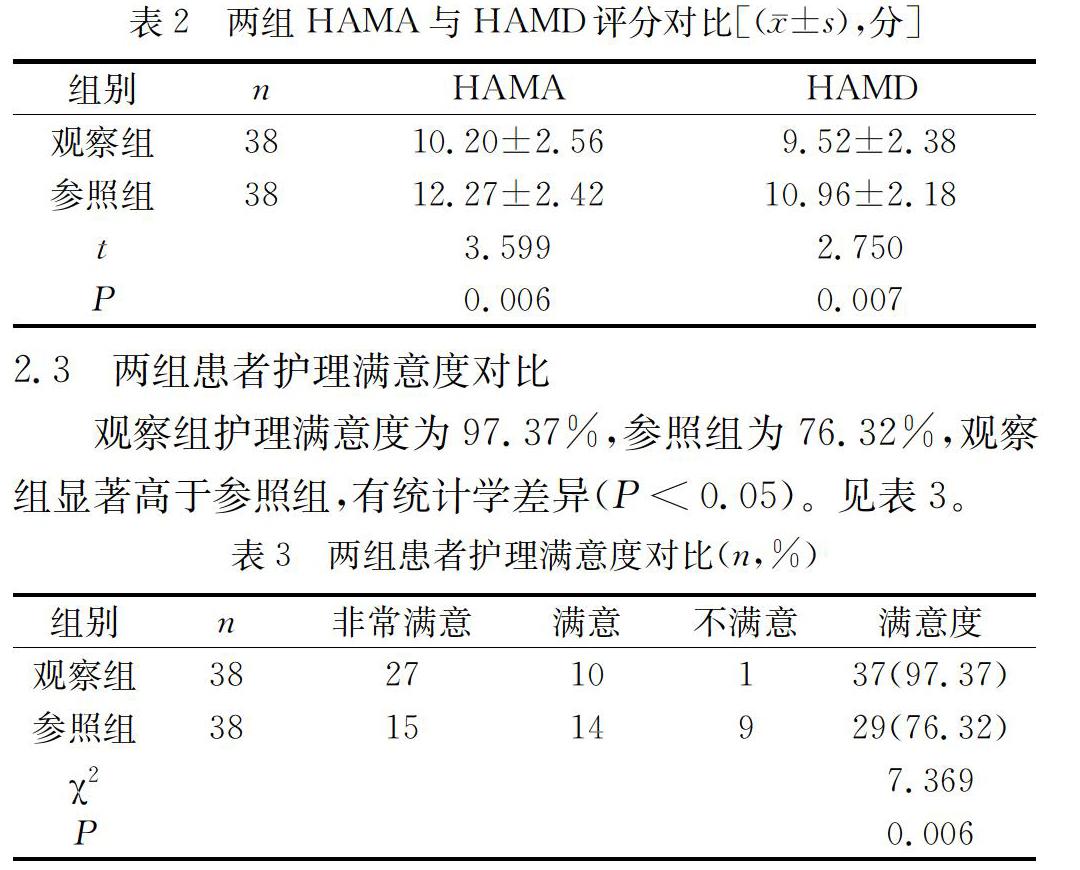
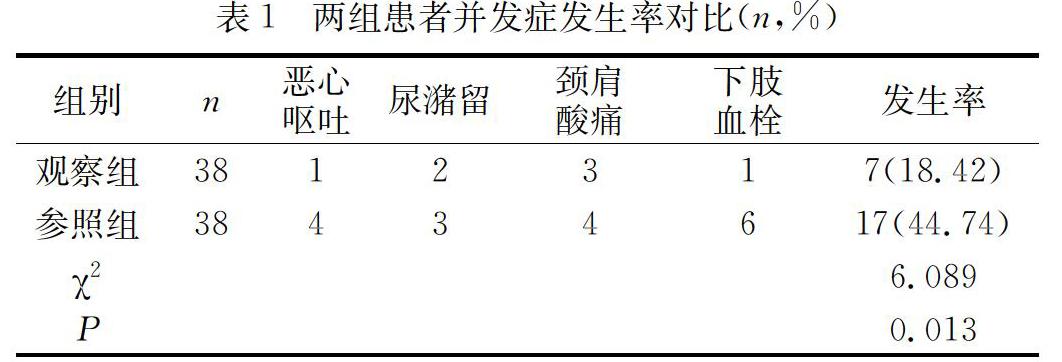
【摘 要】 目的:探究妇科腹腔镜术后经循证护理模式对焦虑抑郁情绪及术后并发症的影响。方法:选取2018年2月至2019年7月于本院妇科接受腹腔镜手术的患者76例,依据数字随机法分为观察组38例与参照组38例。参照组实施围术期常规护理,观察组在上述基础上实施循证护理模式。对比分析术前术后两组患者焦虑、抑郁评分,术后并发症发生率及护理满意度情况。结果:术后观察组患者焦虑、抑郁评分显著低于参照组,有统计学差异(P<0.05);观察组术后并发症发生率为18.42%,参照组为44.74%,观察组显著低于参照组,有统计学差异(P<0.05);观察组护理满意度为97.37%,参照组为76.32%,观察组显著高于参照组,有统计学差异(P<0.05)。结论:妇科腹腔镜手术患者实施循证护理模式,可改善患者焦虑、抑郁负面情绪,减少并发症发生,提高护理满意度。
【关键词】 妇科腹腔镜;循证护理;术后并发症;抑郁;焦虑
[Abstract] Objective:To investigate the effects of evidence-based nursing mode after gynecologic laparoscopic surgery on anxiety and depression and postoperative complications. Methods: 76 patients who underwent laparoscopic surgery in our hospital from February 2018 to July 2019 were enrolled. According to the numerical randomization method, 38 patients in the observation group and 38 patients in the reference group were selected. The reference group was given routine perioperative nursing, and the observation group implemented the evidence-based nursing model on the basis of the above. The anxiety and depression scores, postoperative complication rate and nursing satisfaction of the two groups were compared before and after operation. Results: The scores of anxiety and depression in the postoperative group were significantly lower than those in the reference group (P<0.05). The postoperative complication rate was 18.42% in the observation group and 44.74% in the reference group. The test group was significantly lower than the reference group. There were statistical differences in the group (P<0.05); the satisfaction degree of the test group was 97.37%, and the reference group was 76.32%. The test group was significantly higher than the reference group, and there was statistical difference (P<0.05). Conclusion: Evidence-based nursing mode in patients undergoing gynecologic laparoscopic surgery can improve patients' anxiety, depression and negative emotions, reduce complications and improve nursing satisfaction.
[Key words]Gynecological laparoscopy; Evidence-based nursing; Postoperative complications; Depression; Anxiety
腹腔鏡手术作为微创手术的一种,具备恢复快、术后瘢痕小、出血量少、切口小等优势,可减轻手术给患者机体造成的损伤,维持切口美观,进而改善生活质量[1]。随着腹腔镜技术的逐渐发展与完善,其被广泛应用于妇科手术治疗中,取得显著效果。然而,在手术治疗过程中,受到患者自身因素及疾病因素影响,增加了术后并发症发生的可能。因此,要求医护人员提升器械使用技术,实施有效护理。循证护理作为一种全新的护理方式,以患者疾病情况为中心,制定科学、合理的护理方案,为患者提供全方位的护理服务[2]。本研究选取于本院妇科接受腹腔镜手术患者76例,对其实施循证护理模式,探究该护理模式对患者焦虑、抑郁情绪及术后并发症的影响,现具体报道如下。
1 资料与方法
1.1 临床资料
选取2018年2月至2019年7月于本院妇科接受腹腔镜手术的患者76例,依据数字随机法分为观察组38例与参照组38例。……